
Homemade Vegan Butter
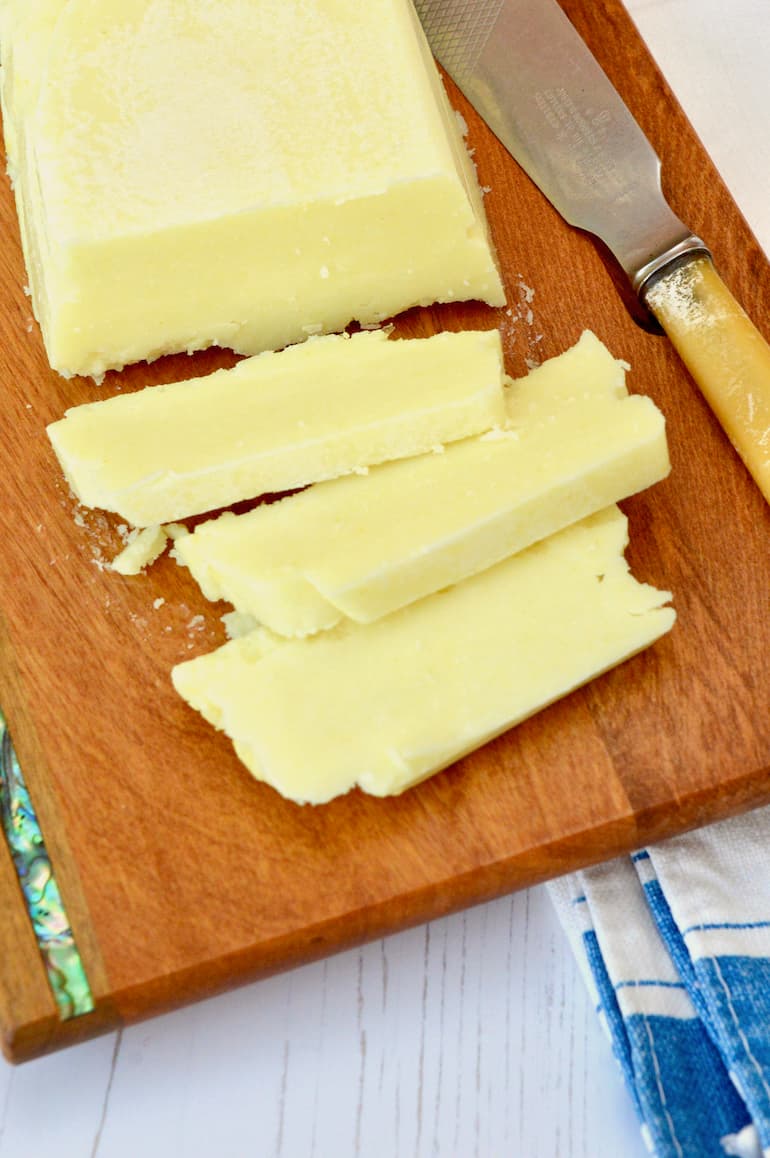
A smooth and creamy homemade vegan butter that looks and tastes pretty much like the real thing. This recipe only takes a few minutes to make and contains just five simple ingredients, including salt. And all you need is a whisk and bowl.
This post may contain affiliate links. As an Amazon Associate, I earn from qualifying purchases. See my cookie and privacy statement for further details.
I can’t tell you how much I’ve missed butter when I’ve gone for Veganuary in the past. Cheese I can manage without for a month. After all I have my ab fab mushroom and walnut pâté for work sandwiches. And then there’s this vegan ‘parmesan’ for pasta, which is astonishingly good. There are so many delicious vegan dishes with layers of flavour and texture it was never as difficult as I thought it might be. But butter? There’s really no substitute. Or so I thought.
Dive Right In
- What Is Vegan Butter?
- Homemade Vegan Butter
- Ingredients
- How To Make Homemade Vegan Butter
- Top Tips
- How Long Does Homemade Vegan Butter Last?
- Flavoured Vegan Butters
- Other Vegan Hacks
- Keep In Touch
- The Recipe
What Is Vegan Butter?
As you’d expect, vegan butter is a plant based substitute for dairy butter. Usually it’s made with some sort of oil mixed with water and a few additives. It’s what we used to call margarine.
It’s hard to buy vegan butter that isn’t overly processed. It usually has ingredients, such as palm oil, that are best avoided for environmental reasons. I’ve not yet found one I’m willing to buy. Luckily, it’s easy to make your own and you can then control exactly what goes into it.

You can use it for spreading, frying and baking. It’s fabulous for adding a touch of luxury to a breakfast bowl of porridge. Sometimes I add a knob of vegan butter to my finished oats alongside a spoon or two of homemade apple sauce or purée.
Homemade Vegan Butter
Last year I experimented with making vegan butter, but at the time I could only find standard extra virgin coconut oil. This is one of my favourite ingredients for vegan baking, but when it comes to butter I don’t want something that tastes mostly of coconut. I’m pretty sure you don’t either.
This year I found some odourless organic coconut oil which has only been lightly steamed. Yay! Not too much in the way of processing and it doesn’t taste of coconut.
Now I can make something that tastes and feels pretty much like the real thing. Even CT, butter lover extraordinaire, was fooled when I first gave him a slice of toast spread with my vegan butter.
I have used it for frying and sauces, but I haven’t tried baking with it yet. I tend to use straight forward coconut or some other oil for that. But I’m pretty certain it would work well as a butter replacement. Mostly, I use it to spread on toast. On its own, with marmite or sometimes homemade jam.
My vegan butter is not a direct replacement for butter of course. It doesn’t last as long in the fridge for a start. However, it does spread well at room temperature and most surprisingly of all it tastes buttery.
It lasts for about two weeks in the fridge if you keep it covered, which isn’t bad. However, it will freeze for up to three months.
I make it with a whisk and bowl, but you can use a blender. I prefer whisking by hand or using a stick blender as I find it hard to extract all of the butter from a jug blender. As it’s such a small quantity, most of it gets lost on the sides.
Vegan Pastry Update Jan 23
I’ve now made pastry with my vegan butter and can report that it works really well. I used my regular ab fab pastry recipe but veganised it. Basically, I swapped the butter for my vegan butter and the yoghurt for vegan yoghurt.
The pastry is really good. I have to say the texture isn’t up to to the delicious flakiness I’ve come to expect; it’s crisper and firmer. But I’m very pleased with it.
Homemade Vegan Butter: Ingredients
You only need five simple ingredients to make homemade vegan butter, including salt. I use six as I like to add a pinch of turmeric for a touch of golden colour.
For a healthier vegan butter, try to use the best quality ingredients you can afford. Organic is always a good option.
Coconut Oil
Coconut oil gives solidity to the butter. Without it, you’d have a soft spread.
I generally prefer to use extra virgin coconut oil in my cooking. But please don’t make the same mistake I did. If you use this, your butter will taste of coconut, which isn’t really what you want for a butter substitute.
Eventually I found an odourless organic coconut oil* from Biona. It isn’t overly processed as it’s only lightly steamed to remove the coconut smell and flavour. I’m really happy with it and it works brilliantly.
Soy Milk
You can use any plant based milk to make vegan butter. However, I’ve found that soy milk makes the creamiest version. It’s higher in protein than other vegan milks and it helps to give a creamy texture to the butter.
Whatever you use, make sure it’s unsweetened and preferably with no additional ingredients. Other than water and maybe salt. I like Plenish soys milk* which contains soy beans and water only.
I’ve heard you can also use aquafaba (chickpea water) instead of plant milk. However, I haven’t tried this yet, so I don’t know for sure it will work. I will get around to it one day though.
Neutral Oil
A little liquid oil is needed in this recipe to help soften the butter and make it more spreadable. Coconut oil goes very hard when refrigerated. A neutral tasting oil is best, I like to use sunflower oil.
If you can get cold pressed oil, so much the better. Cold pressed sunflower oil* is expensive, but I only use it for recipes which don’t require cooking. It’s ideal for vegan mayonnaise as well as vegan butter.
Apple Cider Vinegar
You only need a small amount of vinegar to make vegan butter, but it’s a crucial ingredient. It turns the milk into buttermilk and gives a very slight but important tang.
I like to use live organic apple cider vinegar* – that is one that is unfiltered, unadulterated and comes with the mother. It’s not cheap, but a bottle lasts a long time and it doesn’t go off.
Salt
Homemade vegan butter means you can make it as salty as you like. Add more or less depending on your own taste. How much you add also depends on whether you require the butter for spreading, cooking or baking.
Use fine sea or rock salt as this dissolves more easily than flakes or coarse salt. I like to use unrefined grey salt. This is more expensive, but it hasn’t had all its minerals stripped away. I’m still using a one kilo pack of unrefined Atlantic salt* I bought over ten years ago.
Turmeric
Turmeric is completely optional. It’s not needed in order to make the butter. However, it gives an authentic tint of yellow colour. I find without it, the butter just looks off-puttingly white. I’m a big fan of turmeric in any case, as it’s anti-inflammatory. As there’s such a small amount in this vegan butter, I doubt it has any effect at all, but still.
Add just a small pinch at first and see what you think of the colour. You can always add more, but you probably don’t want a neon yellow, so go carefully.
How To Make Homemade Vegan Butter
Although it’s quick and really quite easy to make homemade vegan butter, there are a few tips and tricks to it that are worth noting. Please note though that this recipe is for a hard butter when cold, not a soft spread.
Step 1. Melt Coconut
Melt the coconut in a small pan over a very gentle heat. As soon as it’s nearly melted, take off the heat. Any residual solids will continue to melt.
Allow the coconut oil to cool. You want it so that it’s only mildly warm, but make sure to use it before it starts to solidify. How long this takes will depend on the ambient temperature of your kitchen.
Top Tip
You can weigh the coconut oil in its solid state or measure it in its liquid state. I weigh the solid stuff on a piece of greaseproof paper so that it doesn’t mess up the scales.
To make the oil liquid, either melt it over a gently heat in a small saucepan or stand the jar in a pan of hot water. Coconut oil melts at a temperature of 24°C (75°F) or above. This means if you live in a hot climate, your oil is probably already liquid. You can also use a microwave, but as I don’t have one, I’ve never tried it.
Step 2. Make Buttermilk
You can either make the buttermilk first or do as I do and just stir the ingredients together and then leave. It still works.
Pour the milk into a medium sized mixing bowl. Add the vinegar and stir once or twice. Leave to thicken. It usually takes less than a minute.
Once thickened, add the sunflower oil, salt and turmeric and whisk until everything is incorporated.
Alternatively, place the milk, oil, vinegar, salt and turmeric, if using, into the bowl and briefly stir. Leave for a minute or two to thicken up, then whisk it all together.
Finally pour the cooled melted coconut oil into the bowl.
Step 3. Whisk
Whisk everything together until the mixture is smooth and has thickened a little. This can take a minute or two, depending on how vigorously you’re whisking and what the ambient temperature is. I have a cold kitchen in winter, so it only takes me about thirty seconds.
Alternatively use a jug or stick blender.
Step 4. Set Butter
Pour or scrape the mixture into containers immediately. It’s easier to get an even finish if it hasn’t started to set. Unlike the images you can see below. But if it has, press and smooth it down with the back of a spoon.
Ceramic or glass dishes are good as are silicone moulds. Ideally try to use one with a lid. Then place them uncovered in the fridge to properly solidify. There are various silicone butter moulds* on Amazon.
Once properly set, cover the butter and keep in the fridge. It will last for about two weeks.
Top Tips
For the best consistency, don’t over whisk the butter when you’re making it. And allow it to set properly in the fridge overnight before using, wrapping or covering.
If you use a power blender to make this recipe for vegan butter, blend in small bursts to avoid the oils heating up.
If you find the butter weeps moisture, it’s probably because it was either over whipped or didn’t get enough time to properly set in the fridge. But don’t worry, just pour or wipe any excess moisture off with a clean piece of kitchen towel.
If you want softened vegan butter for spreading, you’ll need to take it out of the fridge and allow it to warm up to room temperature. It behaves similarly to normal butter.
How Long Does Homemade Vegan Butter Last?
Homemade vegan butter will keep in the fridge for two weeks. If you want to keep it longer than this or make larger quantities, it will freeze for up to three months.
To freeze you can pour it directly into freezer proof containers and skip the fridge part. Or wrap the solid butter in greaseproof paper once set and then place in the freezer. I secure mine with an elastic band.
When you’re ready to use the butter, thaw it in the fridge overnight. Then bring it to room temperature as needed.
Flavoured Vegan Butters
Flavoured butters are a good option for adding layers of flavour to your cooking. Turns out, it’s really easy to make flavoured vegan butter. Just add your chosen ingredient at the final whisking stage, then pour straight into moulds or dishes. Beats creaming butter by hand later.
As per recipe instructions, pop into the fridge or freezer, depending on how you plan to use it.
Vegan Flavoured Butter Suggestions
Mix and match as you see fit. Or let us know your favourite ingredients to use to flavour butter.
- Garlic – add 2 cloves of grated or minced garlic with an additional pinch of salt. Add herbs as well if you like (see below).
- Herbs – finely chop a few sprigs of fresh parsley, tarragon or thyme and add along with an additional pinch of salt. Herbed butters may not last as long in the fridge, so it’s probably best to freeze them unless using with a few days.
- Spices – a teaspoon or two of spice can really perk up butter. Try two teaspoons of smoked paprika or a teaspoon of chilli flakes. If you like add some garlic too and an additional pinch of salt.
- Salt – flavoured salts are a good option. They’re really easy to get hold of these days or make yourself. Replace the salt in the recipe with your chosen flavoured salt, but add an extra pinch or two. Smoked salt is a particularly good one to use.
- Citrus – grate in the zest of a lemon, lime or orange. Add the juice of the fruit to make buttermilk instead of the vinegar.
Or have a go at my chilli, lime and coriander butter recipe. I make this a lot.
Other Vegan Hacks You Might Like
Keep in Touch
Thank you for visiting Tin and Thyme. If you make this homemade vegan butter, please let me know how it went in the comments. I would also appreciate it if you could rate the recipe. Do you have any recommendations or advice for making or using it? If you post pictures of your creations on social media, please use the hashtag #tinandthyme so I can see them.
For more delicious and nutritious recipes follow me on Twitter, Facebook, Instagram, Flipboard or Pinterest. And don’t forget to SUBSCRIBE to my weekly newsletter. Or why not join the conversation in our Healthy Vegetarian Whole Food Recipes Facebook Group?
If you’d like more vegan recipes, follow the link and you’ll find I have quite a lot of them. All delicious and nutritious, of course.
Choclette x
Homemade Vegan Butter. PIN IT.
Homemade Vegan Butter
Ingredients
- 160 g odourless coconut oil (or 190ml melted) do not use extra virgin coconut oil
- 80 ml soy milk can use other plant based milks
- 1 tsp apple cider vinegar
- 30 ml sunflower oil (cold pressed is best)
- ¼ tsp sea salt
- 1 pinch turmeric
Instructions
- Melt the coconut oil in a small pan over a gentle heat then leave to cool until it's no longer hot, but is still liquid.160 g odourless coconut oil
- Meanwhile pour the soy milk and vinegar into a medium sized mixing bowl. Stir and leave to thicken for a minute. Effectively you're making vegan buttermilk.80 ml soy milk, 1 tsp apple cider vinegar
- Add the sunflower oil, salt and turmeric, if using, to the bowl of buttermilk and whisk everything together. Add the melted coconut oil and whisk well for a couple of minutes or until the butter has started to thicken and is smooth and pale in colour. Alternatively place everything in a blender and whiz for a minute.30 ml sunflower oil, ¼ tsp sea salt, 1 pinch turmeric
- Pour (or scoop) into a lidded glass or ceramic container and leave in the fridge with the lid off to solidify overnight or for at least four hours. Alternatively pour into butter moulds. Once set, put the cover on and store in the fridge for up to two weeks.
Notes
Nutrition Estimate
This post contains affiliate links which are marked with an asterisk* or (affiliate link). If you buy through a link, it won’t cost you any more, but I might get a small commission. Thank you for your support of the brands and organisations that help to keep Tin and Thyme blithe and blogging.
Great recipe. Works well as a traditional butter replacement, although a little hard. Suitable for baking, too, made a great buttery, brioche loaf.
Thanks for your feedback and glad you liked the recipe – mostly! It doesn’t get as soft as butter can do, but it should still be spreadable. Your buttery brioche loaf sounds delicious.
This homemade vegan butter is great! Perfect buttery taste and perfect on toast!
Thanks for letting us know you like the butter Erin. Homemade is often best.
You clever thing! What a great recipe. I imagine it would be fabulous with some garlic thrown into the mix too! xxx
Hahaha, great minds think alike. I’m thinking of having a go with wild garlic.
Gosh this looks fabulous. I will definitely have to try it. I’m a huge butter fan and definitely eat too much of the saturated fat kind, so this will help.
I’m absolutely delighted with it, but it’s still pretty much saturated fat as the main ingredient is coconut oil.