
Simple Raita Recipe: Cooling And Refreshing
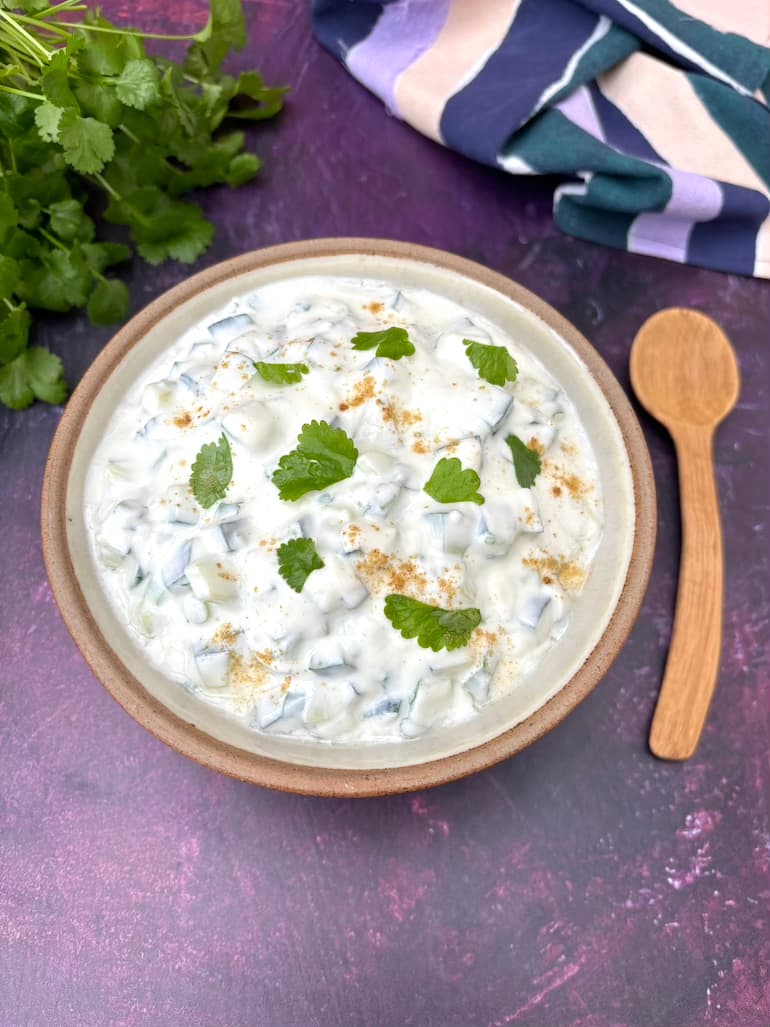
You only need four ingredients, including salt, to make this simple raita recipe. But there are options to jazz it up further if wished. This yoghurt and cucumber traditional Indian side dish serves as a refreshing accompaniment to fiery curries as it cools and cleanses the palate. Moreover, it doubles as a versatile dip, perfect for pairing with snacks such as onion bhajis, pakoras and samosas.
Dive Right In
- What’s The Difference Between Raita and Tzatziki?
- Why Make This Simple Raita?
- Simple Raita
- Ingredients
- How To Make Simple Raita
- How To Make Vegan Raita
- What To Serve With Raita
- Keep In Touch
- The Recipe
What’s The Difference Between Raita And Tzatziki?
Raita and tzatziki are similar dishes, but from differing parts of the world. Raita comes from India and tzatziki from Greece. They’re both made with yoghurt and cucumber, but there are a number of differences.

Raita has more of a saucy consistency whereas tzatziki is thicker. It generally contains coriander leaves (cilantro) as opposed to mint or dill which are nearly always in tzatziki. Additional ingredients often differ too.
Raita is usually made with chopped cucumber whereas you normally find the cucumber is grated in tzatziki.
Why Make This Simple Raita Recipe?
As recipes go, this one for raita is as straightforward as it gets. It’s an essential side dish for any good curry night but also works as a dip or snack in its own right.
But if that’s not enough for you, here are a few more reasons why you might like to make this simple raita recipe.
- Budget-Friendly – With just a few inexpensive ingredients, this simple raita recipe is an affordable way to add flavour and variety to your meals. It’s a budget-friendly option that doesn’t compromise on taste or quality.
- Healthy – Yoghurt and cucumber are both nutritious ingredients. They’re packed with vitamins and minerals as well as probiotics that support gut health. But coriander (cilantro) also has a surprising number of health benefits which might just make you want to consume it more often. (Ref: Healthline)
- Pairs Well with Various Cuisines – Although raita is a traditional Indian dish, it actually complements a wide range of cuisines, including Middle Eastern and Mediterranean. You can use it to dip bread into, as a topping for roasted vegetables or a side dish alongside curries, biryanis, fritters or vegetable kebabs.
- Quick and Easy – With just four simple ingredients, my raita recipe is incredibly easy to make. As side dishes go, it’s a breeze, which makes it perfect for busy weeknights as well as a last minute addition to your meals.
- Refreshing and Cooling – Raita is known for its cooling properties, thanks to ingredients like yoghurt and cucumber. It’s especially effective during hot weather or served alongside spicy dishes.
- Versatile – Whilst the base recipe is simple and delicious on its own, you can add additional ingredients to reflect your own tastes or to complement the main dish you’re serving. I’ve made a few suggestions in the recipe card at the bottom of this post.
Simple Raita
When I’m eating a hot curry, there’s nothing I want to go with it more than a cooling bowl of raita. Because curries are usually flavoursome enough, I favour a simple and easy to prepare raita to go alongside.
However, sometimes it’s useful to ramp the flavours up a bit. When it’s a stand alone dip with bread, for example, a snack all on its own or accompanied by a fairly plain curry. I’ve given several suggestions for additional ingredients to add to the recipe, if you see fit.
There are other types of raita, but this one with cucumber and yoghurt is the most common.
Ingredients
Although you only need four ingredients to make simple raita, you can see from the photo, that I used three additional ones here. They are spring onions (scallions), a little lemon juice and just a pinch of ground cumin.
Coriander Leaves (Cilantro)
Coriander packs a punch when it comes to flavour. It’s also incredibly healthy. Some people find the taste soapy and consequently don’t like it. If that’s the case for you, swap it for fresh mint.
Cucumber
An English cucumber is best for this recipe, though you only need half a one. Just make sure it’s nice and firm. Soft cucumber just isn’t the right texture. You want crunch.
Incidentally, if you’re looking for a recipe to use up the other half of the cucumber, why not try this classic Chinese side dish, din tai fung cucumber?
Salt
Raita isn’t meant to be particularly salty, so you only need a small amount. It’s best to use fine salt for raita rather than large grains or flakes. This is to ensure that the salt dissolves and is evenly distributed. Use sea or rock salt if you can.
Yoghurt
You need ordinary natural yoghurt to make Indian raita. Greek yoghurt is too thick. If that’s all you have, you’ll need to water it down a little. Either that or add some lemon juice.
How To Make Simple Raita
There’s not much more to this simple raita recipe then a bit of chopping and stirring. However, I’ve given some step-by-step instructions along with a few tips, just in case you need them.
Please refer to the recipe card at the bottom of this post for full instructions, timings and quantities of ingredients used.
Step 1. Prepare Cucumber
Wash the cucumber and pat it dry with a clean tea towel or piece of kitchen paper. Alternatively give it a good shake and leave to drain. There’s no need to peel it.
Cut the cucumber in half lengthways and, using a teaspoon, scoop out the watery seeds in the middle. I scrape them straight into the compost bin.
Using a sharp knife, finely chop the two halves. Transfer them into a medium sized mixing bowl.
Step 2. Add Remaining Ingredients
With the same sharp knife, chop the coriander leaves (cilantro) as fine or as chunky as you like. Include any soft stems too. If you don’t like coriander, swap it for fresh mint.
Add it along with the remaining ingredients to the cucumber bowl and give a good stir. If you fancy any of the optional extras, this is the point to add them too.
Taste test and add more salt if needed or any more of the optional extras.
Place the bowl in the fridge and leave for twenty minutes for the flavours to develop. In fact it’s fine to leave it up to two hours. If, however, you plan on making the raita more than two hours in advance, leave the coriander out and add it not long before serving.
It’s likely some of liquid will separate out as it rests, just give it a final stir before serving.
Top Tip
If adding spring onions (scallions), soak them in lemon juice for ten minutes before adding any other ingredients. The citrus tempers the onion and softens its harsh flavour. It also makes them more digestible.
Step 3. Serve Raita
Transfer the raita to a suitable serving bowl, if liked and garnish with chopped coriander and/or a dusting of ground cumin.
How many people this amount or raita actually serves very much depends on what you’re eating it with and whether it’s to accompany a starter or a main.
Although it’s best made fresh, any leftovers will keep in a covered container in the fridge for a couple of days. Just give it a good stir before serving.
How To Make Vegan Raita
It’s very easy to make vegan raita. Simply swap the dairy yoghurt for a plant-based one. Coconut-based yoghurt works particularly well with Indian cuisine.
You can even try making your own vegan yoghurt, as in this recipe from Glow Diaries.
What To Serve With Raita
Raita is really a side dish to serve alongside spicy curries. However, it also works well as a dip for bread, a sauce for fritters and as a standalone light lunch dish or snack.
It’s usually one of the dishes included in an Indian thali. A vegetarian thali is my absolute favourite menu item to order when we eat out at an Indian restaurant. If you’ve not had one before, it’s the best option if you can’t decide what to eat as it’s essentially a selection of curries. They’re presented in little bowls on a platter and come with bread and / or rice.
Here are a few specific suggestions as to what to serve alongside a bowl of simple raita.
- Aloo gobi
- Black bean curry bowls
- Easy paneer jalfrezi
- Roasted carrots & lentil curry
- Smoky sweetcorn pepper fritters
- Vegan keema paratha and maybe an Indian style chutney
Keep in Touch
Thank you for visiting Tin and Thyme. If you make this simple raita recipe, I’d love to hear about it in the comments below. Do you have any recommendations or advice for what to serve with it?
Please rate the recipe. If you post pictures of your creations on social media, use the hashtag #tinandthyme so I can see them.
For more delicious and nutritious recipes follow me on Twitter, Facebook, Instagram, Flipboard or Pinterest. And don’t forget to SUBSCRIBE to my weekly newsletter. Or why not join the conversation in our Healthy Vegetarian Whole Food Recipes Facebook Group?
If you’d like more Indian recipes, follow the link and you’ll find I have quite a lot of them. All delicious and nutritious, of course.
Choclette x
Simple Raita. PIN IT.
Simple Raita Recipe
Ingredients
- ½ cucumber
- 1 tbsp coriander leaves (cilantro) finely chopped
- 175 g natural yoghurt
- ⅛ tsp fine sea salt
Optional Extras
- ⅛ tsp ground cumin
- 1 tbsp lemon juice
- 2 spring onions (scallions) finely sliced
- 1 clove garlic finely grated
- 1 tomato deseeded and finely chopped
- 1 green chilli deseeded and finely chopped
Instructions
- Cut the cucumber in half and scrape out the seeds using a teaspoon. Finely chop the flesh and transfer to a mixing bowl.½ cucumber
- Add the remaining ingredients and give a good stir. This is also the point to add in any of the optional extras.1 tbsp coriander leaves (cilantro), 175 g natural yoghurt, ⅛ tsp fine sea salt
- Taste test and add more salt if needed or any more of the optional extras.
- Place in the fridge and leave for at least 20 minutes for the flavours to develop and anything up to two hours. Give another stir before serving.
- Transfer to a suitable serving bowl, if liked and garnish with chopped coriander or a dusting of ground cumin.