
Gâteau Breton: Made With Wholemeal Flour
A traditional gâteau Breton recipe, but made with wholemeal flour for added depth and character. It’s rich and buttery rather than light and spongy and leans more towards shortbread than cake. The apricot filling is optional, but highly recommended. Keeps beautifully for days and travels well too.
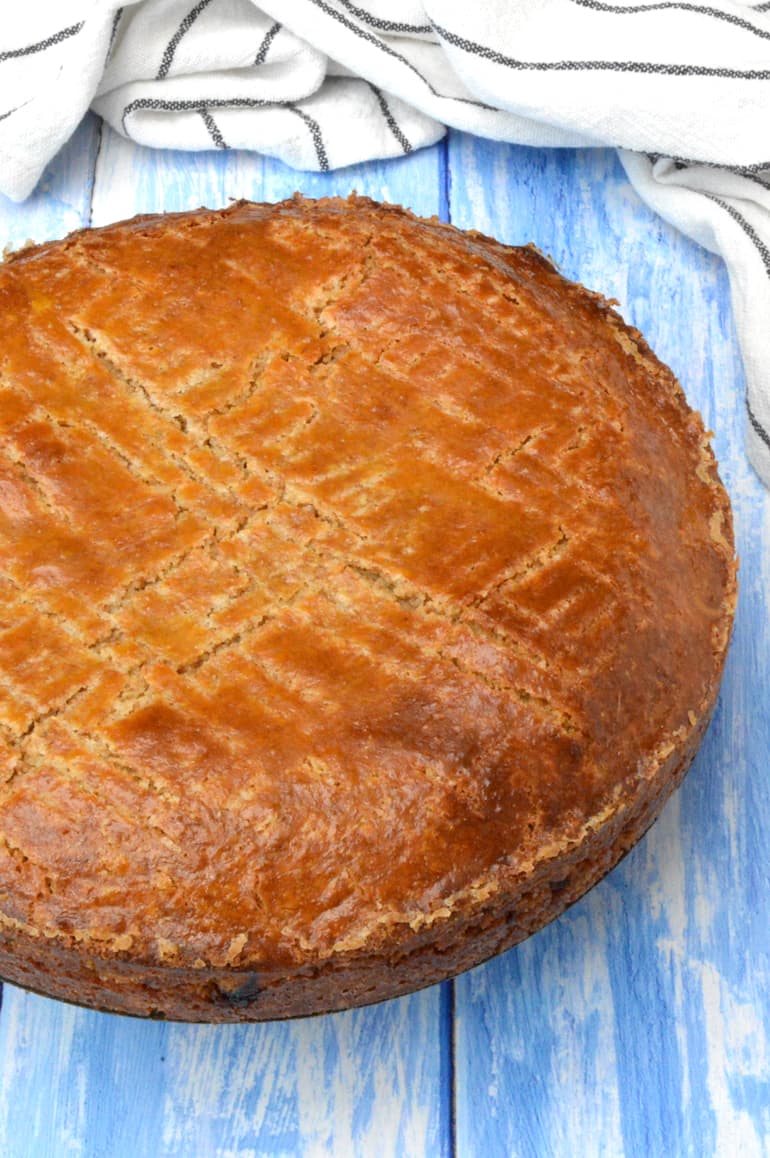
Back home in Cornwall, a Breton friend used to organise an annual summer solstice walk. The aim was to head to a beautiful spot and watch the sun sink over the horizon. Inevitably, with our fickle Cornish weather, we didn’t see it very often. But the walks were always fabulous and ended back at my friend’s house with tea and gâteau Breton. Formidable!
Dive Right In
- Why You’ll Want To Make This Gâteau Breton
- Wholemeal Gâteau Breton
- Ingredients, Additions And Substitutions
- How To Make Gâteau Breton
- Other Recipes For French Bakes You Might Like
- Keep In Touch
- Pin It
- The Recipe
Why You’ll Want To Make This Gâteau Breton
- Deep Buttery Flavour – With plenty of butter and wholemeal flour, this bake is rich, nutty and satisfying. It has a texture that leans more towards shortbread than cake.
- Keeps Beautifully – This gâteau keeps well for several days. It improves both in flavour and texture. It’s ideal for making ahead or savouring over time.
- Less Sweet, More Flavour – Unlike many cakes, it isn’t overly sugary, just deeply satisfying.
- Optional Apricot & Brandy Filling – Sweet, almost toffee-like unsulphured dried apricots simmered in brandy bring a fragrant, grown-up warmth to the centre of the cake.
- Simple and Traditional – A classic French butter cake from Brittany, made with just four ingredients – no fuss, no frills, just solid comfort.
- Taste of Brittany at Home – This is a slice of French baking heritage with a nourishing, modern twist.
- Travel-Friendly – Gâteau Breton is a sturdy bake. This makes it ideal to take on picnics, wrap as a gift or carry to gatherings without it falling apart.
- Versatile – Serve it plain with tea, or dress it up with clotted cream, crème frâiche or fresh fruit on the side.
- Wholemeal Twist – The use of wholemeal flour adds a wholesome, rustic touch and boosts the flavour, without compromising on indulgence.
Wholemeal Gâteau Breton
Gâteau Breton is a rustic French butter cake from Brittany. It’s a sturdy bake, originally made to sustain fishermen at sea and was known as gâteau de voyage (travel cake). For this very reason it holds together well and slices cleanly with few crumbs.

Brittany is famed for its rich creamy butter, so it’s perhaps no surprise that their beloved cake is chock full of it. And goodness, does it taste all the better for it.
A classic gateau Breton is made with just four ingredients, though it sometimes includes a prune filling. I’ve made mine with less traditional apricots and I have to say it makes a most delicious and sweet contrast to the rich buttery cake.
Whether you choose to add the apricot and brandy filling is entirely up to you, but I strongly recommend the apricots.
Not only is the cake full of butter, but it uses quite a few egg yolks too. The question is, what to do with the remaining egg whites? That’s easy, make friands of course. I made lemon curd friands with the ones left over this time.
Lemon Curd Friands
I used my recipe for raspberry rose friands, but upped the quantities times three. Instead of rose extract I grated in the zest of an organic lemon and swapped a swirl of homemade lemon curd for the raspberries.
Other friand recipes are available.
Ingredients, Additions and Substitutions
There are only four ingredients needed to make a traditional gâteau Breton – filling notwithstanding. A filling is sometimes included, but often not. It’s entirely optional.
Butter
If you can get hold of a good salted Breton butter for this recipe, so much the better. The higher quality the butter, the richer the gâteau will be.
I tend to use unsalted butter with a couple of pinches of fine sea or rock salt. This makes a good substitute for high quality salted butter as unsalted butter is generally higher in fat content than salted.
Flour
As anyone familiar with Tin and Thyme will know, wholemeal spelt flour is my favourite to use in sweet bakes. However any wholemeal flour will work in this recipe. It’s meant to be a somewhat solid affair.
Sugar
Caster or granulated sugars both work for this bake. I like to use golden caster sugar as it’s slightly less refined and has subtle caramel tones. It’s fine to use white sugar though, if that’s all you have.
Apricots
Prunes are the more traditional fruit to use in a gâteau Breton. They work really well, but as it’s not a particularly sweet bake, I like the toffeeish sweetness that comes from unsulphured dried apricots.
Do try to hunt down the brown unsulphured apricots. Not only are they delicious, but they’re natural too. Dried orange apricots have sulphur added to keep them that colour.
And if you prefer to use prunes, go for it. Both are good for you in their different ways.
Brandy
Rum tends to be the alcohol of choice when going for prunes in this bake. My thinking is that brandy is better suited to apricots. It’s also more French.
How To Make Gâteau Breton
Gâteau Breton is a really simple cake to make. It’s meant to look rustic, which leaves ample wriggle room for imperfections, wonky edges or a slightly cracked top.
Please refer to the recipe card at the bottom of this post for cooking temperatures and quantities of ingredients used.
Step 1. Cook Apricots
Place the apricots in a small lidded saucepan and add the water. Put the lid on and bring the apricots to a gentle simmer. Cook for ten minutes or until they’re soft.
Turn the heat off, add the brandy and leave to cool a little with the lid still on.
Step 2. Make Dough
Measure the flour and sugar and tip into a large bowl. Take the butter out of the fridge and cube it. It needs to be cold so that it doesn’t melt.
Rub the butter pieces into the flour and sugar with your fingertips until the mixture resembles breadcrumbs.
In a small jug, beat the egg yolks with a fork. Make a well in the centre of the flour mix and tip in all but two teaspoons of the beaten egg. You’ll need the extra bit later for brushing the top of the cake.
You don’t need to be too exact, so it’s fine to judge this bit by eye.
Stir the eggs in with a round bladed knife or fork until it forms a sticky dough.
Bring the mix together with your hands, then cut it in half. Pat one half into a small but smooth disc and place in a plastic bag. Refrigerate whilst you deal with the other half.
Step 3. Assemble Cake
Butter your tin and line the bottom with baking paper if you think it needs it. Press the remaining dough half into the tin to create an even base layer. A spatular or back of a spoon is best for this, though fingers will work at a pinch.
Blend the apricots to a thick purée using a stick blender or a mini food processor. Spread the puree over the base leaving a narrow border around the edge.
Take the dough out of the fridge and pat it into a flat disc with your hands so it’s more or less the same size as the tin. It will be too sticky to roll and you don’t want to add any additional flour.
Place the disc over the apricots and stretch it if necessary to fit the tin. Press the edges down well with your fingers to seal in the filling.
Generously brush the top with the reserved beaten egg yolk, then run a fork lightly across the top to form a criss cross pattern.
Alternatively, ditch the filling and just press all of the dough straight into the pan.
Step 4. Bake Cake
Bake in the centre of the oven until firm and lightly bronzed all over.
Leave to cool in the tin for fifteen minutes or so, then turn out onto a wire rack to cool completely.
Top Tip
Don’t use a spring form tin or the butter may melt out into the oven.
Step 5. Serve Or Store
Transfer the cake to a suitable plate or stand, then serve small slices, just as it is, with a cup of tea or coffee. If liked, you can dress it up with clotted cream, crème fraîche and/or fresh berries.
The gâteau keeps well and will last for at least a week. Wrap it in parchment paper and store in a well sealed container. There’s no need for a fridge.
Other Recipes For French Bakes You Might Like
- Blackcurrant rose honey cakes (nonnettes)
- Diamond biscuits (diamants)
- Clafoutis
- Honey madeleines with thyme
- Salted butterscotch chocolate fondants
- Vegan King cake (galette des rois)
You’ll find several recipes here on Tin and Thyme for ways to use up the leftover egg whites.
Keep in Touch
Thank you for visiting Tin and Thyme. If you make this wholemeal gâteau breton, I’d love to hear about it in the comments below. Do you have any recommendations or tips for making rustic French cakes?
Please rate the recipe too. And do tag me @choclette8 on Instagram with your images, I love to see your take on my recipes.
For more delicious and nutritious recipes follow me on Twitter, Facebook, Instagram, Flipboard or Pinterest. And don’t forget to SUBSCRIBE to my weekly newsletter. Or why not join the conversation in our Healthy Vegetarian Whole Food Recipes Facebook Group?
If you’d like more recipes using dried apricots, follow the link and you’ll find I have quite a lot of them. All delicious and nutritious, of course.
Choclette x
Gâteau Breton. PIN IT.
Gâteau Breton: Made With Wholemeal Flour
Ingredients
Filling
- 100 g dried apricots unsulphured
- 50 ml water
- 2 tbsp brandy
Cake
- 320 g wholemeal flour (whole wheat) (I used wholemeal spelt flour)
- 200 g golden caster sugar
- 250 g salted butter fridge cold and cut into pieces
- 6 egg yolks medium sized
Instructions
Filling
- Place the apricots into a small lidded saucepan and add the water. Put the lid on and bring the apricots to a gentle simmer. Cook for ten minutes or until they’re soft.100 g dried apricots, 50 ml water
- Turn the heat off, add the brandy and leave to cool with the lid on.2 tbsp brandy
- Once it's no longer hot, blend the apricots to a thick purée using a stick blender or a mini food processor.
Cake
- Whilst the apricots are cooking, place the flour and sugar into a large bowl, then add the butter. Rub the butter pieces into the flour and sugar with your fingertips until the mixture resembles breadcrumbs.320 g wholemeal flour (whole wheat), 200 g golden caster sugar, 250 g salted butter
- Beat the egg yolks with a fork and tip all but two teaspoons into the flour mix.6 egg yolks
- Stir the eggs in with a round bladed knife until it forms a sticky dough.
- Bring the mix together with your hands and cut in half. Flatten one half into a small disc and place in a plastic bag, then refrigerate whilst you puree the filling.
- Set the oven to 180℃ (160℃ fan, 350℉, Gas 4).
- Butter a 20 cm (8 inch) round tin and line the bottom with baking paper if you think it needs it. Press the remaining dough half into the tin, creating an even base layer.
- Spread the apricot puree over the base leaving a 1cm border around the edge.
- Take the dough out of the fridge and pat it into a flat disc the same size as the tin. It will be too sticky to roll and you don’t want to add any additional flour.
- Place the disc over the apricots and press the edges down well to seal.
- Generously brush the top with the reserved beaten egg yolk, then run a fork lightly across the top to form a criss cross pattern.
- Bake in the centre of the oven for 40 minutes.
- Leave to cool in the tin for fifteen minutes or so, then turn out onto a wire rack to cool completely.