Italian Chestnut Cake: Castagnaccio
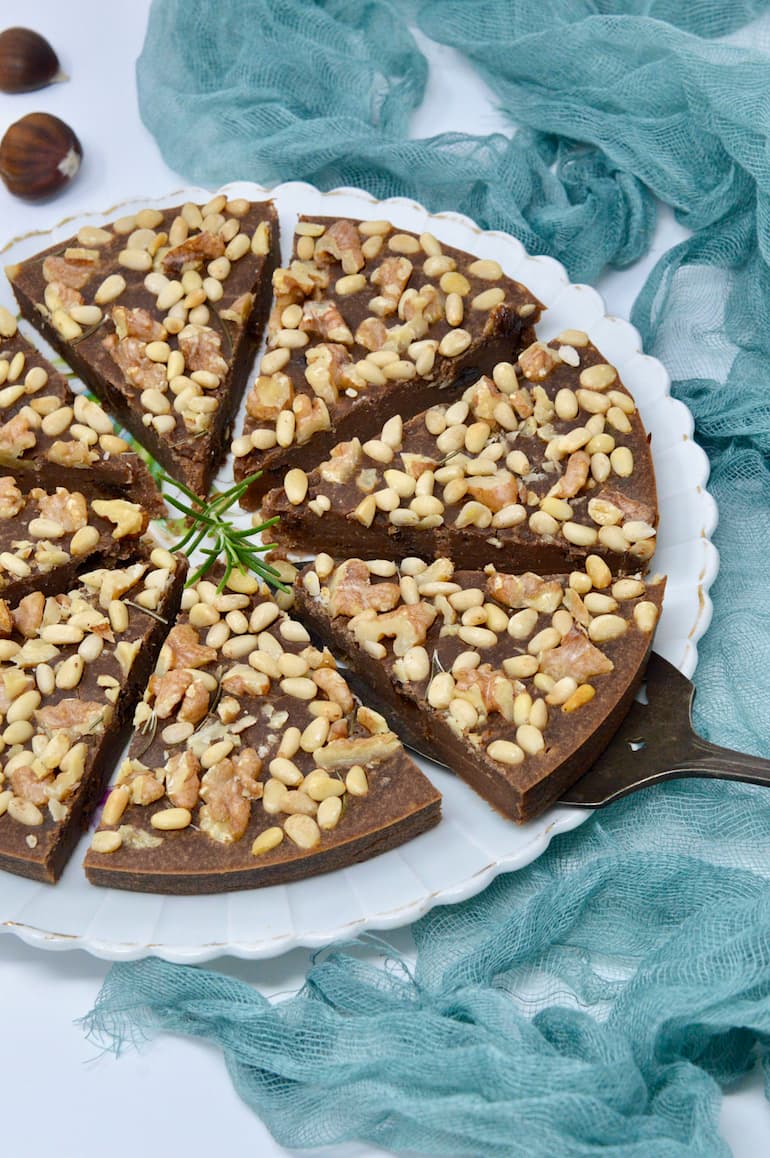
If you like chestnuts you’re in for a treat with this Italian chestnut cake recipe. It has a crunchy nutty top and a satisfyingly fudgy base. In fact it’s more fudge-like than cake-like. Castagnaccio, is a very simple bake subtly infused with honey and rosemary. As it’s both dairy and egg-free, it’s very nearly vegan. It’s also naturally gluten-free.
This post may contain affiliate links. As an Amazon Associate, I earn from qualifying purchases. See my cookie and privacy statement for further details.
What Is Castagnaccio?
Castagnaccio is a simple Italian chestnut cake topped with crunchy nuts and gently infused with rosemary. Traditionally the nuts are pine nuts and walnuts. The base contains very few ingredients, mostly chestnut flour and water.
The cake originally hails from Tuscany, but is now common in Liguria, Piedmont and Lombardy and other northern regions of Italy too. The name comes from castagna, which is the Italian word for chestnuts.
It’s a winter treat, enjoyed once the chestnuts have not only been gathered in, but also dried and turned into flour.
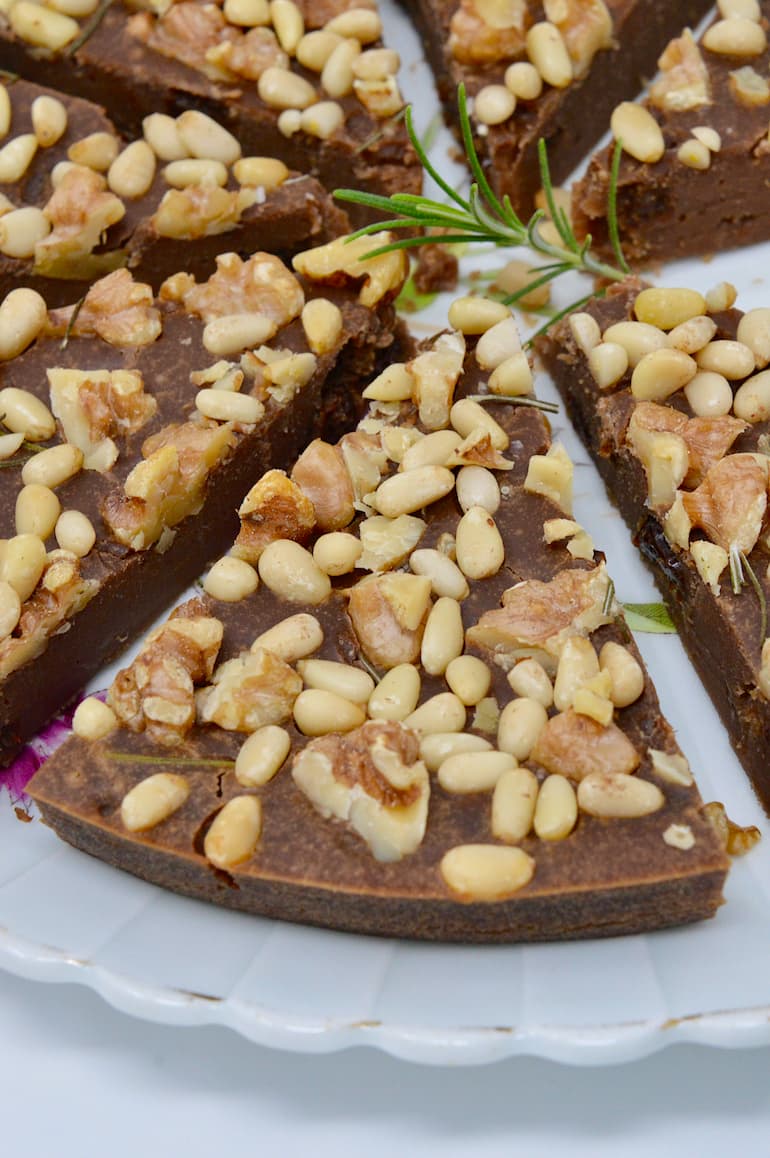
It needs only a handful of ingredients and is naturally dairy-free, egg-free and gluten-free. There’s only a small amount of fat and sweetener too. Yes, a healthy dessert!
And yet, it’s so much nicer than you might think. Really delicious in fact and it’s perfectly sweet enough.
It is not a light and airy sponge. One author – I forget who – likened it to old fashioned bread pudding. I can sort of see what they mean. It’s dense and filling alright, but I think it’s more like chestnut fudge. Not anything like as sweet, but in texture it’s almost an exact match.
Italian Chestnut Cake
Although you can now buy chestnut flour all year round, I feel the flavours are best enjoyed during winter, especially on the run up to Christmas. This Italian chestnut cake has a wonderful crunchy top and a dense but fudgy and flavoursome base.

I haven’t added any refined sugar to my castagnaccio, but I have used a little honey. It doesn’t need much as good quality chestnut flour is naturally sweet. And then there are raisins for added sweetness.
If you’re vegan, the only animal based product is honey and you can always substitute that for a plant-based alternative. Or use sugar; these days it’s commonly used. Alternatively, go traditional and leave the added sweetener out altogether.
Italian Chestnut Cake: Ingredients
This Italian chestnut cake is really a very healthy bake. It’s loaded with nutritious ingredients. As it happens, there are no eggs or dairy products and only a small amount of fat and sugar.
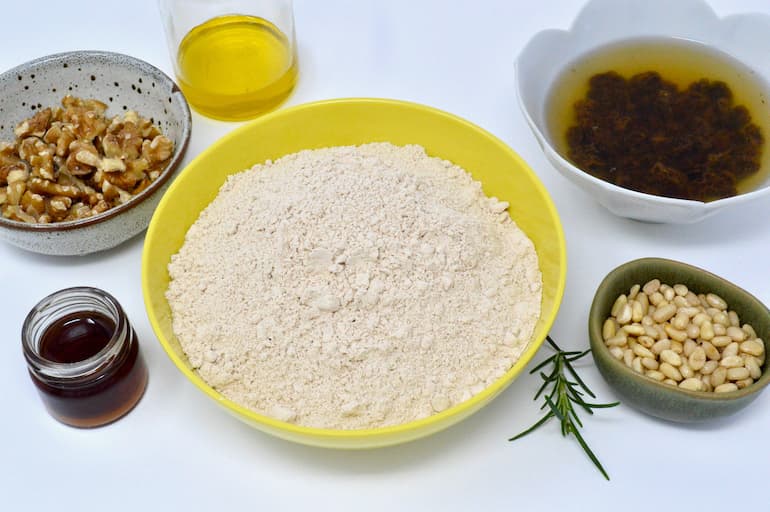
Chestnut Flour
I’ve baked with chestnut flour a few times and I really like it. Mostly, however, I add it to other bakes such as these wholemeal clotted cream shortbread biscuits. This is the only bake where I use one hundred percent chestnut flour.
Chestnut flour is high in protein, dietary fibre and various vitamins and minerals. It’s also gluten-free and quite sweet. This means you don’t need to add a lot of additional sweeteners to this castagnaccio. Traditionally chestnut flour provided the only sweetness, but as bakers became wealthier, they added raisins and later honey. These days, it’s quite common to use sugar.
The flour is also very absorbent.
Although very common in Italy, it’s not the easiest to source here in the UK. You can, however, get chestnut flour* online.
The flour I used for this chestnut cake came from an Italian colleague of CT’s who gets it from a farm near to her home in Liguria. Che fortuna!
Honey
These days this Tuscan chestnut cake is more often made with sugar than honey. I’ve never tried it with sugar, but I can attest it’s delicious with honey. Swap the honey for sugar though and this castagnaccio is vegan.
However, if you can get hold of it, chestnut honey* makes for the most perfect combination. Chestnut honey is one of my favourites, but you may have to search for it. I made this cake with a local honey from just around the corner to where I live.
Olive Oil
There is a small amount of olive oil in this Italian chestnut cake. Use a good quality extra virgin olive oil, preferably one with smoky notes.
Raisins
You can use either raisins or sultanas in this cake. Both add sweetness and a bit of texture.
Walnuts
Walnuts are nutritional powerhouses. It may be a coincidence that these nuts look like a human brain, but they are actually good for our brains. They’re rich in alpha-linolenic acid and contain more polyphenolic compounds than any other nut. Both of these are considered critical brain foods. (Ref: Nutrition 2023)
Pine Nuts
Pine nuts are a true taste of Italy. Like most nuts they’re highly nutritious, but just as importantly, they are also delicious. They are however expensive to buy. Luckily, this castagnaccio only uses a few of them.
Rosemary
Rosemary adds a subtle fresh and herby fragrance to the bake. It’s not essential, but it is traditional and it is very good for both the immune system and memory.
Castagnaccio: Step-by-Step
This Italian chestnut cake has to be one of the quickest and easiest cakes to prepare. Apart from soaking the raisins and chopping a few walnuts, it’s virtually a case of stirring everything together. And you don’t need any special equipment either.

Step 1. Soak Raisins
Cover the raisins or sultanas with warm water and leave to soak for at least ten minutes. If you can manage it for longer so much the better, as you want them nice and plump. Overnight is ideal.
Top Tip
Soak the raisins in two tablespoons of vin santo, marsala or Sambuca. Drain the raisins and top up any residual liqueur with the requisite amount of water.
Step 2. Prep Everything Else
Whilst the raisins are soaking prep the ingredients and prepare the tin. I use a lightly oiled shallow silicone mould, but if you have a tin, it’s a good idea to line the bottom with baking paper.
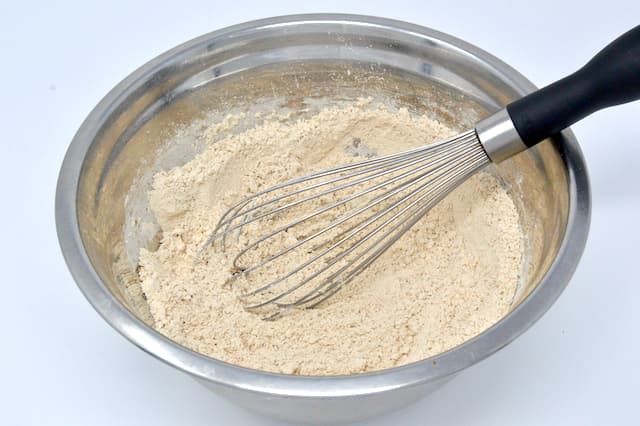
Either sieve the flour and salt into a medium sized mixing bowl or whisk out any clumps once the flour and salt are in the bowl.
Roughly chop the walnuts.
Top Tip
I’ve heard that a true castagnaccio shouldn’t be much above one centimetre (0.4 of an inch) in height. And I can see why. If you go for a deep one, I suspect the top would crack really badly whilst the middle remains almost raw.
Step 3. Add Water
Drain the raisins in a sieve, but catch the water in a measuring jug. It’s sweet and raisin flavoured and it would be a shame to waste it.
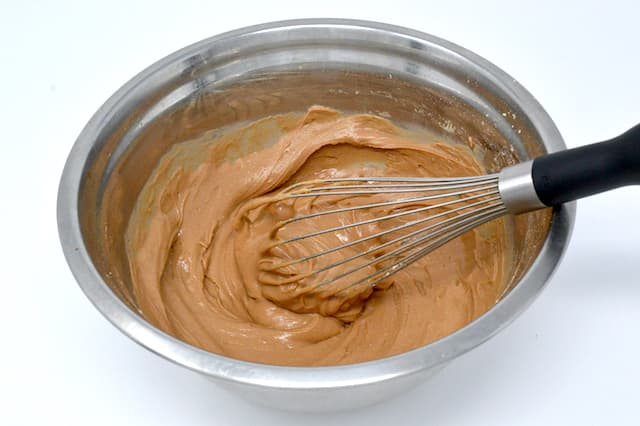
Add enough fresh water to make it up to the requisite amount. Then pour it into the bowl and whisk into the flour until combined and no lumps remain.
Step 4. Add Oil, Honey And Raisins
Measure the oil and honey then whisk them into the chestnut batter until combined. Try not to over mix or the mixture might turn gloopy.
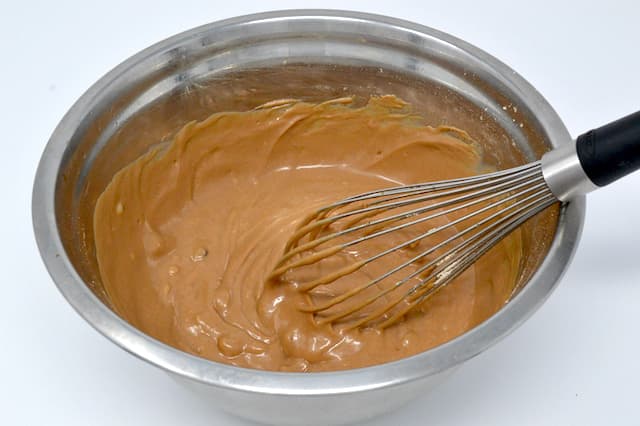
Stir in the drained raisins.
Step 5. Add Nuts And Rosemary
Scrape the castagnaccio batter into the prepared baking tin. Level it with the back of a spoon and give it a sharp bang on a work surface to release any possible air pockets.
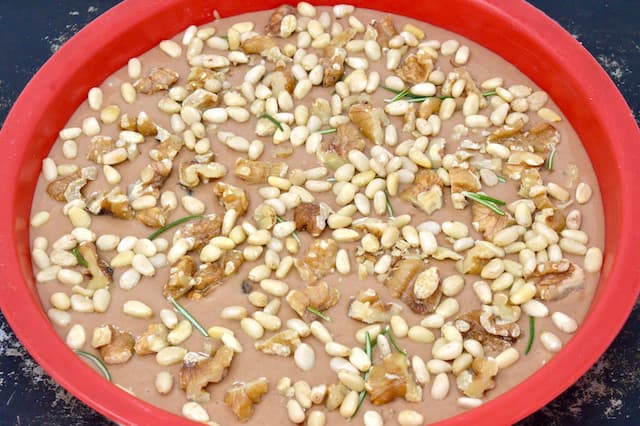
Scatter the walnuts, pine nuts and needles from the rosemary sprig over the top.
Top Tip
If you use a silicone mould as I do, make sure you place it on a baking tray before you add the cake batter to it.
Step 6. Bake
Place the cake on the middle shelf of the oven. Bake until the top is firm to the touch and cracks are starting to develop. The nuts should be nicely golden.
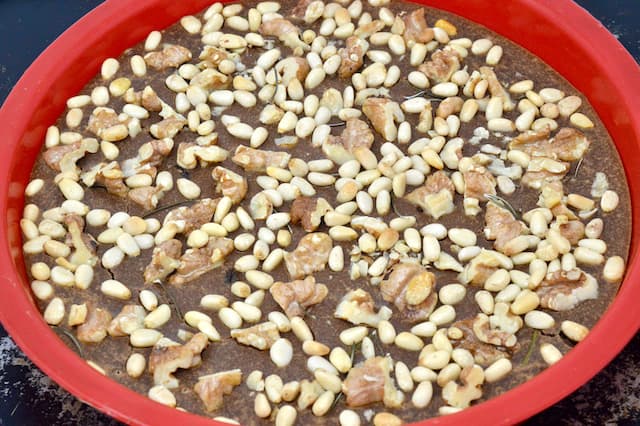
It’s fine to have cracks, but the hotter the oven, the more cracked the cake will appear. This Italian chestnut cake does better in a cooler oven.
How To Serve Castagnaccio
It’s traditional to drizzle honey over the cake just before serving. Or provide a jar of honey so people can help themselves. CT and I find this castagnaccio quite sweet enough and don’t need any additional honey. But it’s a nice touch for those with a particularly sweet tooth.

It’s also often served with ricotta cheese and/or a glass of vin santo.
It cuts into eight modest slices. But this Italian chestnut cake is really quite rich and a little goes a long way.
How Long Does Castagnaccio Keep?
Castagnaccio will keep in a covered container at room temperature for three to four days. However, it is best eaten on the day of baking as the nuts lose their crunch after a while. It does not freeze well.
Italian Chestnut Cake: Variations
Personally, I like my castagnaccio just the way it is. But it’s always good to have options. Here are a few ideas to ring the changes or make it more to your liking.
As already discussed you can leave out the honey altogether, use alternatives such as date syrup or swap it for sugar.
Orange Castagnaccio
Grate in the zest of an orange and replace some of the water with the juice. Use an organic orange if possible. An unwaxed orange is next best and if you can’t get hold of either, give the skin a good scrub with soap and water before using it.
Boozy Castagnaccio
Soak the raisins in two tablespoons of sweet Italian wine or liqueur instead of water. Vin santo, marsala or Sambuca are all perfect for this. Drain the raisins and top up any residual liqueur with the requisite amount of water.
Chocolate Castagnaccio
Then there’s chocolate. You can add cocoa powder to the mix for a richer and slightly bitter tone. Thirty grams should do the trick.
Other Chestnut Recipes You Might Like
- Chestnut brownies
- Chestnut cream meringue cake
- Chilli chocolate chestnut cake
- Chocolate chestnut yule log
- Mushroom & chestnut sausage rolls
- Tempeh & chestnut stuffing (vegan)
Keep in Touch
Thanks for visiting Tin and Thyme. If you make this castagnaccio, I’d love to hear about it in the comments below. And do please rate the recipe. Have you any top tips? Do share photos on social media too and use the hashtag #tinandthyme, so I can spot them.
For more delicious and nutritious recipes follow me on Twitter, Facebook, Instagram, Flipboard or Pinterest. And don’t forget to SUBSCRIBE to my weekly newsletter. Or why not join the conversation in our Healthy Vegetarian Whole Food Recipes Facebook Group?
If you’d like more Italian recipes, follow the link and you’ll find I have quite a lot of them. All delicious and nutritious, of course.
Choclette x
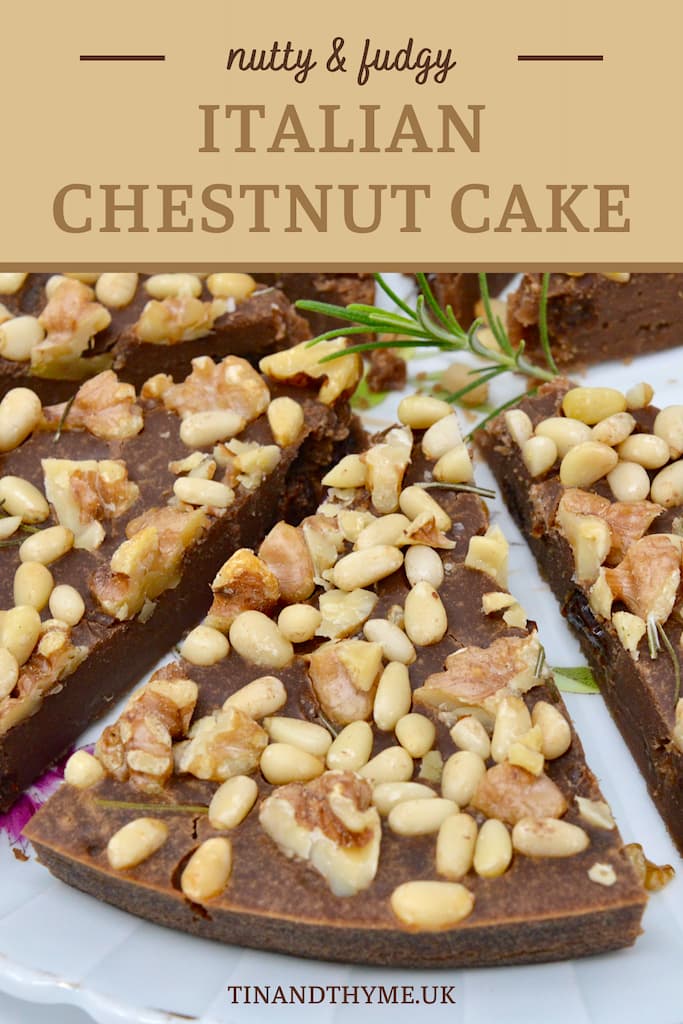
Italian Chestnut Cake. PIN IT.

Italian Chestnut Cake: Castagnaccio
Equipment
Ingredients
- 25 g raisins or sultanas
- 200 g chestnut flour
- pinch sea salt
- 225 ml water
- 40 ml extra virgin olive oil
- 2 tbsp honey
- 30 g walnuts roughly chopped
- 20 g pine nuts
- 1 sprig fresh rosemary
Instructions
- Cover the raisins with warm water and leave to soak for at least ten minutes.25 g raisins
- Preheat the oven up to 160℃ (140℃ fan, 320℉, Gas 3).
- Meanwhile, prep all your other ingredients, including chopping the walnuts.
- Place the chestnut flour into a medium sized mixing bowl along with the salt and whisk to remove any lumps.200 g chestnut flour, pinch sea salt
- Drain the raisins, catching the water in a measuring jug. Then add enough fresh water to make it up to 225 ml. Pour into the flour and whisk until combined and no lumps remain.225 ml water
- Add the olive oil and honey and whisk to combine again.40 ml extra virgin olive oil, 2 tbsp honey
- Stir in the drained raisins.
- Scrape the mixture into a 20cm round shallow silicone mould or lined tin and level it out with the back of a spoon.
- Remove the rosemary needles from the sprig and scatter them over the top. Then scatter over the walnuts and pine nuts. Press the nuts in slightly with your hands or the back of a spoon so that everything sticks.30 g walnuts, 20 g pine nuts, 1 sprig fresh rosemary
- Bake in the middle of the oven for 30 to 35 minutes. The top should be firm and just starting to crack.
- Leave to cool for fifteen minutes, then turn out onto a serving plate and cut into eight slices.
- Serve warm or at room temperature with a drizzle of honey, if liked.
Notes
Nutrition Estimate
Sharing
I’m sharing this recipe for an almost vegan chocolate chestnut cake with Feast Glorious Feast for #CookBlogShare.
This post contains affiliate links which are marked with an asterisk* or (affiliate link). If you buy through a link, it won’t cost you any more, but I might get a small commission. Thank you for your support of the brands and organisations that help to keep Tin and Thyme blithe and blogging.

Delicious
Agree, it’s a really good one, simple but tasty and not too sweet. Glad you enjoyed it.
Hello,
I’m wondering if it would be possible to make this recipe using ground-up prepackaged roasted chestnuts (which are quite moist). Not even the specialty Italian store near me carries chestnut flour, but prepackaged roasted chestnuts are ubiquitous at dollar stores in Canada. I know I would need to considerably reduce the water and cook for longer… I may try to make this soon and post results in the comments for others who might be curious.
Thank you
Would love to hear how you get on Sofia. Definitely reduce the water but also up the quantities of chestnuts. As I haven’t tried doing this, I can’t really help with exact amounts. However, you should be able to get an idea from the consistency you can see in the step-by-step photos. Just make sure you blend the chestnuts and water so that they’re as smooth as possible.
It turned out as a good cake, although it didn’t hold together very easily. I am allergic to pine nuts and walnuts, but I can eat almonds, so I substituted sliced almonds for the other nuts. I used spruce honey to compensate for the lack of pine nuts.
Spruce honey sounds like an excellent idea Sofia. Glad you enjoyed the cake and thanks for letting us know how you got on. Sorry it didn’t hold together so well. The trouble with baking is that there are so many variables. Perhaps the mixture was a bit dry before cooking and could have done with a little extra water. It’s never an exact science because it depends on how absorbent the particular batch of flour is. Or maybe it was over baked.
Hi would luv to make this very interesting cake, but I have water chestnut flour,can I use that?
Hi Tania. I’ve never used water chestnut flour – it sounds like an interesting ingredient. However, I doubt it would make a suitable substitute. The texture and flavour of this cake is very much dependent on tree chestnuts.
Hi, can I use chestnut in place of chestnut flour? this cake sounds wonderful, thanks!
Hi Eunice. It really depends how experimental you want to be. You’d need to grind or pulverise your chestnuts and then play around with the liquid to chestnut ratio. But in essence I don’t see why it couldn’t work. Chestnut flour is just ground dried chestnuts after all.
I’ve never tried chestnut flour before but this looks right up my street, lovely and dense!
It’s a really tasty cake, especially if you like them dense. Chestnut flour is really quite sweet, but I suspect you’d want to leave out the raisins.
Oh my goodness! This cake sounds INCREDIBLE! And naturally gluten free too
I do believe I have a load of chestnut flour in my larder… Perfect!
Yay for a stash of chestnut flour. It’s a good idea to use it though as it doesn’t stay fresh for that long.
I love the addition of pinenuts. They were a surprise for chocolate cake recipe but they really work.
This chestnut cake just wouldn’t be the same without the pinenuts.
Such an unusual sweet treat. Love this idea.
You know me Janice – I love to bring the unusual to people’s attention.
This sounds absolutely divine. Pinning it to the ‘must try’ list now 🙂
If you like chestnuts it really is a must try Helen.
I love chestnuts in sweets and the flavor combination sounds delish. Thanks for posting, such a pretty picture too.
Thanks Jo, that’s very kind. I’m a big fan of chestnuts too, especially at this time of year.
That looks heavenly with all the chestnuts, pinenuts and walnuts!
Thank you Angie. It’s really lovely even with a minimal amount of added sweetener.