
Quince Cake: A Fragrant, Fruity Autumn Bake
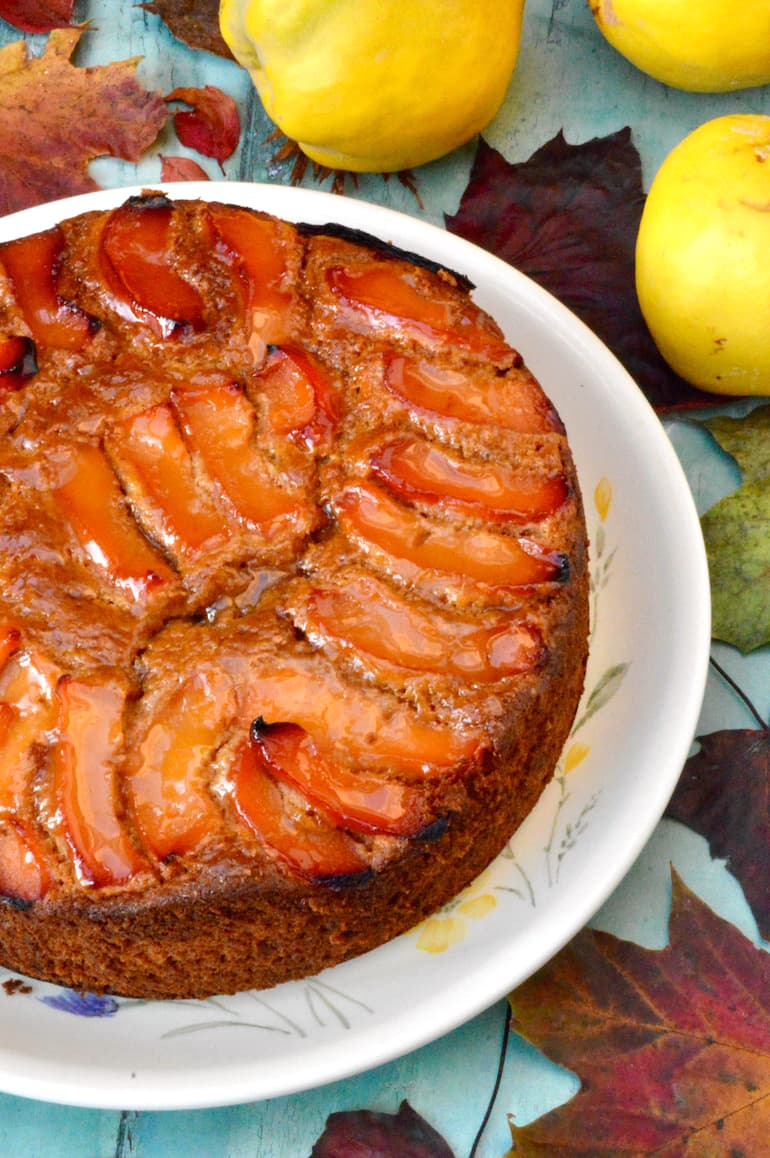
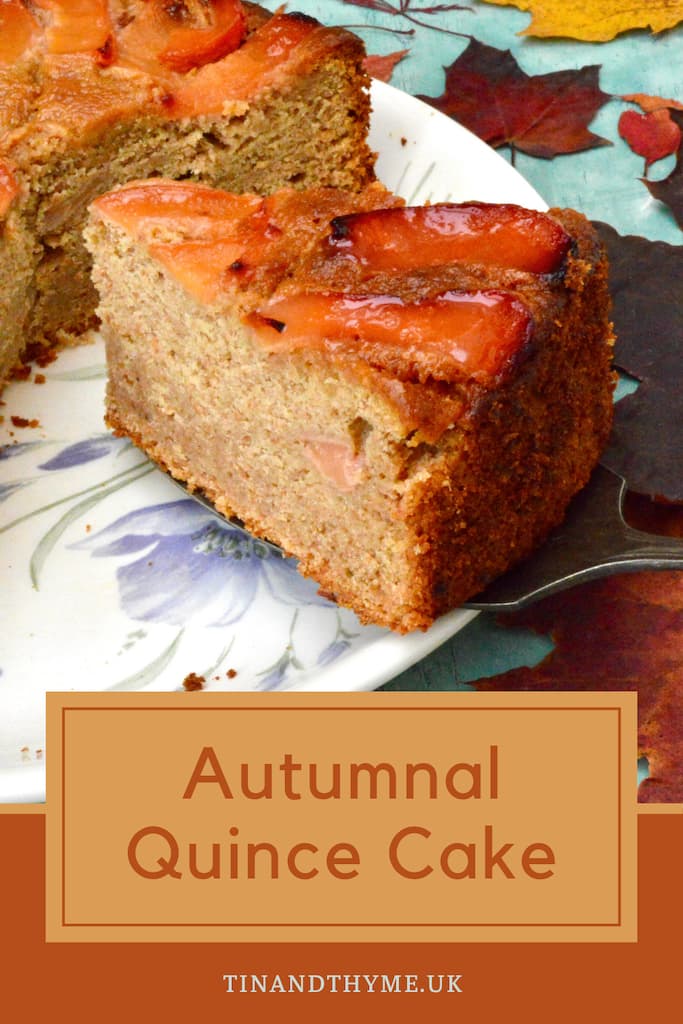
Tender, fruity and fragrant, this quince cake is a true autumnal delight. It’s not a light sponge, but its soft melt-in-the-mouth texture more than makes up for that. The fruit is poached first, with some puréed into the batter and a few syrupy slices arranged on top.
This post may contain affiliate links. As an Amazon Associate, I earn from qualifying purchases. See my cookie and privacy statement for further details.
Whilst out walking in our local neighbourhood recently, I came across a box of quinces that a kind gardener had left on their wall for passers by to take. Needless to say, I took some.
Dive Right In
- Why You’ll Want To Make This Quince Cake
- Quince Cake, Tart or Jelly
- Ingredients, Additions And Substitutions
- How To Make Quince Cake
- Other Fresh Fruit Cake Recipes You Might Like
- Keep In Touch
- Pin It
- The Recipe
Why You’ll Want To Make This Quince Cake
- A little different – Perfect if you’re looking for something to make with quinces other than membrillo or jelly.
- Beautiful flavour – The poached fruit gives the cake a delicate floral aroma and gentle sweetness that’s quite unlike anything else.
- Comforting and autumnal – Ideal for cosy afternoons with a cup of tea or as a dessert with a spoonful of cream or yoghurt.
- Make-ahead friendly – The flavour actually improves after a day or two as it becomes ever more fragrant.
- Tender texture – The cake has a wonderful melt-in-the-mouth texture which feels both comforting and luxurious.
- Uses autumn fruit – A wonderful way to make the most of quinces when they’re in season.
- Visually appealing – The syrupy slices on top are the colour of autumn and make the cake look as good as it tastes.
Quince Cake, Tart or Jelly?
I just adore quince. More than anything it’s that deep floral scent that gets me, though I like its unique flavour too. Just keep two or three in a room and they’ll soon fill it with their heady fragrance.
Usually, when I manage to get my hands on some quinces, my go to recipe is quince jelly. It’s delightful stuff and really quite easy to make. The quince flesh turns from pale yellow, to gold, to deep pink. However, this year I decided it was time to make something different.
Unlike most of my fresh fruit cake recipes where I add the raw fruit straight into the batter, this one needs a little extra preparation. Quinces are quite hard and take time to soften, so it’s best to cook them first before adding to the cake.
I chose to poach the quinces as it’s a technique that works particularly well with this ancient fruit. My quince tart recipe employs the same approach, so I adapted it slightly to suit this cake.
I based my cake on this apple and thyme cake, which is always a winner.
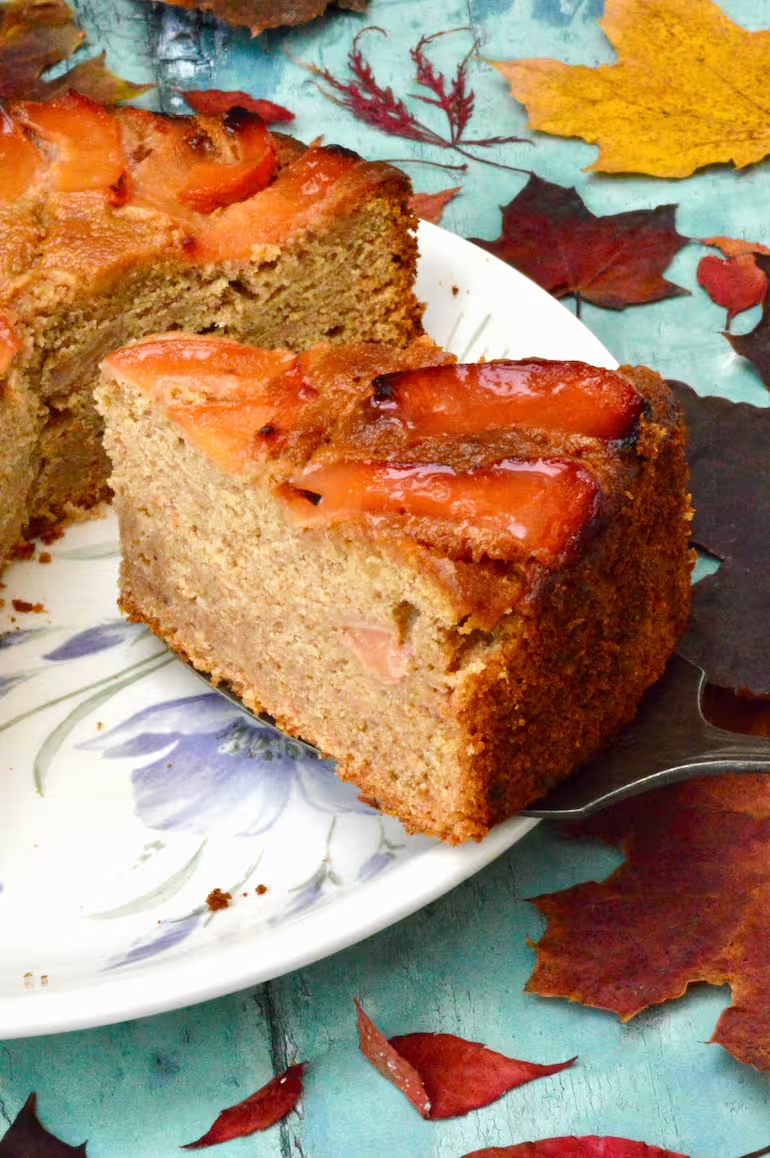
The finished bake has a lovely soft and moist buttery crumb that almost melts in the mouth. It keeps well too and tastes better on days two and three than it does on day one.
Ingredients, Additions and Substitutions
The cake batter in this recipe is a simple one, so apart from the quinces, all you need are standard store-cupboard ingredients.

Quince
Quince (Cydonia oblonga) is a close relative of apples and pears, but not nearly so common. Unlike its cousins, it’s not a fruit that is good to eat raw; it’s both tough and astringent. Cook it, however, and it transmutes into a soft, pink, fragrant delight with a unique floral flavour.
Unless you have a jar of poached quince in your larder, fresh quinces are only available during mid to late autumn. They’re not terribly easy to find unless you live near a good greengrocer, farm shop or farmers market, but you can purchase them online. If you grow your own, you’ll have plenty of course.
Riverford sell organic quinces (affiliate link) in sets of three. And three is just what you need for this recipe. There is a minimum order of £15, but you don’t have to subscribe to a regular veg box if you don’t want to. There’s plenty of lovely things to choose from as well as fruit and veg.
Spices
This is the sort of cake where you want the main ingredient, quinces in this instance, to stand out. So other than the lemon peel and spices that go into the poaching quince, a gentle hint of cloves is all I’ve used in terms of flavouring.
If the flavour of cloves is not your thing, swap it for ground cardamom. Alternatively, use half a teaspoon of ground cinnamon or a teaspoon of ground ginger instead.
How To Make Quince Cake
This bake is made in two parts. First you need to poach quinces and purée some of them. After that it’s pretty much just a case of mixing it into a simple cake batter.
Please refer to the recipe card at the bottom of this post for cooking temperatures and quantities of ingredients used.
Quinces are notoriously hard to deal with when raw. So my top tip is to cook them first. Once soft, they’re easy to handle.
The flesh browns in the air almost as soon as it’s exposed. So my next top tip is to make sure the poaching liquid is ready before you start cutting them. The lemon in the liquid prevents them turning brown.
Step 1. Poach Quinces
Pour the sugar and water into a large lidded saucepan and place over a low to medium heat. Give an occasional stir until the sugar has dissolved.
Pare the lemon, ensuring there’s no pith attached and add the peel to the water along with the juice. Add the clove and cardamom pods.
Wash the quince, rubbing away any fuzz left on their skins. Using a strong sharp knife, quarter the quinces. As soon as you’ve cut them slip them into the syrup.
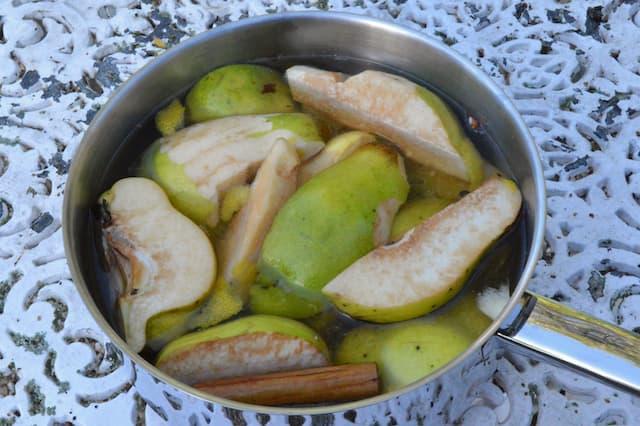
Cover the pan with a lid and bring to a simmer. Allow the quinces to cook gently until a knife slips easily through the skin and into the flesh. You want them soft, but not so much that they’ll fall apart. This will take around thirty minutes.
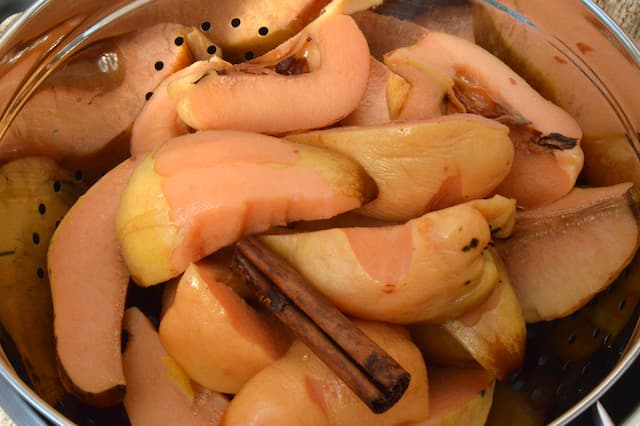
Rest a colander on a wide jug or similar receptacle, so that you can capture all of the liquid. Then pour in the contents of the pan. Leave the quince pieces to drain for a few minutes.
Step 2. Core, Slice and Purée
When the quinces are cool enough to handle, remove the cores with a sharp knife. The cores have a grainy quality that can go quite deep, so make sure you get everything out.
You can also peel the skin at this point, though it’s not strictly necessary. I scrape the worst of it off with a knife – it comes off quite easily.
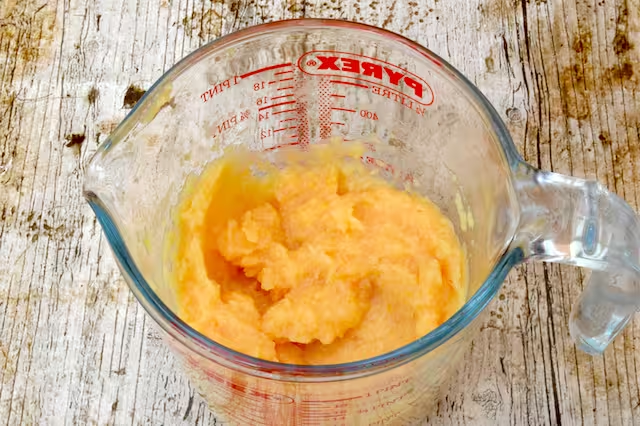
Cut four of the quince quarters into thin slices and reserve to go on top of the cake later. Place the rest in a jug and use a stick blender to turn them into a purée.
Step 3. Make Syrup
Place the liquid back in the pan, add the butter and bring it back to the boil. With the lid off, reduce it down to about half or until it has a syrupy consistency. Take off the heat. You’ll need this for the cake.
Top Tip
Pour any leftover syrup into a sterilised jar and use to eat with ice cream, porridge, rice pudding or yoghurt. It might even set and then you have quince jelly. It keeps for ages.
Step 4. Prepare Cake Batter
Whilst the quinces cook, make a start on the cake batter.
Make sure you take the butter out of the fridge to soften at least half an hour before you need it. I often forget this bit and it’s very annoying.
In a large bowl, cream the softened butter together with the muscovado and golden caster sugars. I add the ground cloves at this point too to ensure it’s thoroughly incorporated into the mix.
A wooden spoon is best for this, although you can use an electric mixer if you prefer. Keep going until the mixture is pale in colour and fluffy in texture.
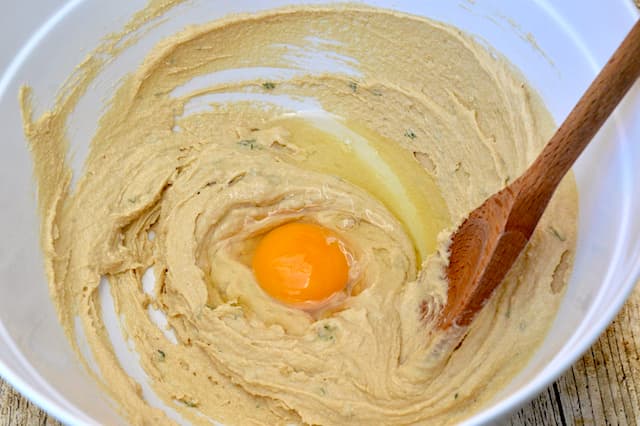
Beat in the eggs, one by one.
Sift in the flour and baking powder and stir until everything is just combined.
Stir in the quince purée – again until just combined.
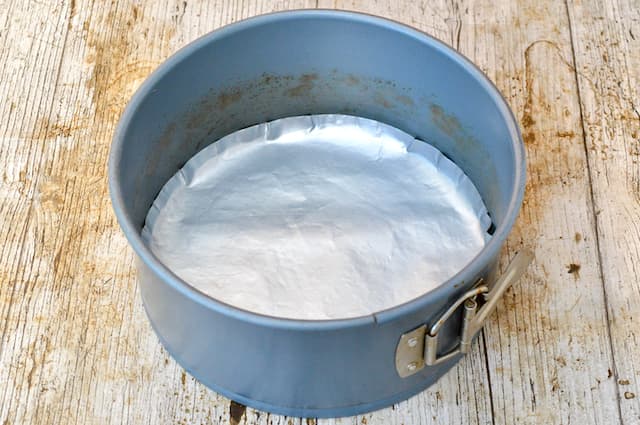
Line the bottom of your cake tin and lightly butter the sides. I have a reusable silicone liner, but otherwise use baking paper. A deep round tin (affiliate link) with a loose bottom will make it easier to remove the cake later.
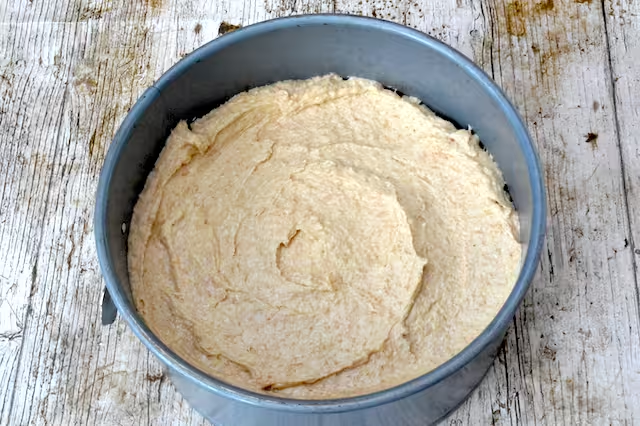
Scrape the batter into the tin and level the top with a palette knife or back of a spoon.
Step 5. Decorate Top
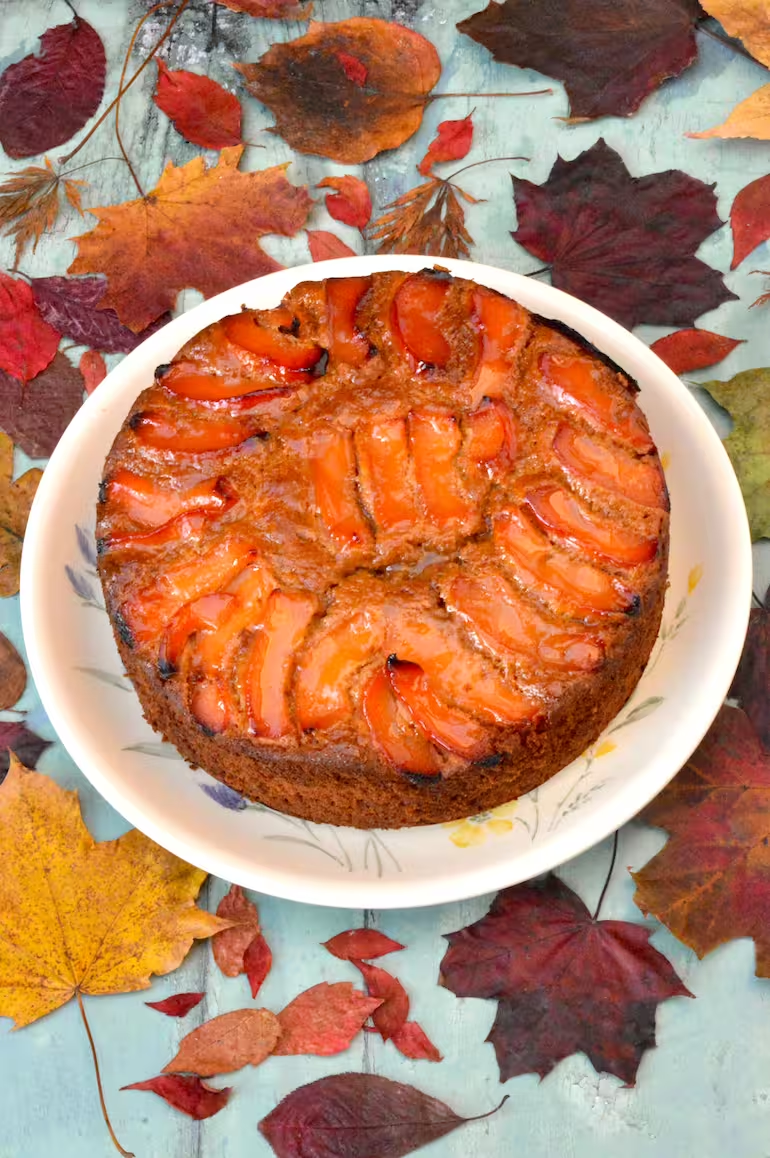
Lay the reserved quince slices over the batter – either randomly or in a pattern. Then brush them generously with some of the syrup.
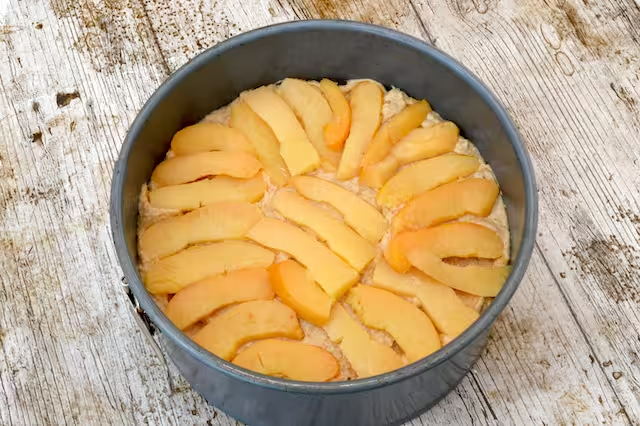
Step 6. Bake
Place the cake in the middle part of the oven and bake for an hour or until the cake is well risen and firm to the touch. It’s always best to check by inserting a skewer into the middle – it should come away more or less clean.
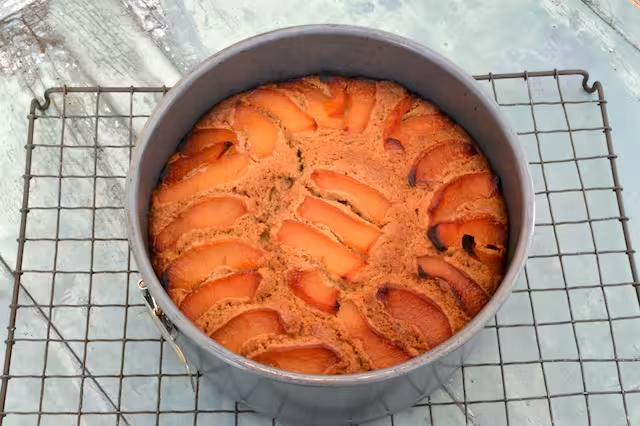
If you see wet dough, you’ll need to cook the cake for a further five to ten minutes. If the top looks like it’s burning, place a piece of foil or baking paper over the top to protect it.
Step 7. Finish and Serve
Transfer the tin to a wire rack. Immediately brush more syrup over the top of the cake so that it’s completely covered and shiny. Allow it to cool for ten minutes before removing from the tin. Run a knife gently around the sides before releasing to ensure nothing sticks.
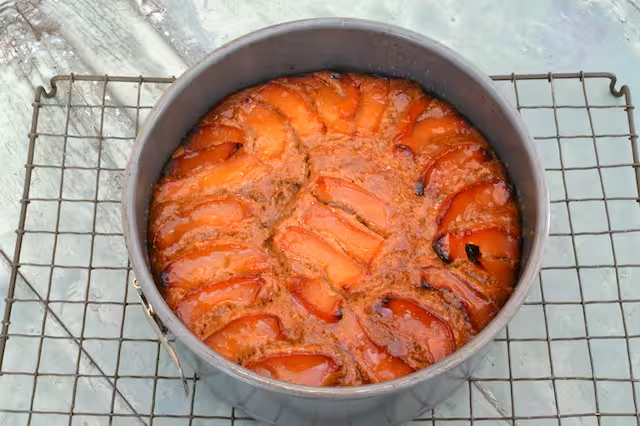
Leave on the rack to cool completely before serving.
The cake is delicious all by itself, but is also rather splendid served with a spoon of clotted cream or crème fraîche.
It will keep in an airtight container for three to four days.
Other Fresh Fruit Cake Recipes You Might Like
- Caramelised pear & honey cake (gluten-free)
- Citrus drizzle cake (vegan)
- Gooseberry cakes
- Grapefruit & honey almond cake
- Plum upside-down cake
- Upside-down fig cake
Keep in Touch
Thank you for visiting Tin and Thyme. If you make this quince cake, I’d love to hear about it in the comments below. Do you have any recommendations or tips for dealing with quince?
Please rate the recipe too. And do tag me @choclette8 on Instagram with your images, I love to see your take on my recipes.
For more delicious and nutritious recipes follow me on Twitter, Facebook, Instagram, Flipboard or Pinterest. And don’t forget to SUBSCRIBE to my weekly newsletter. Or why not join the conversation in our Healthy Vegetarian Whole Food Recipes Facebook Group?
If you’d like more autumnal recipes, follow the link and you’ll find I have quite a lot of them. All delicious and nutritious, of course.
Choclette x
Quince Cake. PIN IT.

Quince Cake
Equipment
Ingredients
Poached Quinces
- 3 quince weighing about 600g in total
- 100 g golden caster sugar
- 250 ml water
- 1 organic lemon peel & juice
- 3 cardamom pods roughly crushed to open
- 20 g unsalted butter
- 1 whole clove
Cake
- 125 g unsalted butter softened
- 125 g golden caster sugar
- ¼ tsp ground cloves
- 100 g light muscovado sugar
- 4 medium eggs
- 200 g wholemeal spelt flour
- 2 tsp baking powder
Instructions
Poached Quinces
- In a large pan, dissolve the sugar in the water over a low heat.100 g golden caster sugar, 250 ml water
- Pare the lemon, ensuring there's no pith attached and add the peel to the water along with the juice. Add the clove and cardamom pods.1 organic lemon, 3 cardamom pods, 1 whole clove
- Using a strong sharp knife, quarter the quinces. There’s no need to peel them or remove the cores at this stage. As soon as you’ve cut them slip them into the syrup; they brown in the air almost instantaneously.3 quince
- Cover the pan with a lid and bring to a simmer. Allow the quinces to cook gently until a knife slips easily through the skin and into the flesh. This can take anywhere from 30 minutes to an hour.
- Drain the quinces in a colander, making sure you capture all of the liquid.
- When the quinces are cool enough to handle, remove the cores. You can also scrape off the skin if you like – it comes off quite easily.
- Cut four of the quince quarters into thin slices and reserve for the cake top. Place the rest in a jug and use a stick blender to purée them.
- Place the liquid back in the pan, add the butter and bring it back to the boil. With the lid off, reduce it down to about half or until it has a syrupy consistency. Take off the heat.20 g unsalted butter
Cake
- In a large bowl, cream the butter together with the sugars and spice. A wooden spoon is best for this, although you can use an electric mixer if you prefer. Keep going until the mixture is pale in colour and fluffy in texture.125 g unsalted butter, 125 g golden caster sugar, ¼ tsp ground cloves, 100 g light muscovado sugar
- Beat in the eggs, one by one.4 medium eggs
- Sift in the flour and baking powder and stir until just combined.200 g wholemeal spelt flour, 2 tsp baking powder
- Stir in the quince purée until just combined.
- Set the oven to 170℃ (150℃ fan, 338℉, Gas 3).
- Lightly butter a 20 cm (8-inch) deep round cake tin. One with a loose bottom will make it easier to remove later. Scrape the batter into the tin and level the top with a palette knife or back of a spoon.
- Lay the quince slices over the batter, then generously brush them with some of the syrup.
- Place the cake in the middle part of the oven and bake for one hour or until the cake is well risen and firm to the touch. It's always best to check by inserting a skewer into the middle – it should come away more or less clean. If you see wet dough, you'll need to cook the cake for a further five to ten minutes. If the top looks like it's burning, place a piece of foil or baking paper over the top to protect it.
- Transfer to a wire rack and generously brush more syrup over the top of the whole cake. Allow it to cool for ten minutes before removing from the tin. Leave on the rack to cool completely before serving.
- Delicious with clotted cream or crème fraîche.
Notes
Nutrition Estimate
This post contains affiliate links which are marked with an asterisk* or (affiliate link). If you buy through a link, it won’t cost you any more, but I might get a small commission. Thank you for your support of the brands and organisations that help to keep Tin and Thyme blithe and blogging.

Wonderful cake! My friend has a quince tree and I get a bag full every year. I decided to poach and freeze them this year, and then this recipe came along! I followed it as written except used light muscovado sugar and put ground cinnamon, ginger, cardamom and cloves in the cake batter. Gorgeous fruity flavour throughout the whole cake, and I’ll be making every year! xx
Ooh, how lovely to get a bag of quinces every year. It’s a bit hit and miss with me. So glad you liked the cake and it’s always good to here how it’s been adapted. Thanks for letting us know.