
Roasted Romanesco Buddha Bowl
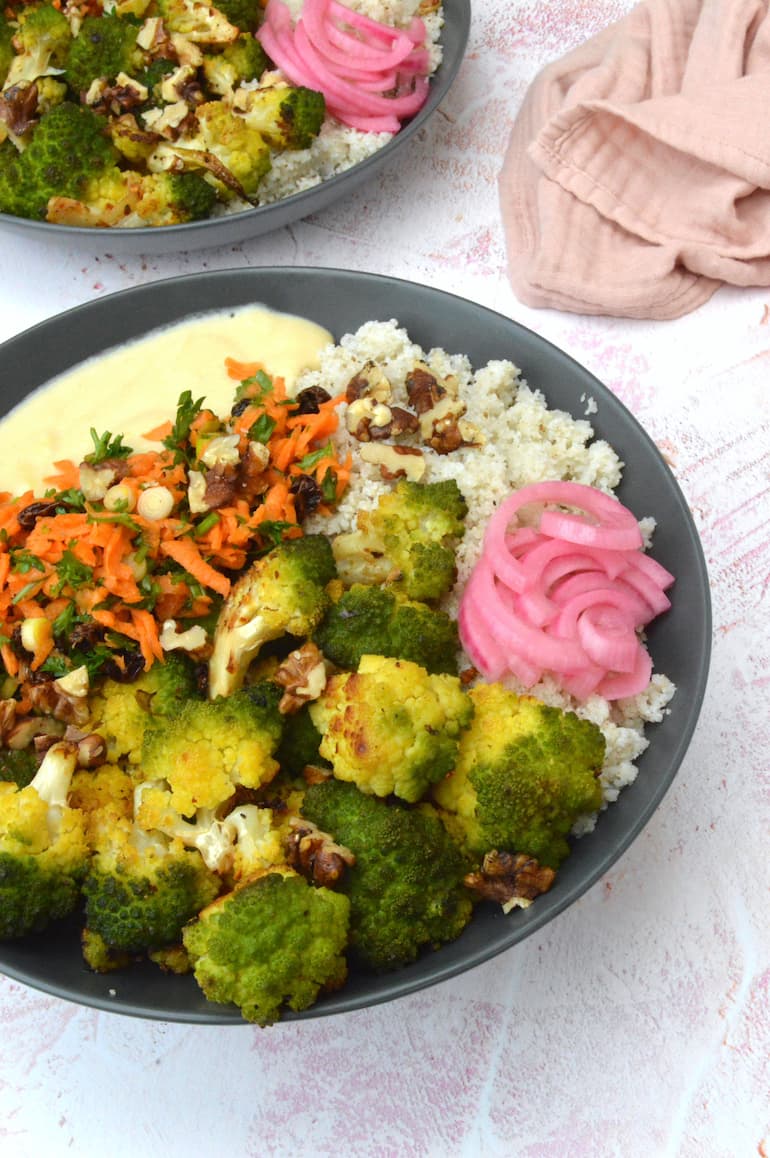
There’s something deeply satisfying about a well-balanced bowl of delicious, yet nourishing homemade food. This roasted romanesco buddha bowl is an autumn celebration of colour, texture and flavour. It’s a vibrant mix of creamy beans, fluffy fonio, umami romanesco, a sharp carrot salad, pungent pickles and crunchy walnuts.
This post may contain affiliate links. As an Amazon Associate, I earn from qualifying purchases. See my cookie and privacy statement for further details.
Romanesco is a most delightful vegetable. With its bright green spirals and almost geometric perfection, it’s like the lovechild of broccoli and cauliflower. It has the tenderness of one with the flavour of the other. When I found one in my veg box last week, I knew I had to do something to capture its striking looks and delicate taste.
Dive Right In
- So What Is a Buddha Bowl?
- Why You’ll Want To Make This Roasted Romanesco Buddha Bowl
- Roasted Romanesco
- Ingredients, Additions And Substitutions
- How To Make Roasted Romanesco Buddha Bowls
- Other Buddha Bowl Recipes You Might Like
- Keep In Touch
- Pin It
- The Recipe
So What Is a Buddha Bowl?
I could as easily have called this roasted romanesco buddha bowl, a grain bowl, a nourish bowl, a power bowl or even a poke bowl. These days, there’s not really much difference between them.

A buddha bowl is effectively a variety of nourishing plant-based foods chosen to make a balanced and colourful meal. The key is that the different components are arranged separately in a bowl, rather than being mixed together. There are five main components:
- a whole grain such as brown rice, quinoa, freekeh, fonio, barley and wholemeal couscous. I’ve used fonio in my buddha bowl.
- a variety of colourful vegetables – cooked or raw, but preferably a mixture of both. Salad leaves and herbs are always a good addition. I’ve used cooked romanesco, raw carrots and pickled onions.
- a plant-based protein such as tofu, tempeh, lentils, beans or chickpeas. I’ve used white beans.
- healthy fats such as avocado, nuts and seeds. I’ve used extra virgin olive oil and walnuts.
- a homemade sauce or dressing to bring it all together. I’ve used the white beans to make a very garlicky sauce reminiscent of aioli.
A grain bowl, power bowl and nourish bowl are pretty much the same thing as a buddha bowl except they’re not necessarily vegan and can include animal protein.
The poke bowl comes from Hawaii and was traditionally a fish dish. A classic version features rice arranged with slices of raw or cooked fish, salads and a flavoursome sauce. It’s presented much like a buddha bowl and these days is just as likely to include tofu or other plant-based alternatives.
It’s not at all clear where the modern buddha bowl originated, but the concept has been around for at least twelve years. The name probably derives from the Buddha’s (Siddhartha Gautama) practice of carrying a bowl around with him to collect food offerings from locals as he wended his way through the countryside seeking enlightenment.
I ate my first one in a Cornish café about ten years ago and immediately fell in love with the idea.
Why You’ll Want To Make This Roasted Romanesco Buddha Bowl
The romanesco florets are roasted until tender and lightly charred with lemon zest and a hint of chilli, then paired with a crisp grated carrot salad, fluffy fonio, creamy white bean aioli, tangy pickled onions and a scattering of toasted walnuts.
- Eat The Rainbow – the chartreuse romanesco, orange carrot and pink onions make for a colourful and eye catching bowl.
- Feast of flavour and texture – from nutty roasted romanesco and zesty lemon to creamy white bean aioli, crunchy walnuts and tangy pickled onions. Each element complements the others, creating a satisfying mix of fresh, roasted, creamy and sharp.
- Homemade everything – from the aioli to the pickles, you know exactly what’s in it — no additives, just real ingredients.
- Naturally plant-based – a filling vegan meal that feels indulgent and satisfying without compromise.
- Nutritious and nourishing – packed with vegetables, plant protein and whole grains for a naturally balanced, wholesome meal.
- Seasonal eating at its best – romanesco is in its prime in autumn, making this an ideal dish to celebrate the season’s produce.
- Something a little different – fonio and romanesco give this bowl a twist on the usual grain or cauliflower-based buddha bowls.
- Versatile and adaptable – swap in other grains, nuts or vegetables depending on what you have or what’s in season.
Roasted Romanesco
My roasted romanesco recipe with chilli and lemon is delicious in its own right. You don’t have to reserve it for this buddha bowl. It makes a fabulous side dish for all sorts of meals.
In my opinion, it tastes nicer than roasted cauliflower and cooks better too. The texture is more tender and it takes less time to roast.
You can use mild, medium or hot chilli flakes, depending on your preference. You can also add grated garlic to the mix. I would have gone this way, but my white bean sauce is very garlicky, so I thought, in this instance it was better without.
Ingredients, Additions And Substitutions
There are a lot of ingredients needed to make this roasted romanesco buddha bowl, but there are six separate elements, so it’s not actually as bad as it seems. I’ve highlighted a few of the key ones down below.
Carrot Salad
Raisins work really well in the carrot salad as they add sweetness to balance out the sharpness of the lemon. Feel free to leave them out though if you’re averse to dried fruit in salads.
It’s also fine to swap them for sultanas or even currants.
Grain
If you’ve not come across fonio before, I have a post dedicated to it. It’s well worth hunting out. However, you can easily sub it for the whole grain of your choice. Small grains such as quinoa, millet or couscous work best. If you go for rice, maybe try short grain brown rice.
Nuts
Nuts or seeds add crunch and additional nutrition. I’ve chosen walnuts, but you can use any nuts or seeds you like the idea of.
Pickles
You can use any type of pickles in this recipe, though I’d suggest homemade ones are more in keeping with the nourishing theme of buddha bowls. Fermented ones are an even better idea than those made with vinegar.
I’ve given a recipe for pickled red onion slices, which is what I’ve used. Another good contrasting colour and flavour is pickled beetroot.
Romanesco
Romanesco is the king when it comes to roasting. But you can swap it for cauliflower as that’s generally easier to get hold of. Just roast it for five minutes or so longer as it’s a bit tougher.
I received mine in my Riverford veg box (affiliate link). If you live in the UK and want to get hold of one of these fabulous vegetables, you can make up your own box of organic fruit and veg to the value of £15 as a one off. Although I’ve been getting a regular fortnightly box now for many years and am very happy with it.
White Bean Aioli Ingredients
It’s perhaps not surprising that you need garlic for this recipe, but rosemary, thyme, mustard and extra virgin olive oil are all key ingredients too.
White Beans
You can use any type of white beans you like in this recipe, but jarred rather than tinned give a creamier result. I usually find tinned beans need a little cooking, whereas the jarred ones are fabulous just as they are.
If using jarred beans, don’t drain them as the surrounding gel is both delicious and nutritious.
For the very best beans, you can, of course, cook your own from dried. If doing this, soak them overnight, rinse well and simmer them in unsalted water along with a bay leaf for an hour or so until tender.
How To Make Roasted Romanesco Buddha Bowls
Despite the number of elements to this buddha bowl, each one is quite quick to make and you can easily have it on the table within thirty five minutes or less. Don’t think of it as a weekend project, but as a nourishing weeknight dinner.
Please refer to the recipe card at the bottom of this post for cooking temperatures and quantities of ingredients used.
Step 1. Pickle Onions
If making your own pickled onions, try and do this at least one day before you need them.
Thinly slice a medium red onion into half moons and place them in a clean sterilised jar. If you have a bay leaf, pop that in too.
In a small saucepan and over a gentle heat, dissolve one tablespoon of golden caster sugar in 100ml (.4 of a cup) apple cider vinegar and 75ml (.3 of a cup) water. Once the sugar has dissolved, bring the vinegar to the boil, then immediately pour over the onions in the jar.
Make sure the onions are covered in the liquid, then place the lid on and seal. Leave to cool, then store in the fridge until needed. The onion’s outer layer of pink will infuse the vinegar and onions and they’ll get pinker and pinker the longer you leave them. They’ll keep for several weeks.
Step 2. Carrot Salad
Top and tail the carrot, then give it a good scrub. But there’s no need to peel it. Grate it coarsely using a box grater or food processor.
Transfer to a medium sized bowl. Rinse the spring onion (scallion) and remove the root then finely slice it. Add to the bowl along with the raisins. Then roughly chop the parsley and add that too.
Squeeze in the lemon juice then give everything a good mix. Set aside to marinate whilst you get on with the rest. The carrots and raisins will soak up the juice, creating a delicious sweet and sour effect.
Step 3. Roast Romanesco
Rinse the romanesco under the tap, then strip it of its leaves. Keep these to use in another dish. Cut the head into small florets of a more or less even size.
Finely grate the lemon zest into a large bowl. A microplane (affiliate link) is ideal for this. Transfer the florets to the bowl, then add the chilli flakes and salt.
Drizzle the olive oil over the top and give everything a good mix so the florets are coated all over with both spices and oil. You can use your hands if you like, but I find a large spoon works just as well.
In a large roasting tray, lay the florets out in a single layer. You may want to line the tray with baking paper first to make clean up easier.
Place the tray in the top half of the oven and roast for ten minutes. Turn the florets over and roast for a further ten minutes. Test for doneness. They should be tender but only slightly charred. Give them another five minutes, if needed.
Step 4. White Bean Aioli
Whilst the romanesco roasts, infuse the oil with the garlic and herbs. Use a small lidded pan and place it over a gentle heat. Cook for ten minutes or until the garlic is soft and slightly golden. Leave to infuse for a further five minutes.
Remove the herb sprigs, then pour the oil into a small food processor along with the garlic. If using white beans, give them a good rinse, then drain. Add them to the food processor as well as the mustard, lemon juice, salt and pepper.
Blitz until you have a smooth but loose aioli type consistency. If the mix is too stiff add a tablespoon or two of warm water, as needed.
Top Tips
If using jarred beans, just scoop the beans straight from the jar, including any gel or liquid that comes with them. You probably won’t then need any additional water and the aioli will be more flavoursome.
How much salt you add to the beans depends on whether they’re ready salted or not. The jarred beans I used are already quite salty and along with the seasoned mustard, I found I didn’t need to add any extra.
Step 5. Cook Fonio
Whilst the garlic and romanesco cook, place the fonio in a small lidded pan along with the water. With the lid on, bring the water to the boil, then turn the heat right down to your stove’s lowest setting.
Cook for fifteen minutes, then turn the heat off, but leave the pan in situ to steam for a further two to three minutes or until needed. Fluff up with a fork before serving.
Step 6. Toast Walnuts
Dry fry the walnuts over a moderate heat until they smell toasted, but make sure they don’t burn. Turn over and toast the other side. Allow to cool, then roughly chop.
Step 7. Assemble Buddha Bowls
As soon as the romanesco is ready and whilst it and the fonio are still hot, construct you buddha bowls.
Divide the fonio between two wide shallow bowls in one third each bowl. Follow this with the white bean aioli in another third and then add the romanesco to the remaining third.
A bit of overlap is good, but try to keep each component clearly visible. Pile on the carrot salad, add a few red onion pickles then scatter over the toasted nuts.
Other Buddha Bowl Recipes You Might Like
- aubergine rice bowl
- black lentil bowl with chimichurri sauce
- Greek rice bowl
- quinoa bowl with broccoli & pumpkin three ways
- vegan rice bowl with maple tofu & smoked tomato sauce
- vegan sushi bowl
Keep in Touch
Thank you for visiting Tin and Thyme. If you make these roasted romanesco buddha bowls, I’d love to hear about it in the comments below. Do you have any recommendations or tips for roasting veg?
Please rate the recipe too. And do tag me @choclette8 on Instagram with your images, I love to see your take on my recipes.
For more delicious and nutritious recipes follow me on Twitter, Facebook, Instagram, Flipboard or Pinterest. And don’t forget to SUBSCRIBE to my weekly newsletter. Or why not join the conversation in our Healthy Vegetarian Whole Food Recipes Facebook Group?
If you’d like more fonio recipes, follow the link and you’ll find I have a slowly growing number of them. All delicious and nutritious, of course.
Choclette x
Roasted Romanesco Buddha Bowl. PIN IT.
Roasted Romanesco Buddah Bowl
Equipment
- microplane (affiliate link) optional
Ingredients
Carrot Salad
- 1 carrot scrubbed but skin left
- 1 spring onion (scallion) finely sliced, or use a few snipped chives
- 20 g raisins
- fresh parsley small bunch, roughly chopped
- ½ lemon juiced
Roasted Romanesco
- 1 head romanesco cut into small florets
- 1 tsp chilli flakes mild, medium or hot
- 1 organic lemon zested (juice used in other parts of recipe)
- 1 pinch fine sea salt
- good grinding of black pepper
- 2 tbsp extra virgin olive oil
White Bean Aioli
- 2 tbsp extra virgin olive oil
- 2 cloves garlic peeled
- 2 sprig fresh rosemary
- 3 sprig fresh thyme
- 200 g cooked white beans drained weight
- 1 tsp English mustard
- ½ lemon juiced
- sea salt to taste
- good grinding of black pepper
Remaining Ingredients
- 90 g fonio swap for 100g quinoa
- pickled red onion slices swap for pickled beetroot
- 25 g walnuts toasted until crunchy, but not browned – roughly chopped
Instructions
Carrot Salad
- Coarsely grate the carrot, then mix with the remaining ingredients and set aside to marinate.1 carrot, 1 spring onion (scallion), 20 g raisins, fresh parsley, ½ lemon
Roasted Romanesco
- Set the oven to 190℃ (170℃ fan, 375℉, Gas 5).
- Place the romanesco florets in a large bowl. Finely grate in the lemon zest, then add the chilli flakes, salt and pepper. Drizzle the olive oil over the top and give everything a good mix so the florets are coated all over with both spices and oil.1 head romanesco, 1 tsp chilli flakes, 1 organic lemon, 1 pinch fine sea salt, good grinding of black pepper, 2 tbsp extra virgin olive oil
- In a large roasting tray, lay the florets out in a single layer. You may want to line the tray with baking paper first to make clean up easier.
- Place the tray in the top half of the oven and roast for ten minutes. Turn the florets over and roast for a further ten minutes. Test for doneness with a knife. They should be tender but only slightly charred. Give them another five minutes, if needed.
White Bean Aioli
- Meanwhile, in a lidded pan, sauté the garlic and herbs in the olive oil over a gently heat. Cook for fifteen minutes or until the garlic is soft and slightly golden, but not brown.2 tbsp extra virgin olive oil, 2 cloves garlic, 2 sprig fresh rosemary, 3 sprig fresh thyme
- Remove the herb sprigs, then pour the oil into a small food processor along with the garlic. Add the remaining white bean ingredients and blitz until you have a loose aioli type consistency. If the mix is too stiff add a tablespoon or two of warm water.200 g cooked white beans, sea salt, good grinding of black pepper, 1 tsp English mustard
Fonio
- Whilst the garlic and romanesco are cooking, place the fonio in a small lidded pan along with 250 ml water. With the lid on, bring the water to the boil, then turn the heat right down to your stove’s lowest setting. Cook for 15 minutes, then turn the heat off, but leave the pan in situ to steam for a further 2-3 minutes.90 g fonio
- Fluff up with a fork before serving.
Buddha Bowls
- As soon as the romanesco is ready and whilst it and the fonio are still hot, construct you buddha bowls. Divide the fonio between two wide shallow bowls, followed by the white bean aioli and then the romanesco. Pile on the carrot salad, add a few red onion pickles then scatter over the toasted nuts.pickled red onion slices, 25 g walnuts
I used to go to a little cafe not far from my home where they served Buddha Bowls. Such an innovation at that time but gave me ideas for easy meals at home!
I’m sure I’ve seen Romanesco in the Greengrocers but I think they wanted a ‘King’s Ransom’ for it, so I left it there. Must check again, maybe it will fit my purse better. Glad you have reminded me of these lovely bowls with Summer rolling in.
Thanks Choclette
Agree Mary, I was quite excited by my first buddha bowl, it’s such a fun way to eat and get lots of different things on the plate. Romanesco is an autumn veg, so I seems unlikely you’ll spot it any time soon. Definitely not the cheapest, but worth trying at least once.
Kia ora Choclette.
Have you been watching over me? I have just started to make my first few bowls at home in the last couple of weeks. Not sure why it took me so long. Before I had to think what I’ll eat for lunch today you gave me the recipe. I soaked quinoa last night (no fonio available in NZ yet), I could finally use that last can of beans (leftover from last seasons shortage of dried beans here), no time to pickle onions, but apart from that I had everything. And gosh, it was nice! Loved the bean “aioli” and the carrot salad and the familiar rest of it. Thanks heaps
No problems with the text by the way.
Hi Sigi, what a lovely thought. I remember how excited I was when I first came across bowls – they’re one of my favourite things to eat now.
Thanks for letting me know the comments work properly now. I got it sorted yesterday – phew!
I love buddah bowls and would love to try this one – romanescu is such a gorgeous veg that needs to be featured so I love how you do it here. I even have pickled onions my mum made for me so I will put this on the to do list. Have not heard of fonio before but will be looking out for it now
btw not sure why but my name and email are white on white so it is hard to see what I have written.
Aghhhh! Not sure why that should be the case Johanna. I’ve not heard of this being a problem before, but will look into it. Thanks for letting me know.
Romanesco is a complete delight. Hope you enjoy the bowl.