
Aubergine Rice Bowl: Fuss-Free Caponata
No faffing around with oven, stove top and umpteen different utensils with this delicious yet fuss-free caponata recipe. It’s all done in one pan. Serve it with rice, hummus, cucumber, olives and fresh herbs and you have a healthy aubergine rice bowl.
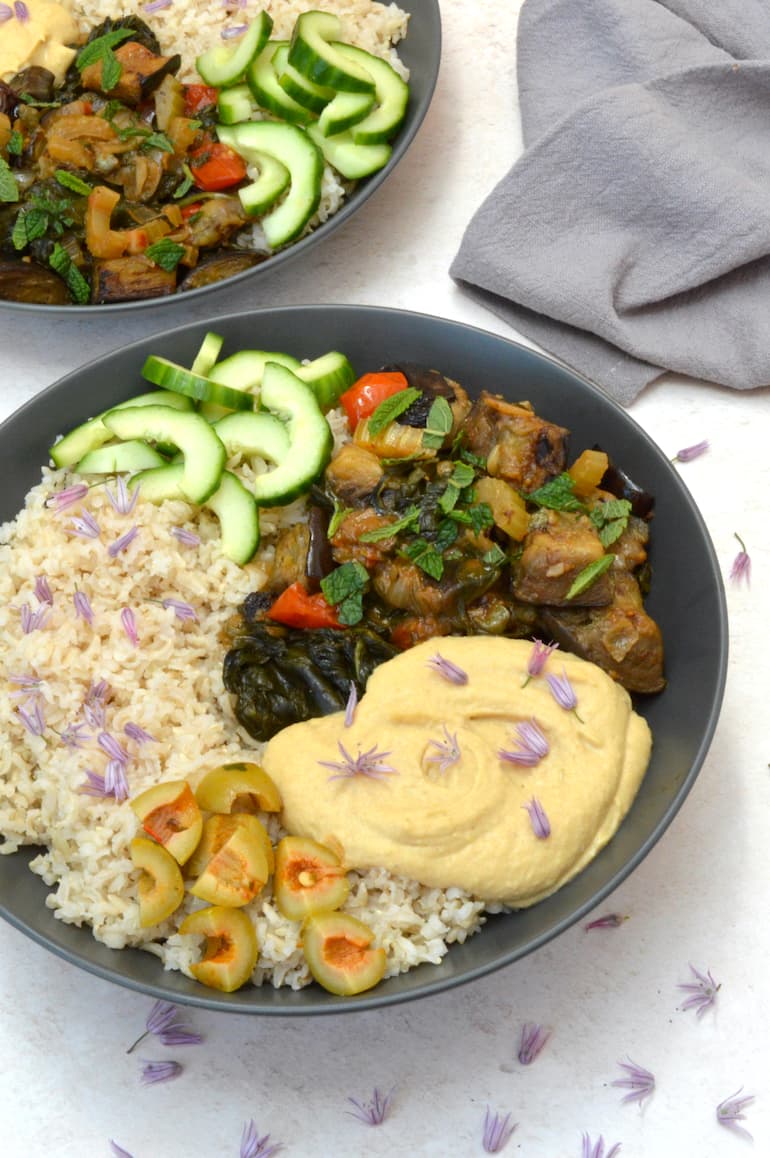
There’s something really comforting as well as relaxing about eating a meal in a bowl. Once served, all you need is a fork or spoon. Enjoy it at the table, outside in the garden, at work or as a picnic. Supper on the sofa anyone?
Dive Right In
- Why Make An Aubergine Rice Bowl?
- Aubergine Rice Bowl?
- Ingredients
- How To Make Blackberry Flapjacks
- Other Aubergine Recipes You Might Like
- Keep In Touch
- The Recipe
Why Make An Aubergine Rice Bowl?
Some grain bowls, nourish bowls or buddha bowls can be quite complicated to prepare. My aubergine rice bowl is really simple. Apart from cooking the rice and making my fuss-free caponata, you only need to slice some cucumber, spoon on some hummus and add a few olives.

- Easy to Prepare – Whilst the caponata takes a bit of time to cook, the rest of the ingredients are simple to prepare and assemble. This makes my aubergine rice bowl a practical option for a weeknight dinner.
- Full of Flavour – Caponata adds a rich and savoury element to the bowl. Combined with creamy hummus, fresh cucumber and briny olives, it creates a delightful medley of flavours and textures ready to excite your taste buds.
- Gut Health – Both brown rice and vegetables are high in fibre, which is essential for gut health. This dish helps keep you fuller for longer and supports a healthy digestive system. Just what you need if you’re following a Mediterranean diet.
- Nutritious and Balanced – This aubergine rice bowl is not only delicious, but a well-balanced meal. It combines complex carbohydrates from brown rice, healthy fats from olives, protein from hummus and plenty of antioxidants, vitamins and minerals from the vegetables.
- Perfect for Meal Prep – Prepare the various components for this bowl in advance and store them separately and you have a great option for meal prepping. Caponata is ideal for this as it’s best enjoyed warm or at room temperature rather than hot. Simply assemble when ready to eat or use for picnics and packed lunches. This ensures a healthy meal is always at hand.
- Vegan and Plant-Based – This recipe is entirely plant-based, making it suitable for vegans as well as vegetarians and those looking to reduce their meat consumption. It’s a satisfying and hearty meal that showcases how delicious and varied plant-based eating can be.
Aubergine Rice Bowl
The base of my rice bowl is the Sicilian aubergine stew, caponata. It’s a sweet and sour vegetable dish, usually enjoyed as a starter or side. It started life as a fish stew, but at some point in history poorer folk swapped the fish for the much cheaper aubergine. And it stuck. These days it’s naturally vegan.
There’s a really nice balance of flavours and textures in this recipe. The caponata is neither too sweet nor too sour, but oh so very tasty. Once cooked the vegetables are soft and the aubergine succulent and yielding. It literally melts in the mouth. The rice tempers the richness of the caponata, the hummus offers protein and creaminess and the cucumber provides freshness and crunch.
Olives are often included in caponata, but I’ve gone for adding them as a separate component to the finished aubergine rice bowl. I find they get a bit lost in the mix otherwise.
Although this rice bowl is one of the easiest ones to put together, it gets slightly more involved if you go with homemade hummus, but only slightly. You can make the hummus several days before you actually need it and also make enough to last for a few meals.
If you don’t want to go down the rice bowl route, the caponata is well worth making anyway. It makes a great side dish, or just eat it on its own with focaccia or ciabatta. A sprinkling of toasted nuts makes a good topping as does crumbled feta cheese, if you’re not vegan. Both of these add protein.
Caponata Ingredients
Aubergine, celery, onion and tomatoes are a must for caponata as are capers, but as for other veg, pretty much anything goes. Red or green peppers are popular, as are carrots and courgettes. I’ve gone for spinach as I like to get my greens in. But more importantly, it works really well in terms of taste and texture.
Aubergine (Eggplant)
Aubergine (eggplant), is a highly nutritious vegetable in the nightshade family. It’s rich in fibre, vitamins, minerals and antioxidants. With its versatile texture and capacity to absorb flavours, it’s often used as a meat substitute.
Modern varieties aren’t bitter as the old ones used to be. This means you can just cut them up and use straight away. No need for salting.
Although it’s the absolute star of this rice bowl, a little goes a long way. For two people you only need a small to medium aubergine. To make a bigger quantity, go for a large one or just more of the smaller ones.
Capers
Capers are small unripened green flower buds taken from the Capparis spinosa bush which grows in the Mediterranean. They’re preserved in brine and are little flavour bombs that add a lot more than just salt.
Olive Oil
Extra virgin olive oil is the oil in which to cook this fabulous Sicilian stew. Yes, it’s expensive, but it adds the perfect flavour.
In any case, you don’t need nearly as much of it as you might think. Admittedly, aubergine is a sponge and will soak up as much as you give it, but it cooks perfectly with less and still tastes amazing.
Spinach
Spinach is perfect for all the fabulous nutrients found in greens. It also fits in with the texture of the dish and adds flavour too. I’ve used baby spinach, but if you have mature spinach, just chop it up a bit before adding it to the stew.
Sweet And Sour
A good caponata is both sweet and sour, but not overly assertive. The sweetness comes from the raisins, though many recipes include sugar as well. I don’t use any sugar in my caponata recipe. The raisins work well enough to counteract the acidity of the vinegar.
The sour part comes from vinegar. Apple cider vinegar works well as it’s on the milder spectrum of sourness. Sherry vinegar or a good quality herb vinegar make good substitutes.
I used chive flower vinegar that I made a couple of weeks ago with apple cider vinegar.
Tomatoes
You don’t need many tomatoes for this recipe, but some good flavoursome ones really help. I’ve used cherry tomatoes, but larger ones are fine too. They just require a bit more chopping.
Some recipes use passata, or tinned tomatoes, but fresh are preferable. As I’ve already mentioned, you don’t need many.
The Rest
Celery is an essential ingredient for caponata. It’s often cooked as big chunks, but I prefer to slice it thinly to ensure it’s properly cooked. All the veg should be nice and soft for this dish.
Chilli or red pepper flakes are sometimes added to caponata. I’ve gone with just a touch of chilli to give a little warmth and add to the general flavour. However, it’s entirely optional.
Garlic is always a good idea, but it’s not a dominant flavour in this dish. Once small to medium clove is just about right.
Mint is my favourite herb to finish caponata. You can use other fresh herbs such as basil or parsley, but mint adds a freshness which really elevates the dish.
Onion is one of the must have ingredients. I’ve used an ordinary brown onion, but a red one is fine too.
How To Make An Aubergine Rice Bowl
Whilst caponata and brown rice take a while to cook, you don’t need much in the way of hands on time to assemble this aubergine rice bowl. It’s really quite easy.
Please refer to the recipe card at the bottom of this post for full instructions, timings and quantities of ingredients used.
Step 1. Prepare Rice
Rinse and drain the rice, then place in a small lidded saucepan. Cover with water, bring to a boil, clamp the lid on then turn the heat right down.
Allow the rice to cook for a good twenty minutes, then turn off the heat, but leave the lid on the pan so the rice can continue to steam.
Top Tip
Brown rice takes a lot longer to cook than white rice. For a faster rice cooking time, soak the rice in cold water for at least six hours or in hot water for 1 hour. You’ll need less water to cook the rice in if you use this method though.
Step 2. Make Caponata
Cut the aubergine into chunks. In a large heavy bottomed lidded pan, heat the oil. Fry the aubergine chunks in the hot oil over a high heat for five minutes. Give an occasional stir and keep frying until they’re pretty much golden all over. Don’t worry if the odd bit chars.
Meanwhile finely dice the onions and thinly slice the celery. Add both to the pan and lower the heat to medium. The aubergines will have soaked up all the oil, but that’s okay. Don’t be tempted to add any more, unless you prefer a more oily caponata. Cook for four minutes, giving an occasional stir.
Chop the tomatoes into halves or quarters, depending on size. Finely chop the garlic and chilli then add to the pan along with the tomatoes and salt. Cook for two minutes, again giving an occasional stir.
Add the capers, raisins and vinegar and clamp the lid on the pan. Cook for two minutes.
Wash and drain the spinach or give it a good shake. It’s fine if there’s still some water clinging to the leaves though as an additional bit of liquid will help everything cook down. Add to the pan and clamp the lid back on. Cook for a further five minutes.
Stir the now wilted spinach into the aubergine then put the lid back on the pan. Turn the heat down a little and simmer until the celery is more or less soft. There should only be a tiny amount of liquid in the pan, but enough to cook everything through. If it looks dry at any point add a little water, but not much.
As soon as the celery is soft and the aubergine collapsed, turn the heat off but leave the lid on.
Leave the caponata to rest so the flavours can mingle for at least fifteen minutes. An hour is even better. It’s best served warm or at room temperature rather than hot.
Step 3. Assemble Bowls
When you’re ready to eat, halve, deseed and slice the cucumber and chop the olives into halves or quarters if large. Finely chop the mint and any other herbs you might want to use.
Divide the rice between two bowls. Spoon in the caponata and scatter the mint over the top. Dollop in the hummus then lay the cucumber slices and olives on the side. Scatter everything with more mint or other fresh herbs, such as parsley or chives if desired.
Top Tip
If not eating straight away, the caponata will keep in the fridge for five days. Just make sure it’s in a suitable sealed container.
Other Aubergine Recipes You Might Like
- Aubergine carrot couscous
- Aubergine dip without tahini
- Aubergine yakitori
- Baba ganoush
- Barley bowl with spiced aubergine, chickpeas & tomatoes
- Roasted Mediterranean vegetables
Keep in Touch
Thank you for visiting Tin and Thyme. If you make this aubergine rice bowl, I’d love to hear about it in the comments below. Do you have any recommendations or advice for making caponata?
Please rate the recipe. If you post pictures of your creations on social media, use the hashtag #tinandthyme so I can see them.
For more delicious and nutritious recipes follow me on Twitter, Facebook, Instagram, Flipboard or Pinterest. And don’t forget to SUBSCRIBE to my weekly newsletter. Or why not join the conversation in our Healthy Vegetarian Whole Food Recipes Facebook Group?
If you’d like more bowl recipes, follow the link and you’ll find I have quite a lot of them. All delicious and nutritious, of course.
Choclette x
Aubergine Rice Bowl. PIN IT.
Aubergine Rice Bowl: Fuss-Free Caponata
Ingredients
- 120 g brown basmati rice
- 4 tbsp hummus (I made my own hummus)
- ¼ cucumber halved, deseeded and sliced
- 16 small olives or 4 large ones cut into quarters – go for green if you can
Caponata
- 2 tbsp extra virgin olive oil
- 1 aubergine (eggplant) roughly cut into 2 ½ cm (1 inch) chunks
- 1 small onion finely chopped
- 1 stick celery thinly sliced
- ½ tsp sea salt
- 8 cherry tomatoes halved or quartered
- 1 clove garlic finely chopped
- ½ red chilli (optional) deseeded and finely chopped
- 1 tbsp capers
- 20 g raisins
- 2 tbsp apple cider vinegar or good quality herb vinegar (I used my own chive flower vinegar)
- 200 g baby spinach or chopped mature spinach – washed and drained
- 2 sprig fresh mint finely chopped
Instructions
Rice
- Rinse and drain the rice in a small pan with a tight fitting lid. Once rinsed, cover with 250ml water. With the lid on, bring the pan to the boil, turn down to your lowest setting and let the rice cook gently for 25 minutes. Turn off the heat and let it steam for a further 5 minutes (up to 15 minutes is fine). Don't be tempted to remove the lid. Fluff with a fork before serving.120 g brown basmati rice
Caponata
- Fry the aubergine chunks in the hot oil over a high heat for five minutes. Use a heavy bottomed lidded pan. Give an occasional stir and keep going until they’re pretty much golden all over. Don’t worry if the odd bit chars.2 tbsp extra virgin olive oil, 1 aubergine (eggplant)
- Add the onions and celery and lower the heat to medium. Cook for four minutes, giving an occasional stir.1 small onion, 1 stick celery
- Add the tomatoes, garlic, chilli and salt and cook for two minutes, again giving an occasional stir.½ tsp sea salt, 8 cherry tomatoes, 1 clove garlic, ½ red chilli
- Add the capers, raisins and vinegar and clamp the lid on the pan.1 tbsp capers, 20 g raisins, 2 tbsp apple cider vinegar
- Cook for two minutes, then add the spinach. Clamp the lid back on the pan and cook for 5 minutes.200 g baby spinach
- Stir the now wilted spinach into the aubergine, put the lid back on the pan. Turn the heat down a little and simmer for 10-15 minutes or until the celery is more or less soft. There should only be a tiny amount of liquid in the pan, but enough to cook everything through. If it looks dry, add a little water, but not much.
- As soon as the celery is cooked, turn the heat off and leave the caponata to rest for at least fifteen minutes with the lid on. It’s best served warm or at room temperature rather than hot.
Assembly
- When you’re ready to eat, divide the rice between two bowls. Spoon in the caponata and scatter the mint over the top. Dollop in the hummus then lay the cucumber slices and olives on the side. Scatter with more fresh herbs, such as parsley or chives if desired.4 tbsp hummus, ¼ cucumber, 16 small olives, 2 sprig fresh mint
I adore the flavors of this bowl. Eggplants are one of my favourite veg to prepare. Yum!
Yes, totally agree. Just like courgettes, they’re one of the easiest veg to prepare. And delicious too.
This looks so good. Usually I am a bit wary of the sour component of caponata but this looks wonderful with the balance of flavours in the bowl. And I do love a bowl of different textures and tastes!
Oh wow! This was so flavorful. It came out perfectly delicious. I will be making this again.
So glad you enjoyed it Katie. It’s one of our favourite ways to eat aubergine.
I made this for dinner, and it was a breeze! The rich, savory flavors of the caponata paired perfectly with the rice, making for a delicious and satisfying meal.
So glad you enjoyed the aubergine rice bowl. It’s one of our favourites. The caponata and rice do make a lovely pairing. Thanks for feeding back.
This was such a great recipe! I can’t wait to make it again. It will be perfect again for a light summer meal.
It’s a lovely dish for summer indeed. So pleased you enjoyed it and thanks for letting us know.
I’m a big fan of eggplant and this was such a delicious meal. Love that it is clean and healthy too. So excited for the leftovers
Yes, caponata is brilliant for leftovers. It just seems to get better and better – within reason of course!