
Keema Paratha With Vegan Mince (Vegan Stuffed Paratha)
Soft and pliable vegan keema paratha is a protein-packed northern Indian flatbread. This plant-based version is made with wholemeal flour and spiced vegan mince. Traditionally a wayfarers’ breakfast, stuffed paratha is now a lunchtime favourite. It’s utterly delicious on its own, but also ideal for tearing, sharing and rolling.
This post may contain affiliate links. As an Amazon Associate, I earn from qualifying purchases. See my cookie and privacy statement for further details.
Dive Right In
- What Is Keema Paratha?
- Why You’ll Want To Make This Vegan Stuffed Paratha
- Vegan Stuffed Paratha
- Ingredients, Additions And Substitutions
- How To Make Vegan Keema Paratha
- Other Flatbread Recipes You Might Like
- Keep In Touch
- Pin It
- The Recipe
What Is Keema Paratha?
Paratha is a type of whole wheat flatbread which is normally layered with ghee to make it flaky and pan-fried. It’s name comes from the Sanskrit parat (meaning layers) and atta (meaning wholemeal flour). There are, however, a number of stuffed parathas which are made a little differently.
Instead of layering the dough with ghee, it’s stuffed with spiced vegetables, paneer or minced meat (keema). It’s then rolled out flat, brushed with ghee and baked on a tawa – a type of griddle pan. Keema paratha is a staple in North Indian Pakistani and Bangladeshi cuisine and is particularly popular for breakfast.
Why You’ll Want To Make This Vegan Keema Paratha
- A brilliant introduction to stuffed flatbreads – If you’ve never made stuffed paratha before, this recipe is forgiving, flexible and far less fiddly than it looks.
- Big flavour from simple spices – Turmeric gives the dough a gentle warmth and beautiful colour, while kalonji adds little bursts of oniony, peppery flavour. It makes the paratha interesting before you even get to the filling.
- A satisfying, protein-packed meal – Stuffed with spiced vegan mince, this paratha is filling enough to stand alone. There’s no need for extra sides unless you want them.
- Comforting but not heavy – Made with wholemeal flour and pan-fried rather than deep-fried, it’s hearty without feeling stodgy.
- Perfect for lunch, dinner or leftovers – Eat it hot from the pan, pack it up for lunch or reheat the next day. It’s just as good torn and dipped as it is rolled and eaten on the go.
- Great for sharing – Stuffed paratha is made for tearing, passing and piling onto the table. It’s ideal for relaxed meals rather than plated perfection.
- Vegan without the extra prep – Using ready-made vegan mince keeps things simple while delivering a satisfying, plant-based take on keema paratha.
Vegan Stuffed Paratha
Flatbreads are a firm favourite with us and I’ve made many over the years. Although I love my wholemeal flour and use it most of the time, I find that it makes parathas just a bit too tough. So I always make mine now with half wholemeal flour and half plain white. This produces a lovely soft and pliable texture, but retains a significant amount of fibre.

Rather than use a plain dough to make this vegan stuffed paratha, I like to spice it up a bit. This gives both colour and extra interest. You’ll see that the breads are yellow rather than brown.
Brushing the dough with a little oil whilst frying gives richness, but also a little crispness to the outside. Traditionally, this would be ghee, but that’s no good if you’re trying to go dairy-free.
Ingredients, Additions and Substitutions
You need very few ingredients to make the most delicious keema parathas. Apart from the mince, you’re likely to have everything you need.
Allium
You can use either onion or a shallot for this recipe. I prefer to use a large shallot if I happen to have one. It’s milder and slightly sweeter than an onion, but failing that I go for a small onion.
You’ll also need garlic.
Flour
Traditionally, atta flour is used to make parathas. If you can get hold of it, go with it. I’ve never actually tried it, but find when making flatbreads a mix of half wholemeal flour and half plain white produces the best result.
Spices
I’ve used ground cumin and chaat masala to spice up the filling. Chaat masala is a salty blend of spices which includes some chilli. It’s not particularly hot, but if you’d prefer no chilli, garam masala works well. If you use this, however, you’d need to add a pinch or two of salt to the mix as well.
Alternatively use curry powder.
If you like things hot, add a small finely chopped chilli. Whether you remove the membranes and seeds depends on just how hot you like it.
I’ve also added a little turmeric and kalonji to my dough for colour, flavour and interest. Kalonji is the same thing as nigella seeds and is sometimes referred to as black onion seeds.
Vegan Mince
One of the few occasions I use ready made fake meat. Luckily, plant-based mince has improved over the years and you can now get ones that both taste and perform well. The one I use is made from soy protein and doesn’t have any nasty ingredients in it either.
Although I usually make my own mince substitute when needed, it doesn’t work for this recipe. You need a really dry mix for the stuffing as you roll the flatbreads out really thinly and the mince gets semi incorporated into the parathas.
How To Make Vegan Keema Paratha
Don’t be put off by the thought of having to stuff dough. It’s a lot easier and faster than it looks.
Please refer to the recipe card at the bottom of this post for cooking temperatures and quantities of ingredients used.
Step 1. Make Dough
In a large mixing bowl, stir the flours, salt and spices together. You can use your hands for this or a sturdy round bladed knife. I use a knife as I find this a much less messy way of making dough.
Make a well in the centre and add the water. Stir with the knife (or your hands) until the mix forms a soft, but not too sticky dough. You may need to add a little more water, but go carefully.
Knead the dough briefly, in the bowl is fine, until smooth Cover the bowl with a plate or tea towel then let it rest for twenty minutes or so. This allows the glutens to relax, which in turn makes the dough easier to roll and gives a softer more supple finish to the paratha.
Step 2. Make Filling
Whilst the dough is resting, mix the filling.
Peel and finely dice the shallot or onion. For even more flavour, you could grate it instead. Add it to a medium sized bowl along with the mince. Peel the garlic then finely grate or press it straight into the bowl. Add the spices.
Give everything a good stir and set aside. Again, a knife is good for this as you don’t want to destroy the mince by pressing it too hard.
Step 3. Stuff Dough
When you’re ready to start cooking the dough, divide it into eight more or less equal pieces, then form into balls. I find it easiest to do this if I roll the dough into a log first. It’s then easier to divide.
Flour your work surface, then roll a dough ball out into a small circle – about the size of the palm of your hand. Place a heaped tablespoon of the keema mixture into the middle, then bring the sides up and over it and pinch them together to seal the filling inside.
Don’t worry if it looks over stuffed, the dough is quite stretchy. And ultimately it doesn’t really matter if some of the filling escapes as some of it gets incorporated into the dough when you’re roll it anyway.
Turn it over so that the seam is face down, then roll into a circle of about 2mm (0.1 inches) thin.
Repeat the same process with the remaining dough balls.
Top Tip
I roll and fill each paratha whilst one cooks in the pan.
Step 4. Fry Parathas
Place a skillet or tawa over a medium-hot heat. Leave it until it’s really hot, then dry-fry the paratha on one side for two minutes. If you use a frying pan, ensure it can take a high heat. I use a cast iron skillet (affiliate link).
Flip the paratha over and cook the other side for a two minutes. Whilst it’s cooking brush the cooked side with just enough oil to cover it. Flip it over and cook for thirty seconds or so. Brush with just enough oil to coat it, then flip over and cook for a further thirty seconds.
Both sides of the paratha should be cooked twice, once dry and once with oil.
Place the cooked paratha in a clean tea towel and wrap it so it keeps warm and soft whilst you cook the others. If you really can’t wait, eat it straight away. I generally can’t help myself, they’re just so good.
Repeat the process with the remaining flatbreads.
The parathas are at their best whilst fresh and warm, but they will keep for a further day, if need be. Just reheat in a hot pan when needed. They also freeze well. Wrap in a freezer proof bag and they’ll last for a month or so.
How To Eat Vegan Keema Paratha
For the best experience serve straight away whilst the keema parathas are still warm. I like them just as they are, though they’re even more sumptuous spread with vegan butter which melts into the bread in the most delightful way.
It’s traditional to serve keema paratha with Indian chutneys and/or yoghurt. Homemade raita makes an excellent accompaniment too.
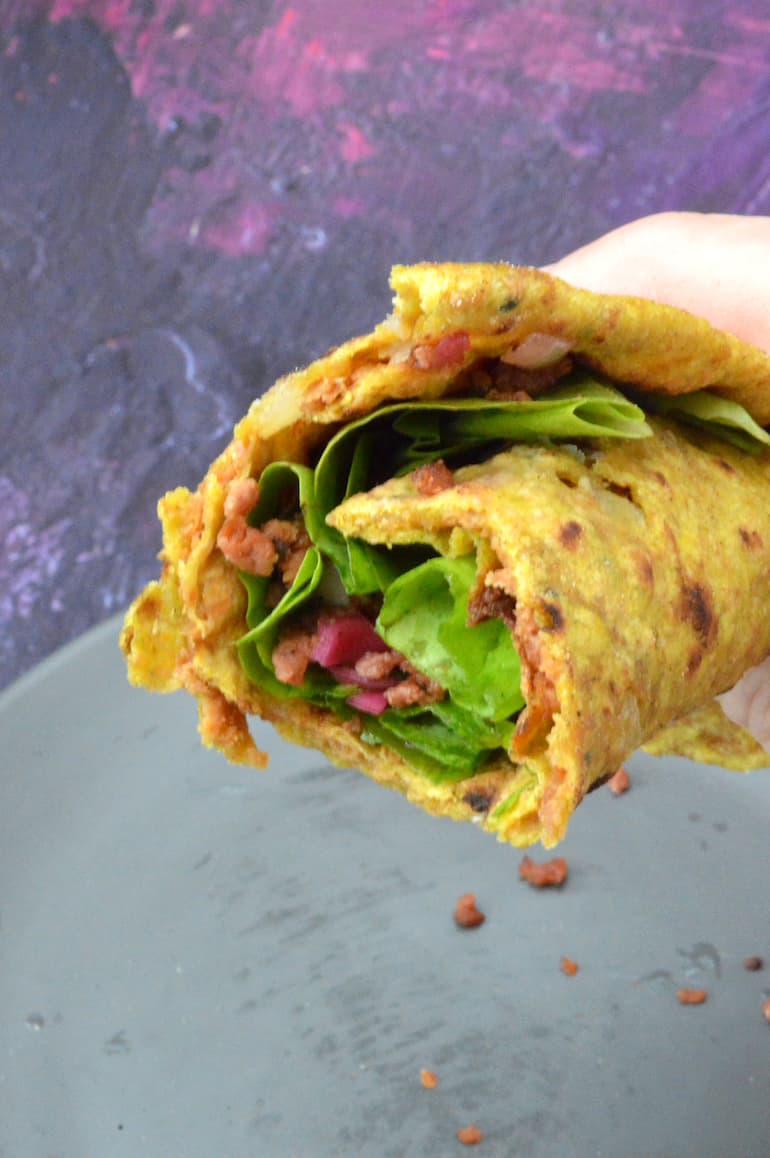
They’re also good rolled up with salad, pickles and any remaining vegan mince. Just fry the mince in a little oil for a few minutes first.
However, if you’d like to make a full meal out of them, serve with vegetable soup, dhal or vegetable curry.
Other Flatbread Recipes You Might Like
- green flatbreads with wild garlic and nettles
- how to make fluffy or flaky flatbreads with yoghurt or kefir
- sourdough flatbreads and pitta bread
- spelt cocoa pitta breads
- vegan arayes: tempeh stuffed pitta breads
- whole wheat focaccia bread
Keep in Touch
Thank you for visiting Tin and Thyme. If you make these vegan keema paratha, I’d love to hear about it in the comments below. Do you have any recommendations or tips for making stuffed paratha?
Please rate the recipe too. And do tag me @choclette8 on Instagram with your images, I love to see your take on my recipes.
For more delicious and nutritious recipes follow me on Twitter, Facebook, Instagram, Flipboard or Pinterest. And don’t forget to SUBSCRIBE to my weekly newsletter. Or why not join the conversation in our Healthy Vegetarian Whole Food Recipes Facebook Group?
If you’d like more Indian style recipes, follow the link and you’ll find I have quite a lot of them. All delicious and nutritious, of course.
Choclette x
Vegan Keema Paratha. PIN IT.
Keema Paratha With Vegan Mince (Vegan Stuffed Paratha)
Equipment
Ingredients
Flatbreads
- 150 g wholemeal flour
- 150 g plain flour
- 1 tsp nigella seeds (kalonji) aka black onion seeds
- ¾ tsp ground turmeric
- ½ tsp fine sea or rock salt
- 200-225 ml water
- 1 tbsp sunflower oil or other neutral oil – for frying
Mince Stuffing
- 250 g plant-based mince
- 1 large shallot or small onion – finely chopped
- 1 clove garlic grated or minced
- 1 tsp ground cumin
- 1 tsp chaat masala
Instructions
Flatbreads
- In a large mixing bowl, stir the flours, salt and spices together. You can use your hands for this or a sturdy round bladed knife.150 g wholemeal flour, 150 g plain flour, 1 tsp nigella seeds (kalonji), ¾ tsp ground turmeric, ½ tsp fine sea or rock salt
- Make a well in the centre and add 200 ml of water. Stir with the knife (or your hands) until the mix forms a soft, but not too sticky dough. You may need to add a little more water, but go carefully.200-225 ml water
- Knead the dough briefly until smooth, then cover the bowl and rest it for 20 minutes. This allows the glutens to relax, which in turn makes the dough easier to roll and gives a softer more supple finish to the paratha.
Filling
- Whilst the dough is resting, mix the filling. Place the mince into a medium sized bowl, add the diced shallot, grated garlic and the spices.250 g plant-based mince, 1 large shallot, 1 clove garlic, 1 tsp ground cumin, 1 tsp chaat masala
- Give everything a good stir and set aside.
Stuff and Fry Parathas
- Divide the dough into eight more or less equal pieces, then form into balls. Flour your work surface, then roll each one into a small circle – about the size of the palm of your hand. Place a heaped tablespoon of the keema mixture into the middle, then bring the sides up and over it and pinch them together to seal the filling inside.
- Turn it over so that the seem is face down, then roll into a thin circle of about 2mm (0.1 inches). Repeat the same process with the remaining dough balls.
- Dry fry in a medium-hot skillet or tava for two minutes. If you use a frying pan, ensure it can take a high heat. Flip the paratha over and cook for a further two minutes. Whilst it's cooking brush the cooked side with just enough oil to coat it. Flip it over and cook for thirty seconds or so. Brush with just enough oil to coat the top side, then flip over and cook for a further thirty seconds.1 tbsp sunflower oil
- Place the cooked paratha in a clean tea towel and wrap it so it keeps warm and soft whilst you cook the others. Repeat with the remaining flatbreads, then serve whilst still warm.
At last I know about Paratha. I’ve seen them on Indian menus but never investigated them. Always with the thought that I must find out about them but never did – until today! Do they always have a stuffing? Anyway, your recipe sounds really interesting and tasty and I must try it out. As you have wrapped salad in them, hot vegetables would be tasty as well? Thanks Choclette for helping to expand my knowledge!!
Glad to have helped Mary 🙂 Oh but do try a paratha next time you’re at an Indian restaurant, a good one is gorgeous. The most common kind are just layered with ghee before rolling than pan baked with more ghee, so they’re wonderfully rich but also beautifully flaky. If you get a bad one, they’re just greasy though. It happens!