
Vegan Madeleines: With Wholemeal Spelt Flour
These vegan madeleines bake up to a delicately crisp, golden shell and a soft, fluffy crumb. Made with wholemeal spelt flour, they’re a wholesome plant-based version of the traditional French sponge cakes, delivering the classic shell shapes and those all-important humps.
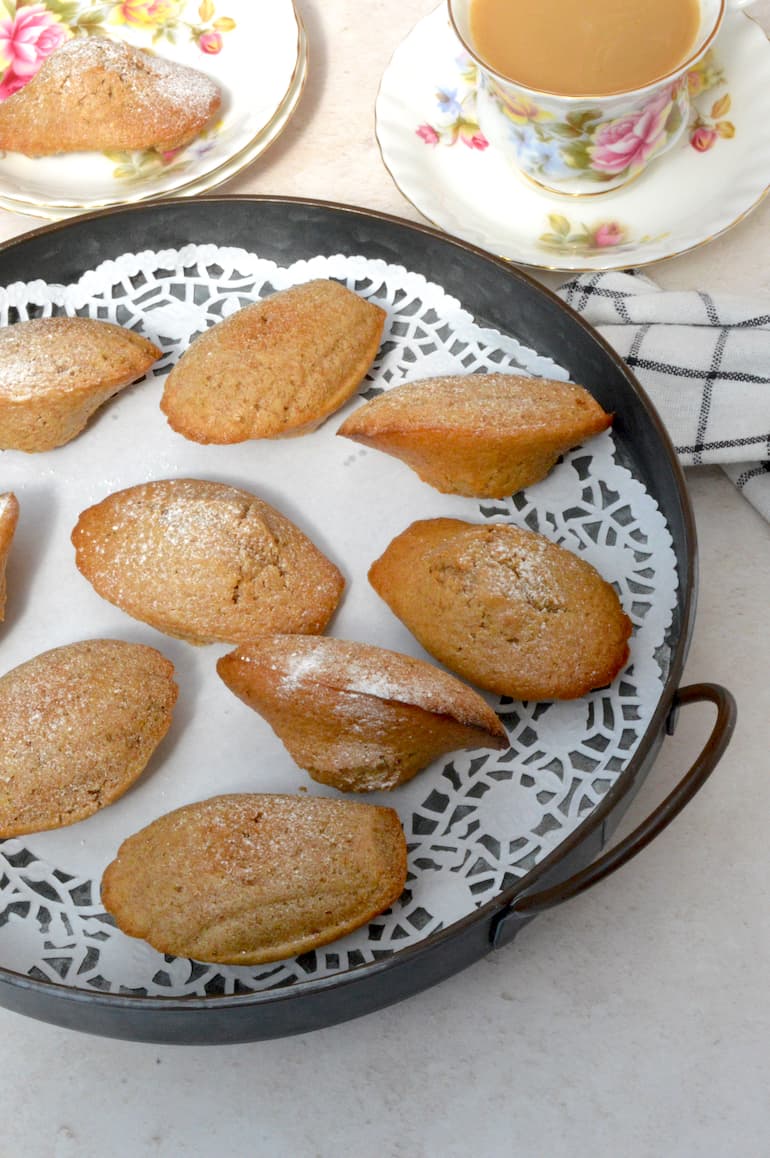
As this is my first post of 2026, I’d like to wish you a very Happy and Healthy New Year. As usual, I’m going completely vegan for the month of January. In the UK, it’s commonly known as Veganuary. Unusually, I’m starting off with a light but delicious sweet treat. I hope you like the recipe.
Dive Right In
- Why You’ll Want To Make These Vegan Madeleines
- Light and Fluffy Vegan Madeleines
- Madeleine Moulds
- Ingredients, Additions And Substitutions
- Madeleine Moulds
- How To Make Vegan Madeleines
- How To Get a Madeleine Hump
- Other Vegan Cake Recipes You Might Like
- Keep In Touch
- Pin It
- The Recipe
Why You’ll Want To Make These Vegan Madeleines
As they only take ten minutes to cook, these vegan madeleines are ideal when you need to turn out a delicious bake in a hurry. And if that’s not enough, here are a few more reasons as to why you’ll want to make these little French cakes:
- Made with wholemeal spelt flour for a more wholesome take on a classic French bake. It also adds a subtle nuttiness.
- Completely vegan, yet light and fluffy with a tender sponge crumb.
- A straightforward recipe with simple ingredients and an easy method. No specialist equipment required.
- Plant-based indulgence – you won’t miss the butter.
- Crisp, golden shell with the traditional madeleine shape and signature hump.
- Ideal for an elegant afternoon tea, light desserts or alongside a cup of tea or coffee.
- A nice way to explore vegan baking using a traditional French-style sponge.
Light and Fluffy Vegan Madeleines
These gorgeous little sponge cakes are my vegan wholegrain take on the classic French madeleines. Made famous by Proust, they’re quick to prepare, light and fluffy and contain only 111 calories each.

What’s more they have the requisite hump. They’re super easy to make with not much more than a bit of stirring needed. And if you don’t like vanilla, there are plenty of other flavourings you can use instead.
The shells are wonderfully crisp around the edges, but word of warning – they only stay that way for an hour or two. After that they soften and become indistinguishable from the spongy interior.
This means madeleines are best consumed as soon after baking as possible. Oh what a chore. They’ll keep in an air tight container for three days, but can also be frozen for a couple of months.
Ingredients, Additions and Substitutions
The ingredients required to make these vegan madeleines are all common store cupboard items.
Flavouring
I’ve used vanilla to flavour these vegan madeleines. However, if you fancy a something different, no problem. There are lots of alternatives you can use.
For a citrusy take, try the grated zest of a lemon, orange or lime, together with two teaspoons of the juice. Or go with a teaspoon or two of coffee, cocoa or matcha powder for a coffee, chocolate or green tea version.
Flour
It’s fine to use ordinary wholemeal flour for this recipe, but I prefer to go with wholemeal spelt flour. Click on the link to find out why.
I haven’t tried making them with any type of gluten-free flour, but I’ve heard they work well if you use a good quality mixed blend. Just ensure you use gluten-free baking powder as well.
Milk
You can use any plant-based milk you like. I prefer soy milk for baking as it contains more protein and thus improves the structure.
Souring the milk first helps to give the batter a better rise. It also adds a little tangy note which benefits the overall flavour. I use apple cider vinegar to sour the milk, but lemon juice or white wine vinegar are good too.
Oil
Sunflower oil makes an acceptable substitute for butter in many vegan bakes. Whilst it doesn’t have the “butteriness” of traditional butter, it doesn’t have any other flavour that can taint or overwhelm.
I like it because it’s low in saturated fats, high in poly-unsaturated fats and a good source of vitamin E. But it’s fine to use your preferred neutral flavoured oil instead.
Sugar
I like to use less refined sugars where possible, so I use golden caster sugar for this recipe. Whilst this is easy to get hold of in the UK, I know it’s harder in many countries, so use ordinary white sugar if necessary.
Madeleine Moulds
When it comes to baking madeleines, you do need a madeleine mould or tin to get the correct shell shape and hump. They aren’t difficult to get hold of though and they’re not expensive either.
I use a 12 hole silicone mould (affiliate link) which I bought many years ago and have never regretted. If you have a silicone mould, you don’t need to do anything to it (in theory), other than spoon in the batter. The product I’ve linked to is the nearest I could find to the one I have.
A word of caution. I usually lightly grease my madeleine moulds, even though they are silicone – just to make sure. Despite baking several batches recently to fine tune this recipe, I forgot to do so with the batch you can see in this post. And some of them stuck, which was disappointing, but also unusual.
Tins tend to produce more defined lines in the finished madeleines than silicone ones. They also give a crisper shell. If you go down this route, however, you will need to both oil and flour the holes before spooning in the batter.
How To Make Vegan Madeleines
Madeleines are very quick to make and also quick to bake. They do require a bit of resting and chilling though, so do factor that in when planning your baking session.
Please refer to the recipe card at the bottom of this post for cooking temperatures and quantities of ingredients used.
Step 1. Prepare Batter
Measure the dry ingredients and place them all in a large bowl. Whisk them together to ensure there are no lumps.
Pour the soy milk into a measuring jug and stir in the cider vinegar. Leave for a couple of minutes for it to curdle the milk. This is how you make a cheat’s version of sour milk.
Pour the oil and vanilla extract into the jug, then whisk or stir it all together.
Make a well in the middle of the flour mix, then pour the contents of the jug into it. Stir from the inside out until everything is just about mixed. For a nice spongy texture, it’s important not to over stir. I use my whisk, but stir it slowly rather than whisking fast.
Step 2. Chill Batter
Cover the bowl and leave in a cool place to rest for at least twenty minutes. You can make ahead and keep it in the fridge for up to twelve hours, if that’s more convenient. Chilling the batter helps to get the classic madeleine hump.
Step 3. Mould Up
Prepare your madeleine moulds as per previous section. I use silicone ones, which are great for non-stick, but you do need to rest them on a baking tray. I also lightly grease them first as a precaution – when I remember!
Divide the batter between the twelve madeleine moulds, filling them almost, but not quite, to the top. You’ll need about one heaped tablespoon per shell.
Step 4. Bake
Bake on the middle shelf of your preheated oven until the madeleines are well risen, golden and firm to the touch.
Transfer the tin or silicone mould to a cooling rack and leave for five minutes. Then turn out the madeleines onto the rack to cool completely. Dust lightly with icing sugar just before serving, if liked.
Alternatively, eat whilst still warm from the oven.
How To Get A Madeleine Hump
When you place cold batter into a hot oven you create a thermal shock which causes the batter to rise. And if you use traditional madeleine shaped moulds, the shallow edges firm up quickly, so the only way the batter can rise in the middle is straight up.
If you’re not getting the classic humps when baking madeleines, the most likely reason is that your batter just isn’t cold enough. Alternatively, your oven might just not be hot enough.
So, to get a beautiful hump on your madeleines, chill the batter before baking and make sure you use traditional madeleine shaped moulds.
Incidentally, the hump is called a bosse in French.
Other Vegan Cake Recipes You Might Like
- celebratory chocolate cake
- chai seed muffins
- chocolate mayonnaise cake
- cinnamon choc chip friands
- citrus drizzle cake
- healthy carrot cake with cashew icing
Keep in Touch
Thank you for visiting Tin and Thyme. If you make these beetroot and orange cupcakes, I’d love to hear about it in the comments below. Do you have any recommendations or tips for making these cakes?
For more delicious and nutritious recipes follow me on Twitter, Facebook, Instagram, Flipboard or Pinterest. And don’t forget to SUBSCRIBE to my weekly newsletter. Or why not join the conversation in our Healthy Vegetarian Whole Food Recipes Facebook Group?
Please rate the recipe too. And do tag me @choclette8 on Instagram with your images, I love to see your take on my recipes.
If you’d like more madeleine recipes, follow the link and you’ll find I have quite a lot of them. All delicious and nutritious, of course.
Choclette x
Vegan Madeleines. PIN IT.
Vegan Madeleines
Ingredients
- 125 g wholemeal spelt flour
- ½ tsp baking powder
- ¼ tsp bicarbonate of soda (baking soda)
- 1 pinch fine sea or rock salt
- 70 g golden caster sugar
- 110 ml soy milk
- 1 tsp apple cider vinegar or lemon juice
- 70 ml sunflower oil or other neutral tasting oil
- 1 tsp vanilla extract
Instructions
- Whisk the dry ingredients together in a large bowl.125 g wholemeal spelt flour, ½ tsp baking powder, ¼ tsp bicarbonate of soda (baking soda), 1 pinch fine sea or rock salt, 70 g golden caster sugar
- Pour the soy milk into a measuring jug and stir in the cider vinegar. Leave for a couple of minutes for it to curdle the milk.110 ml soy milk, 1 tsp apple cider vinegar
- Add the oil and vanilla extract, then whisk or stir it all together.70 ml sunflower oil, 1 tsp vanilla extract
- Make a well in the middle of the flour, then pour the milk mix into it. Stir from the inside out until everything is just about mixed. For a nice spongy texture, it’s important not to over stir.
- Cover the bowl and leave in a cool place to rest for at least twenty minutes. You can make ahead and keep it in the fridge for up to twelve hours, if that’s more convenient.
- When you’re ready to bake, preheat the oven to 200℃ (180℃ fan, 400℉, Gas 6).
- Lightly grease your madeleine moulds. I use silicone ones, which are great for non-stick, but you do need to rest them on a baking tray.
- Divide the batter between the twelve madeleine moulds, about one heaped tablespoon per shell.
- Bake on the oven's middle shelf for 12 to 15 minutes or until the madeleines are well risen, golden and firm to the touch.
- Transfer the tin to a cooling rack and leave for five minutes. Then turn the madeleines out onto the rack to cool completely. Alternatively, eat whilst still warm from the oven.