
Swede and Bean Stew: With Optional Vegan Dumplings
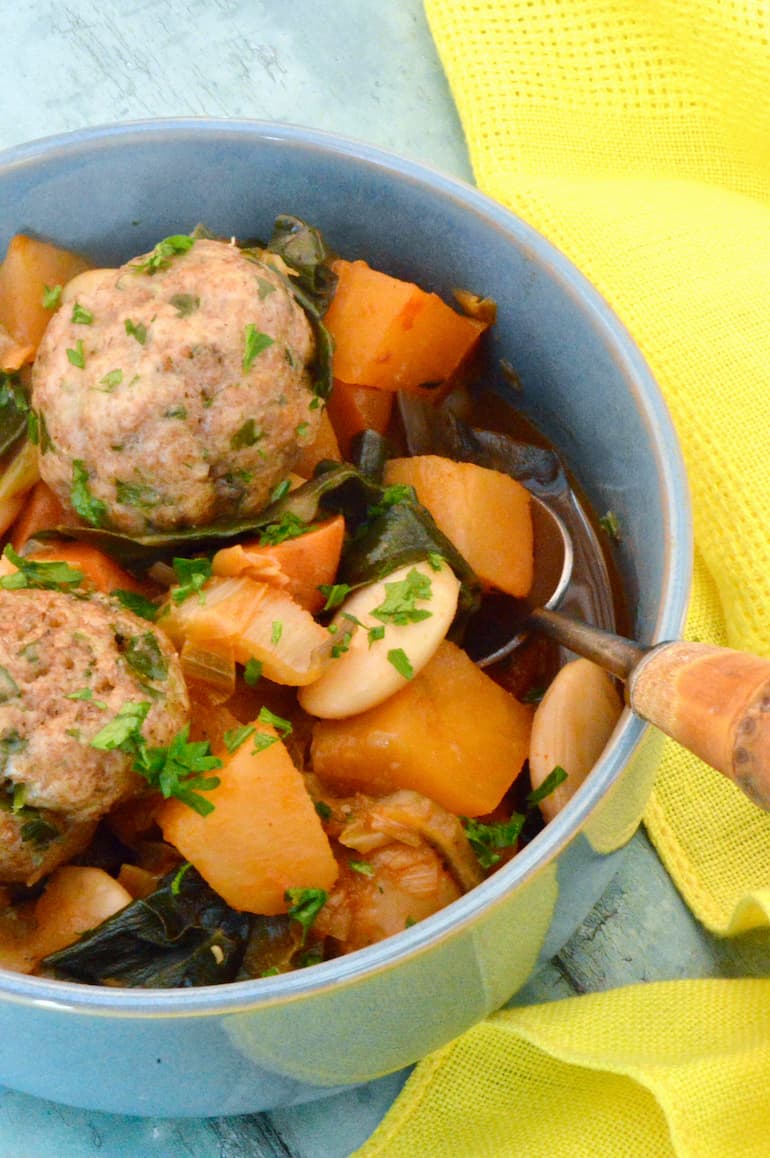
Warming, nourishing and ever so tasty, this swede and bean stew recipe is just the thing for serving on cold winter days and nights. It’s a simple one-pot, plant-based dish that comes together without much effort. Add dumplings or just dunk some crusty bread into the bowl and enjoy.
This post may contain affiliate links from which I may earn from qualifying purchases. See my cookie and privacy statement for further details.
We ended up with two Christmas Riverford veg boxes (affiliate link) over the holidays as my mother brought hers along with her when she came to stay. This meant I ended up with quite a lot of swede (rutabaga). I made carrot and swede mash for our Christmas dinner, followed by a couple of stews later on. This one is especially delicious and puts swede firmly in the spotlight – a role this much underrated vegetable rarely gets.
Dive Right In
- Why You’ll Want To Make This Swede and Bean Stew
- Swede and Bean Stew
- Ingredients, Additions And Substitutions
- How To Make Swede and Bean Stew
- Other Vegan Stew Recipes You Might Like
- Keep In Touch
- Pin It
- The Recipe
Why You’ll Want To Make This Swede and Bean Stew
- Deeply comforting winter food – Swede becomes meltingly tender and gently sweet when slow-cooked, while the creamy beans soak up all the savoury, herby flavours of the stew, making it warming, hearty and perfect for cold days.
- Brilliant for using up odds and ends – It’s designed as a flexible, fridge-clearing recipe. Almost any winter vegetables will work, so it helps reduce food waste and saves a trip to the shops.
- Simple, affordable ingredients – Swede, beans and winter vegetables are budget-friendly, widely available and easy to store, making this an economical meal that still feels nourishing.
- Nutritious and filling – The beans add plant protein and fibre, the vegetables bring colour and micronutrients, and the herbs lift everything so it feels wholesome rather than heavy.
- Naturally vegan, with optional dumplings – The stew stands on its own, but the olive-oil wholemeal dumplings turn it into a more substantial, rib-sticking meal when you want something extra comforting.
- No ultra-processed fats – Using olive oil in the dumplings keeps the recipe closer to whole food cooking, without relying on margarines or heavily processed fats.
- Great for batch cooking – This stew reheats well and tastes even better the next day, making it ideal for make-ahead dinners or easy lunches.
Swede and Bean Stew
Swede is surprisingly sweet when cooked, though it has a slightly bitter edge. I couldn’t bear it cooked as a child, although I was happy to eat it raw. Luckily, I grew to like it as an adult. It grows so well in the UK, it’s a shame not to take advantage of it.

It’s particularly good in a stew and works really well with creamy white beans and a few greens. The swede adds sweetness and the beans soak up all the flavours of this herby savoury stew. Dumplings are an optional extra, but highly recommended.
I’ve made this swede and bean stew on the stove top, but you can use an instant pot or slow cooker instead if you prefer.
Ingredients, Additions and Substitutions
You need a fair few ingredients to make this stew, especially if you’re going to enjoy it with the dumplings too. However, apart from the veg, they’re all store-cupboard items you’re likely to have to hand.
Beans
You can use whatever type of beans you like in this stew. I’ve even made it with brown lentils. Aesthetically, white beans are nice and the larger the better. Stews are all about chunky bits, after all.
I used some of our home grown gigantes, which are a type of super large runner bean. They’re white, creamy and delicious.
If using dried beans, you’ll need to soak and cook them first. Otherwise tinned or jarred are fine.
Herbs
Good old fashioned winter herbs are best for this stew. Rosemary, thyme or even sage are all good and bay leaves almost go without saying. If making the dumplings, parsley is a great addition too.
I’ve used fresh herbs, but if you don’t have any, use a teaspoon of dried ones instead.
Oil
I use extra virgin olive oil (evoo) for both the stew and the dumplings. It’s not refined and thus retains the beneficial micro nutrients. It also has a much better flavour.
British style dumplings are traditionally made with beef suet. As a vegetarian, I can’t use that and prefer not to use the ultra processed vegetarian suet replacement. Luckily, olive oil works well as a substitute, so all is not lost.
Vegetables
Swede is the star of the show here, but stews are all the better for lots of veg. As well as that all important onion, I’ve added leeks, carrots and Swiss chard – stalks and leaves.
Substitute some or all of these with any winter veg you have to hand or that needs using up. Celery is always a good bet and kale makes a good stand-in for the chard. I snuck in a couple of small wrinkled parsnips that I’d ignored for far too long.
Dumplings
As you’d expect, I make my dumplings with wholemeal flour. They don’t quite produce the fluffy result you get from dumplings made with refined flour, but they’re still delicious. And of course, they provide additional fibre, vitamins and minerals.
As well as adding chopped parsley, I sometimes add nutritional yeast too. This gives the dumplings a pleasing cheesy umami flavour that works well with the parsley.
As mentioned in the oil section, olive oil is my preferred fat for this style of dumpling. I used plant milk to bind the dumplings together this time, but plain water works well too.
How To Make Swede and Bean Stew – With or Without the Dumplings
Hands on time isn’t as much as you might think, but you will need about an hour for the stew to cook.
Please refer to the recipe card at the bottom of this post for cooking temperatures and quantities of ingredients used.
Step 1. Fry Veg
Heat a medium to large stock pot or casserole over a medium heat. Whilst it’s warming up, peel and finely dice the onion. Pour the olive oil into the pot, then fry the onion for a couple of minutes or until it turns translucent.
Whilst the onion’s frying, peel the swede and cut it into bite size chunks. You’ll need a sturdy knife for this as swede is quite dense.
Add the swede chunks to the pan along with a pinch of salt and fry for five minutes, stirring occasionally. The swede will start to turn orange as it cooks.
Whilst the swede fries, scrub the carrots, top and tail them, then cut into slightly smaller chunks than the swede. There’s no need to peel them unless you need to remove any scabby bits.
Add the carrots and stir-fry for a further three minutes.
Whilst the carrots fry, prepare the leeks. Wash them well, ensuring there’s no dirt caught in the leaf bases. Slice into rings and add to the pan. Stir-fry for another three minutes.
Meanwhile, wash the Swiss chard and separate the stalks from the leaves. Slice the stalks crossways and add them to the pot. Stir everything together.
Step 2. Simmer Stew
Add the beans, herbs, marmite, tomato paste, paprika and stock to the pan. Cover with the lid. Bring the liquid to the boil, then turn the heat down and let it simmer for ten minutes.
Slice the chard greens and add those to the pot. Give everything a good stir.
At this point, add the dumplings if you’re using them. Otherwise, cover the pan and let the stew simmer for a further twenty minutes or until the vegetables are well and truly tender and the beans are starting to fall apart.
If you decide not to go with the dumpling option, I have a top tip to thicken the stew should you so choose. Either take a ladleful of the finished stew and blitz it in a blender or pulse the whole thing with a stick blender once or twice to partially blend the stew.
Step 3. Make Dumplings (optional)
In a small to medium sized bowl, whisk the flour, baking powder, salt and nutritional yeast (if using) together. Finely chop the parsley, add to the bowl and stir.
Make a well in the centre, add the oil and milk, then stir with a knife from the inside out until the mix comes together as a soft, but not sticky dough. If it’s a bit too dry add a splash or two of extra milk.
Bring the dough together with your hands then roll it into a log. Divide the log into eight more or less equal pieces. Roll each piece into a ball between the palms of your hands.
Carefully drop the dough balls into the stew. Place the lid back on and simmer gently for twenty five minutes.
Dumplings soak up a lot of moisture, so if your stew looks at all dry, add a cup of boiling water to it before adding the dumplings. Make sure to give it a good stir first. Once the dumplings are in, it’s best not to take the lid off again until you’re ready to serve.
Step 4. Serve
Before serving, remove the bay leaves and any herb stalks, if you can find them. Otherwise, just warn diners that there may be the odd one lurking in the stew.
Scatter with some chopped parsley, either before or after ladling into bowls. Divide the stew between four bowls, making sure each one includes a couple of dumplings (if using).
Other Vegan Stew Recipes You Might Like
- Carlin pea stew with sweet peppers
- Oca peanut stew with kale
- Pumpkin stew with borlotti beans & cavolo nero
- Ribollita
- Slow cooker vegetable stew with mushroom dumplings
- Squash & butter bean stew
Keep in Touch
Thank you for visiting Tin and Thyme. If you make this swede and bean stew, I’d love to hear about it in the comments below. Do you have any recommendations or tips for making stews?
Please rate the recipe too. And do tag me @choclette8 on Instagram with your images, I love to see your take on my recipes.
For more delicious and nutritious recipes follow me on Twitter, Facebook, Instagram, Flipboard or Pinterest. And don’t forget to SUBSCRIBE to my weekly newsletter. Or why not join the conversation in our Healthy Vegetarian Whole Food Recipes Facebook Group?
If you’d like more winter recipes, follow the link and you’ll find I have quite a lot of them. All delicious and nutritious, of course.
Choclette x
Swede and Bean Stew. PIN IT.
Swede and Bean Stew: With Optional Vegan Dumplings
Ingredients
Stew
- 2 tbsp olive oil
- 1 onion diced
- 1 pinch sea or rock salt
- 1 small swede (rutabaga) weighing around 700g (25oz) – peeled and cut into 2-3 cm (1 inch) chunks
- 2 carrots cut into 1½-2 cm (¾ inch) chunks
- 1-2 leeks one large or two medium – thinly sliced into rounds
- 1 head Swiss chard stems and leaves divided
- 480 g cooked white beans (2 x 400g tins, drained) I used homegrown gigantes
- 2 bay leaves
- 4 sprig fresh rosemary
- 4 sprig fresh thyme
- 2 tsp smoked paprika
- 1 tbsp tomato paste
- 1 tbsp Marmite or other yeast extract
- good grinding of black pepper
- 400 ml light vegetable stock I use the water the beans have cooked in (aquafaba)
- fresh parsley chopped to serve
Dumplings
- 125 g wholemeal flour (whole wheat)
- 1 tsp baking powder
- 1 pinch fine sea or rock salt
- good grinding of black pepper
- 1 tbsp nutritional yeast (optional)
- ½ bunch fresh parsley finely chopped
- 2 tbsp olive oil
- 75 ml plant milk
Instructions
Stew
- In a stock pot or casserole, fry the onion in the oil over a medium heat for 2-3 minutes until translucent.2 tbsp olive oil, 1 onion
- Add the salt and swede chunks and fry for 5 minutes, stirring occasionally.1 pinch sea or rock salt, 1 small swede (rutabaga)
- Add the carrots and stir-fry for a further 3 minutes.2 carrots
- Add the leeks and stir-fry for another 3 minutes.1-2 leeks
- Meanwhile, slice the Swiss chard stems crossways and add them to the pot. Stir everything together.1 head Swiss chard
- Add all the remaining ingredients, bar the parsley. Cover the pan, bring to the boil, then turn the heat down and let it simmer for 10 minutes. Slice the chard greens and add those to the pot. Give everything a good stir.480 g cooked white beans, 2 bay leaves, 4 sprig fresh rosemary, 4 sprig fresh thyme, 2 tsp smoked paprika, 1 tbsp tomato paste, 1 tbsp Marmite, good grinding of black pepper, 400 ml light vegetable stock
- If making dumplings, add them at this point. If not let the stew simmer, with the lid on, for an additional 20 minutes or until the veg is well and truly tender and the beans are starting to fall apart.
Dumplings
- Whisk the dry ingredients together in a small to medium sized bowl, then stir in the parsley.125 g wholemeal flour (whole wheat), 1 tsp baking powder, 1 pinch fine sea or rock salt, good grinding of black pepper, 1 tbsp nutritional yeast, ½ bunch fresh parsley
- Make a well in the centre, add the oil and milk, then stir with a knife from the inside out until the mix comes together as a soft, but not sticky dough. If it’s a bit too dry add a splash or two of extra milk.2 tbsp olive oil, 75 ml plant milk
- Bring the dough together with your hands then roll it into log. Divide the log into eight more or less equal pieces. Roll each piece into a ball between the palms of your hands.
- Gently drop the dough balls into the stew.
- Place the lid back on and simmer gently for twenty five minutes. Leave well alone until you’re ready to serve.
- Scatter with the parsley either before or after ladling into bowls.fresh parsley
This looks so lovely. So many of my favourite foods, all together! Would the dumplings work without the nutritional yeast? Sorry if this is a stupid question- I have a real aversion to a cheesy flavour!
Yes of course. The nutritional yeast is there to give cheesy flavour, so if you don’t like it, leave it out. Hope you enjoy the dumplings and stew.
This may not win any Beauty Contests but that is one very lovely bowlful to enjoy on a cold night! I love Swede and include it a lot in stews and mashes. It’s summer here but I could still enjoy that meal even though it’s hot as Hades!
Thanks Choclette :))
Thanks Mary. It is indeed one lovely bowlful, but not sure I could cope with it on a hot summer’s day. Hope it gets a bit cooler for you soon.