
Chorley Cakes: Made With Wholemeal Flour
Chorley cakes are a traditional Lancashire bake with buttery pastry and a sweet currant filling. This version is made with flaky wholemeal pastry and a touch of rum to plump up the dried fruit and add a little extra flavour.
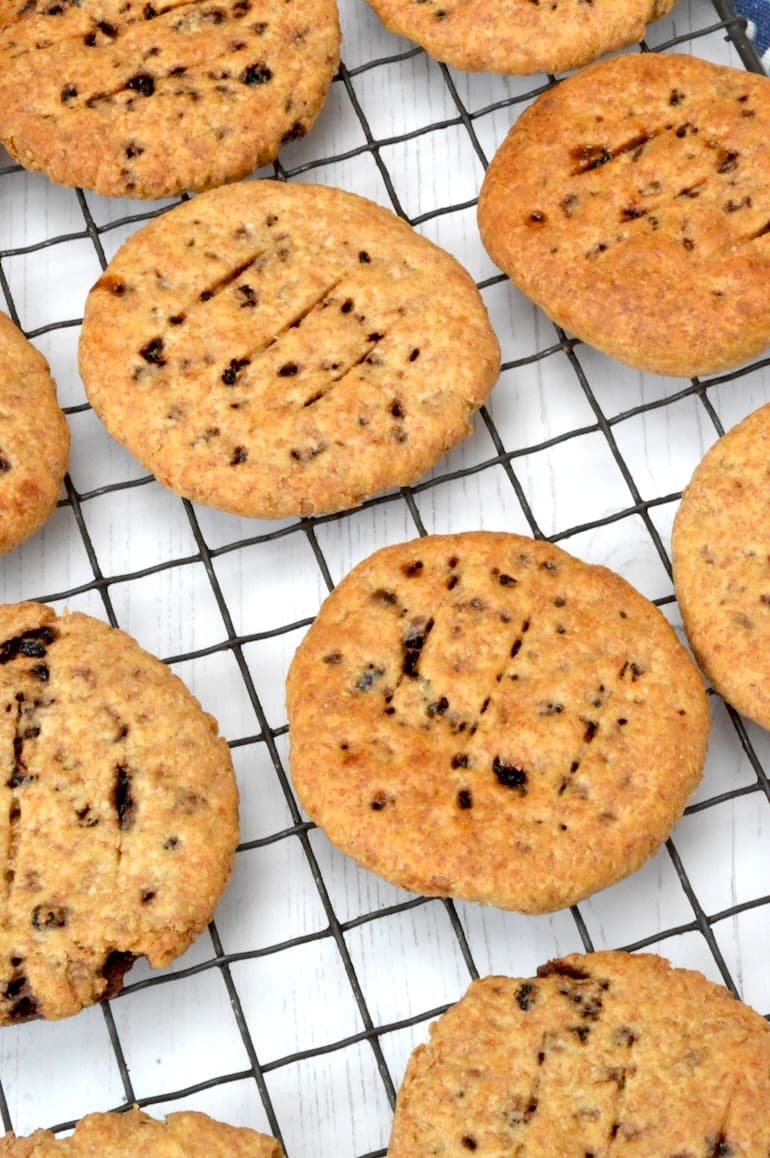
About a year ago I received a money off voucher for Chorley cakes at my local supermarket. I’ve eaten Eccles cakes plenty of times, but this might have been a first for Chorley cakes. Apart from being too sweet and made with white flour, of course, I really liked them. So I did some research and came up with a more authentic, less sweet version, which I reckon takes some beating.
Dive Right In
- What’s The Difference Between Chorley Cakes and Eccles Cakes?
- Why This Chorley Cakes Recipe Works
- Wholemeal Chorley Cakes
- Ingredients, Additions And Substitutions
- How To Make Chorley Cakes
- Top Tips For Making Delicious Chorley Cakes
- Other Regional British Bakes You Might Like
- Keep In Touch
- Pin It
- The Recipe
What’s The Difference Between Chorley Cakes and Eccles Cakes?
Despite their names, Chorley cakes and Eccles cakes are really pastries rather than cakes as we know them today. Both hail from towns in Lancashire and consist of pastry wrapped around a sweet dried-fruit filling. They probably evolved as a thrifty way to use up leftover pastry from pie-making. These days they are very much traditional English bakes in their own right.
Chorley cakes are the lesser known cousins of Eccles cakes. The principle difference between the two is that Eccles cakes are made with flaky pastry whereas Chorley cakes are made with shortcrust pastry. The latter are also flatter, less spiced and less sweet than the former.
A true Chorley cake is made with currants and is not egg washed nor dusted with sugar on the top, as Eccles cakes are. Indeed, Chorley cakes are left plain with just three slashes on the top.
Locally, they’re affectionately known as “fly pies” and you can perhaps see why.
Why This Chorley Cakes Recipe Works
- Buttery flaky pastry – Wholemeal pastry delivers plenty of buttery flavour and a lovely flaky texture.
- Sweet fruity filling – Lightly spiced, juicy currants provide a delicious contrast to the rich pastry, with a little rum adding extra depth.
- Wholemeal twist – Wholemeal flour brings a nuttier flavour and a little extra goodness to this traditional Lancashire bake.
- Keep surprisingly well – These little cakes stay good for several days, making them ideal for baking ahead and enjoying with a cuppa. They also freeze well.
Wholemeal Chorley Cakes
Chorley cakes are a wonderful no-fuss bake. They don’t need to look elegant, there’s no egg wash required and no sugar sprinkled on top. It’s just the pastry and currant filling and they both shine through.

Rustic they may be, but Chorley cakes are deliciously rich and buttery. It’s perhaps not surprising as not only is the pastry made with butter but the dried fruit is soaked in melted butter too.
Serve them warm from the oven for a real treat with a pat of butter, if liked or maybe a slice of Lancashire cheese. Though I find the cakes are so buttery anyway, they don’t really need any extra.
They’re also really good at room temperature with a cup of tea.
Ingredients, Additions and Substitutions
All of the ingredients needed for this recipe are store cupboard staples, so you’re like to have everything you need to hand.
Butter
I like to use unsalted butter for baking, it generally has a richer flavour. But if you use salted butter, you can omit the pinches of salt in the recipe.
Currants
Traditionally, Chorley cakes are made with currants. And actually they’re the best dried fruit to use because they’re small. Larger vine fruit, as in raisins or sultanas, are more likely to tear through the pastry and will make it difficult to roll.
Flour
I use wholemeal spelt flour, as that’s my favourite flour for baking. It’s light and easy to work with and makes fabulous pastry. I’ve not tried making them with standard wholemeal flour (whole wheat flour), but that’s what I’d use if I didn’t have any spelt in the house.
Rum
Rum isn’t a traditional ingredient, but I like to add a small amount to plump up the currants and add a little extra flavour. The alcohol pretty much cooks out whilst the cakes are baking, but the flavour remains.
Spice
Chorley cakes are lightly spiced and nutmeg is the spice traditionally used. However, if nutmeg isn’t your thing or you don’t have any, a pinch of ground cloves makes a good substitute. Likewise, try a half teaspoon of ground cinnamon, ground allspice or mixed spice instead.
How To Make Wholemeal Chorley Cakes
You don’t need much in the way of tools for this recipe. Chorley cakes are a very simple bake. A couple of bowls, rolling pin, baking tray, scales and measuring spoons should just about do it.
Please refer to the recipe card at the bottom of this post for cooking times, measurements and quantities of ingredients used.
Step 1. Prepare Filling
Measure the currants, rum and sugar into a small mixing bowl. Grate in the nutmeg and give everything a good stir.
Melt the butter, then add it to the bowl of currants and stir again.
Cover the bowl with a plate and leave the currants to plump up whilst you get on with making the pastry.
Step 2. Make Pastry
Cut the cold butter into small cubes and drop them into a large wide bowl along with the flour, baking powder and salt. Rub the butter into the dry ingredients with your fingertips until the mixture resembles breadcrumbs.
Make a well in the centre and add the water. Stir together with a flat bladed knife until everything clumps together. If it doesn’t, add a little more water. But go carefully – a wet mixture doesn’t make good pastry and is difficult to handle.
Bring the mix together with your hands to form a ball of pastry dough. The less you handle the dough the flakier it will be.
Flatten the pastry into a disc and place it back in the bowl. Cover with a plate and leave to rest for fifteen minutes or longer. If your kitchen is warm, place it in the fridge.
Step 3. Form Cakes
Roll the pastry out on a lightly floured surface to about 5 mm thick.
Using a ring cutter or small saucer, cut out as many 8 cm (3 inch) circles as you can. Gather up any offcuts and roll the pastry out again. Keep cutting and re-rolling until you’ve used up all the pastry. I usually make sixteen.
Top Tip – for 12 larger Chorley cakes, use a 10 cm (4 inch) cutter.
Place a tablespoon of the currant mix onto the centre of a pastry circle. Don’t worry about overfilling, it doesn’t matter if some of it breaks out. Chorley cakes are meant to have a rustic appearance with the currants showing through the pastry anyway.
Fold the sides into the middle and pinch them together well to seal. Flip over so the seam is on the bottom then roll lightly into a thick round about the same diameter as the original pastry circles. Keep rolling until the currants just start to show through the pastry.
Repeat, the process then score three slashes across the top of each one with a sharp knife. Then pop them onto a lined baking tray, spacing them well apart.
Step 4. Bake
Place the tray in the centre of the preheated oven and bake until golden.
Transfer the cakes onto a wire rack and leave to cool, or eat whilst still warm.
Store in an airtight container for up to four days or wrap well and freeze for up to three months.
Chorley cakes are delicious cold, but if you’d like to serve them warm at a later stage, preheat the oven to 150℃ (130℃ fan, 300℉, Gas 2). Place the Chorley cakes on a baking tray and heat for 4-6 minutes. To air fry, heat for 4 minutes at 130℃ (260℉).
Top Tips For Making Delicious Chorley Cakes
- Keep the pastry cool – Wholemeal pastry benefits from being kept cool while you work with it. If it starts to feel soft or sticky, pop it in the fridge for a short while before rolling.
- Don’t overwork the pastry – Handle it as little as possible to help keep it tender and flaky.
- Soak the currants – Don’t skip this step as the currants need time to soak up the rum and butter.
- Seal the edges well – Gather the pastry around the filling and pinch it firmly closes before turning teh cake over and rolling it gently to flatten.
- Don’t worry about perfectly round cakes – Chorley cakes are rustic little pastries, so slight variations in shape are part of their charm.
Other Regional English Bakes You Might Like
- Dorset apple cake
- Grasmere ginger shortbread
- Jam almond cake
- Jumbles
- Simple tea bread
- Yorkshire curd tarts with chocolate pastry
Keep in Touch
Thank you for visiting Tin and Thyme. If you make these Chorley cakes, I’d love to hear about it in the comments below. Do you have any recommendations or tips for making these types of stuffed pastries?
Please star rate the recipe too. And do tag me @choclette8 on Instagram with your images, I love to see your take on my recipes.
For more delicious and nutritious recipes follow me on Twitter, Facebook, Instagram, Flipboard or Pinterest. And don’t forget to SUBSCRIBE to my weekly newsletter. Or why not join the conversation in our Healthy Vegetarian Whole Food Recipes Facebook Group?
If you’d like more British recipes, follow the link and you’ll find I have quite a lot of them. All delicious and nutritious, of course.
Choclette x
Chorley Cakes. PIN IT.
Chorley Cakes: Made With Wholemeal Flour
Ingredients
Filling
- 150 g currants
- 40 g dark muscovado sugar
- 1 tbsp rum
- good grating of nutmeg
- 1 pinch fine sea or rock salt
- 40 g unsalted butter melted
Pastry
- 250 g wholemeal spelt flour
- 2 tsp baking powder
- 1 pinch fine sea or rock salt
- 125 g unsalted butter fridge cold – cubed
- 5-6 tbsp water
Instructions
Filling
- Measure the currants, rum, sugar, salt and spice into a small mixing bowl. Give everything a good stir. Add the melted butter and stir again.150 g currants, 40 g dark muscovado sugar, 1 tbsp rum, good grating of nutmeg, 1 pinch fine sea or rock salt, 40 g unsalted butter
- Cover the bowl with a plate and leave the currants to plump up whilst you get on with the pastry.
Pastry
- In a large wide bowl, rub the cubes of butter into the dry ingredients with your fingertips until the mixture resembles breadcrumbs.250 g wholemeal spelt flour, 2 tsp baking powder, 125 g unsalted butter, 1 pinch fine sea or rock salt
- Make a well in the centre and add 5 tablespoons of the water. Stir together with a flat bladed knife until everything clumps together. If it doesn’t, add the remaining 1 tbsp water.5-6 tbsp water
- Bring the mix together with your hands to form a ball of pastry dough. The less the dough is handled the flakier it will be.
- Flatten the pastry into a disc and place it back in the bowl. Cover with a plate and leave to rest for fifteen minutes or longer. If your kitchen is warm, place it in the fridge.
- Preheat the oven to 200℃ (180℃ fan, 400℉, Gas 6).
- Roll the pastry out on a lightly floured surface to about 5 mm (0.2 inch) thick.
- Using a ring cutter or small saucer, cut out as many 8 cm (3 inch) circles as you can. Gather up any offcuts and roll the pastry out again. Keep cutting and re-rolling until you've used up all the pastry. I usually make sixteen.
- Place a tablespoon of the currant mix onto the centre of a pastry circle. Fold the sides in and pinch them together to seal. Flip over so the seam is on the bottom then roll lightly into a round. Keep rolling until the currant just start to show through the pastry.
- Make three slashes across the top with a knife, then pop them onto a lined baking tray, spacing them well apart. Place the tray in the centre of the oven and bake for 13-15 minutes until golden.
- Transfer the cakes onto a wire rack and leave to cool, or eat whilst still warm.