
Raspberry Rose Curd
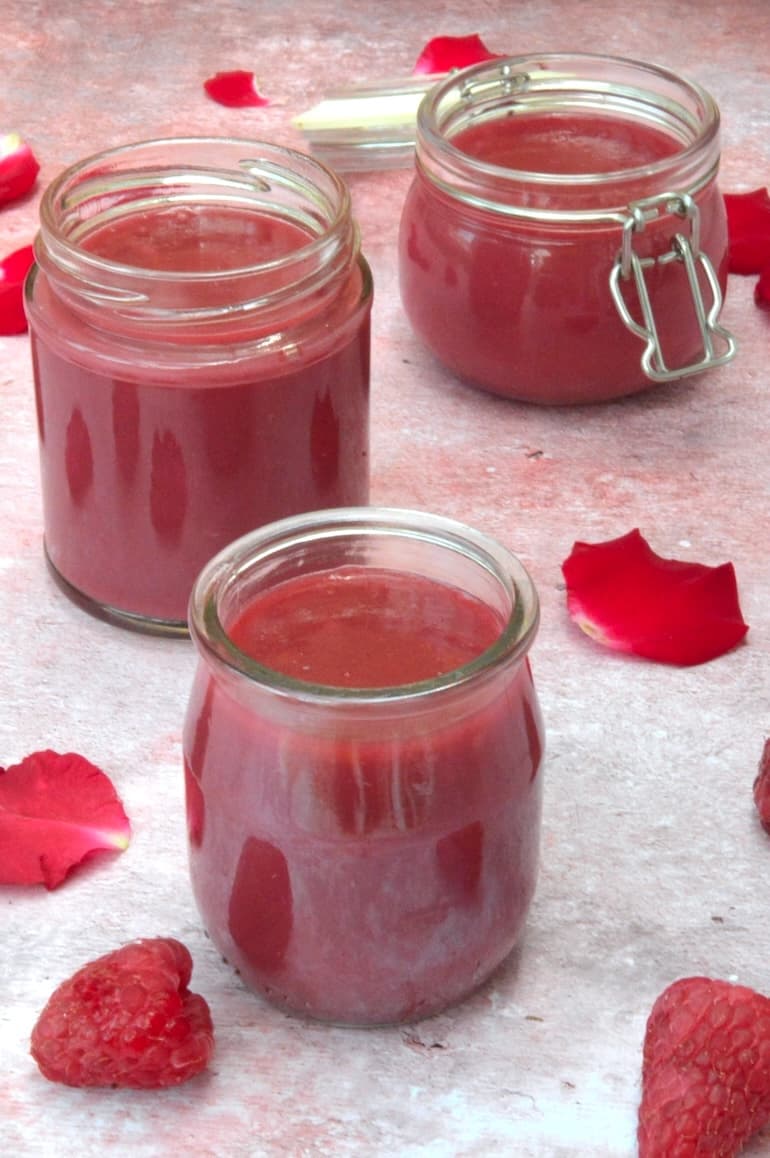
Homemade raspberry rose curd is a velvety fruit curd made with fresh raspberries and a hint of rose. It’s easy to make and has a wonderfully intense raspberry flavour. Smooth, sweet and zippy, it’s delicious spread on toast or scones, swirled into yoghurt or used to create cakes and desserts.
This post may contain affiliate links. As an Amazon Associate, I earn from qualifying purchases. See my cookie and privacy statement for further details.
I first made this curd, way back when, for my big birthday tea. I wanted some to make cupcakes with. For that version, I used rose sugar and some local Cornish raspberries. But I’ve used real rose petals in the recipe here, though other options are available. What a delight. Raspberries and rose are a heavenly combination.
Dive Right In
- What Is Raspberry Curd?
- Why This Raspberry Curd Works
- Why You’ll Love This Raspberry Curd
- Ingredients, Additions And Substitutions
- How To Make Raspberry Rose Curd
- Delicious Ways To Use Raspberry Rose Curd
- Raspberry Curd Flavour Pairings
- FAQs
- Other Fruit Curd Recipes You Might Like
- Keep In Touch
- Pin It
- The Recipe
What Is Raspberry Curd?
Raspberry rose curd is similar to lemon curd but with a gorgeous deep pink colour and berry flavour. It’s a smooth, creamy fruit spread made by gently cooking raspberry purée with lemon, sugar, eggs and butter until thickened. Adding fresh rose petals or rose flavouring is optional, but recommended.
Unlike traditional lemon curd, raspberry rose curd is softer, fruitier and lightly floral. This makes it especially good for spooning over breakfast dishes, desserts or pancakes.
Like other fruit curds, it stands out for its velvety luxurious texture and flavour, which is both sweet and tart.
Why This Raspberry Curd Works
This raspberry rose curd balances sharp raspberry notes with the richness of a classic egg-thickened curd. The addition of rose enhances the fruit without overpowering it, creating a more aromatic and layered flavour than traditional raspberry curd.
It works particularly well for the following reasons:
- smooth, creamy texture
- easy to make at home
- pronounced raspberry flavour with subtle floral notes
- uses whole eggs, rather than just egg yolks, thus reducing waste
- works with fresh or frozen raspberries
- versatile – as good for baking and desserts as it is for breakfast or afternoon tea
- lovely way to use seasonal fruit
Why You’ll Love This Raspberry Curd
Everyone’s heard of lemon curd, but did you know there are any number of fruits you can use instead? Each time I make a new fruit curd I think it’s the best ever. When I tried this one, I thought I’d died and gone to heaven.

Of course you don’t have to add rose petals to make a perfectly delicious raspberry curd. Just leave them out. Alternatively, stir a few drops of rose extract or rose water into the curd at the same time as you add the butter.
This curd is a soft set one so that it tastes more of the bright zingy fruit than it does of eggs. But if you prefer something thicker, make it with three eggs rather than two.
Once you’ve made a batch, spread it on bread, toast or scones. And when you’ve done that you can use the rest to bake some raspberry and rose curd cupcakes. Honestly, assuming it doesn’t disappear almost immediately, you’ll find plenty of ways to use it. But if you need ideas, I have a whole section of delicious ways to use raspberry rose curd.
Let me know if you love this raspberry curd as much as I do.
Ingredients, Additions and Substitutions
Apart from the raspberries and rose, you’re likely to have all of the ingredients needed to make this recipe.
Fruit
Use fresh raspberries if you can and the riper they are the better. They provide natural acidity, flavour and colour.
If you can’t get hold of fresh ones, however, frozen will also work.
As well as raspberries, you’ll also need a lemon. This adds additional acidity and brightens the flavour. It also enhances the raspberries sweet and tart notes and helps the curd to thicken.
Eggs
Whole eggs work brilliantly in this recipe. They create a stable structure, creamy texture and reduce waste. You don’t need to use only yolks, as some recipes do. This means there’s no need to throw away the whites or try and find something else to make with them.
In my experience fruit curds made with whole eggs aren’t nearly as cloying as those made with egg yolks only.
I’ve used two large eggs in this recipe, but you can replace these with three small eggs. For a thicker curd, replace them with three medium eggs.
Sugar
Sugar acts as both stabiliser and preservative. It’s also necessary for balancing the tartness of the raspberries. This means it’s best not to reduce the sugar too much, as it affects both flavour and texture.
Butter
Butter rounds out the fruit’s sharpness, adds richness and helps spreadability. It also helps to thicken the curd and give it gloss. Use unsalted butter rather than salted though.
Additional Flavour
Rose adds a delightful fragrance rather than sweetness to the curd, but not so much that it overpowers the raspberries.
I’ve used fresh rose petals in the recipe, but you can also use rose extract or rose sugar instead. However, if you’d rather not have the rose flavour, you can just leave it out, the raspberry curd will still be delicious.
Vegan Alternative
Traditional fruit curd relies on eggs and butter for its texture. To make a vegan version, you’ll need to replace both the thickening and richness components.
You can swap the butter for a good quality vegan butter and use arrowroot or cornflour instead of the egg. Because vegan curd thickens differently from egg-based curd, expect a softer, more pudding-like texture.
How To Make Raspberry Rose Curd
Fruit curds are a joy to make, but they can be a little tricky. If overheated they can curdle, though all is not lost if they do. You don’t need any special equipment, but there is a lot of stirring involved.
Please refer to the recipe card at the bottom of this post for cooking times, measurements and quantities of ingredients used.
Step 1. Purée Raspberries
First off, remove the petals from your rose, if using. Place them in a jug together with the raspberries, then use a stick blender (affiliate link) or food processor to mash them to a purée. It only takes a few seconds.
Suspend a sieve over a small to medium sized saucepan, then scrape the purée into it. Using a sturdy metal spoon, press the raspberries through the sieve until you’ve extracted the juice and flesh and it’s mostly only seeds that remain.
Throw the remains into the compost bin.
Step 2. Add Sugar & Lemon
Add the sugar to the raspberry purée in the pan, so it can start to dissolve.
Scrub the lemon and dry it, then grate the zest finely into the pan. A microplane (affiliate link) is excellent for this.
Halve the lemon, then juice it and pour into the pan, ensuring no pips make their way in too.
Stir until the sugar is more or less dissolved.
Step 3. Beat In Eggs
Break the eggs into the pan, then whisk thoroughly until smooth with no traces of egg to be seen. A balloon whisk (affiliate link) is good for this.
Step 4. Cook Curd
Place the pan over a medium heat, stirring with a wooden spoon from time-to time. As soon as you see steam rising up, lower the heat a bit and cook the curd for fifteen minutes or until it’s thick enough to coat the back of a wooden spoon.
You know it’s ready when you draw your finger across the back of the spoon and the trail stays clear.
Top Tip – The curd will thicken slowly but it’s important to not let the mix get so hot that it starts to turn into scrambled eggs. Stir regularly once the mixture starts steaming to prevent the eggs catching at the bottom of the pan. If it does curdle, don’t panic. Just pass the mix through a sieve before jarring to remove any bits of egg.
Step 5. Add Butter
As soon as the curd has thickened, remove the pan from the heat. Cut the butter into cubes and drop one into the curd. Stir until it’s melted, then repeat with the remaining butter.
This step prevents the curd from becoming greasy, ensures it’s emulsified properly and retains that lovely buttery taste.
Step 6. Jar Up
Decant the curd into the warm sterilised jars, then seal. It will thicken as it cools.
Leave to cool fully, then store in the fridge where it will keep for up to one month.
Delicious Ways To Use Raspberry Rose Curd
Perhaps the best way of all to enjoy this raspberry rose curd is to just eat it with a spoon. But if you think that’s way too indulgent, here are a few ideas on other delicious ways to use it.
Breakfast
- spread on toast
- swirl into yoghurt
- dollop onto porridge
- enliven a granola bowl
- spoon over pancakes or waffles
Baking
- use as a filling for sponge cakes, a topping for cupcakes or make these raspberry rose curd cupcakes
- sandwich biscuits or macarons
- fill tarts – try this recipe for chocolate tarts and swap the lime curd for raspberry curd
- make these chocolate cake waffles and swap the lemon curd for raspberry curd and the strawberries for fresh raspberries
Desserts
- spoon over ice cream
- swirl over cheesecakes such as this raspberry white chocolate cheesecake or bake these individual curd cheesecakes, swapping the lemon curd for raspberry curd
- fold into whipped cream or mascarpone cheese
- layer onto pavlovas or make my mini chocolate pavlovas and top with raspberry curd and fresh raspberries
Afternoon Tea
- Spread on freshly made scones or warm crumpets
- Sandwich cakes with it. Bake this chocolate Victoria sponge and swap the lime curd for raspberry curd
Gifting
Fill attractive jars and give as edible gifts. Label the jars and maybe list a few ideas as to how to use it, eg afternoon tea spread.
Raspberry Curd Flavour Pairings
The flavour of rose pairs brilliantly with raspberries. They’re both in season at the same time. Raspberry curd pairs well with pretty much the same flavours that raspberries do.
- Chocolate – white chocolate & dark chocolate
- Dairy – mascarpone, cream, yoghurt & labneh
- Nuts – almond & pistachio
- Aromatics – cardamom, lemon, vanilla & rose
FAQs
Absolutely. Frozen raspberries allows you to make raspberry curd all year round. Just thaw before following the recipe.
It probably hasn’t cooked enough for the eggs to start setting. Just put it back on the stove and keep going until it coats the back of a spoon. It will thicken further as it cools.
If you overheat the curd whilst cooking, it will scramble the eggs. Pass it through a fine mesh sieve to remove cooked eggy bits.
Sometimes butter is the culprit. Make sure you add it a little bit at a time after you’ve taken the eggs and sugar off the heat so it can properly emulsify.
As long as you’ve used clean sterilised jars with tight fitting lids, it will keep in the fridge for three to four weeks. Once opened, eat within three days.
Raspberry curd freezes well, though it might need a quick stir once thawed. It will keep in the freezer for six months.
No. Rose should sit in the background and enhance the raspberries rather than dominate.
Butter helps to thicken fruit curd and gives it a nice spreadable consistency. But it also adds richness and gives a delightfully silky smooth mouthfeel. The trick is to add it at the end of the process. This really makes a difference to the silkiness of the finished raspberry curd.
Other Fruit Curd Recipes You Might Like
Keep in Touch
Thanks for visiting Tin and Thyme. If you make this raspberry and rose curd, I’d love to hear about it in the comments below. And do please rate the recipe. Have you any top tips? Do share photos on social media too and use the hashtag #tinandthyme, so I can spot them.
For more delicious and nutritious recipes follow me on Twitter, Facebook, Instagram, Flipboard or Pinterest. And don’t forget to SUBSCRIBE to my weekly newsletter. Or why not join the conversation in our Healthy Vegetarian Whole Food Recipes Facebook Group?
If you’d like more raspberry recipes, follow the link and you’ll find I have quite a lot of them. All delicious and nutritious, of course.
Choclette x
Raspberry And Rose Cupcakes. PIN IT.
Raspberry Rose Curd
Equipment
- microplane (affiliate link) optional
Ingredients
- 200 g raspberries can also use frozen
- petals from one deep scented rose or 3 drops rose extract or 1 tsp rose water
- 150 g golden granulated sugar or golden caster sugar
- 1 organic lemon
- 2 large eggs (I used duck eggs)
- 60 g unsalted butter cubed
Instructions
- Mash the raspberries and rose petals as thoroughly as possible. A stick or jug blender is the best way to do this.200 g raspberries, petals from one deep scented rose
- Pass the purée through a sieve to remove any seeds. Place the sieve directly over a small to medium sized saucepan to catch the purée.
- Add the sugar to the pan, grate in the lemon zest then squeeze in the juice.150 g golden granulated sugar, 1 organic lemon
- Stir until the sugar has dissolved, then whisk in the eggs until the mix is completely smooth.2 large eggs
- Stirring all the while, place over a medium heat until you can start to see steam rising up. Lower the heat to medium low (I use 3 out of a possible 9), then cook for about fifteen minutes or until the mixture is thick enough to coat the back of a spoon. You don't need to stir all of the time, but stir regularly to ensure the mixture remains smooth and that the eggs aren't cooking on the bottom of the pan.
- Once thickened, take the bowl off the heat, add the butter, one cube at a time, and stir until melted and thoroughly combined.60 g unsalted butter
- Pour into three clean sterilised jars. The curd will thicken as it cools. Seal, allow to cool fully then store in the fridge for up to a month.
Notes
Nutrition Estimate
This post contains affiliate links which are marked with an asterisk* or (affiliate link). If you buy through a link, it won’t cost you any more, but I might get a small commission. Thank you for your support of the brands and organisations that help to keep Tin and Thyme blithe and blogging.
I really like the flavour of rose. I shall have to use Rosewater as I’m unable to source rose petals. Even after letting everyone know I wanted some – too many sprayers!! I love rose petal jam, lovely with Brie or Camembert. Thanks Choclette:))
Ah, now I’ve never made rose petal jam. There’s a thought and a project for next year. We’re having a rather horrid heatwave and none of our garden plants are enjoying it very much. If you make the curd, add the rosewater at the end, a little at a time to ensure it doesn’t get too rosy.
I’ve never made it either. I think the brand I found was made in Poland but not sure – jar already recycled! But it was a lovely delicate flavour but quite runny – could be a bit messy if you didn’t concentrate while eating it. You can imagine how it would slide off a piece of cheese for the unwary!!
I’ve been researching it and many use added pectin or cornflour to thicken it up, but as I won’t use either of those things, I suspect mine will be on the runny side too. I’m determined to give it a go though.
I would imagine it is just a syrup with lemon juice for setting. I’m sure you will sort it and it will be lovely. If I could only find some spray free petals …………
Yes, that’s pretty much what I was thinking. So does no rose petals mean you don’t have a garden Mary?
Yes I do but I don’t grow roses. For quite a few years I didn’t have time to garden as I was cooking commercially. I am quite a novice in the garden but am learning and only a summer gardener!! :))
Ooh interesting, you were a professional cook? I didn’t know that. The summer’s are becoming so hot here, I’m finding it hard to be a summer gardener.
No not a professional, just able to get stuff done. Good fun!
I’ve just read how to make Rose Sugar – grind 1/2 cup of unsprayed dried rose petals with 1 cup of granulated sugar in a processor. After that use the mixture wherever your heart desires. :))
Hahaha, thank you Mary. I have the recipe for rose sugar on my blog.
oh yum this looks so pretty. i love rose flavoured foods (and violet!) I’ve made lemon curd and i’ve made a rose petal sorbet with real roses. so lovely.
sherry
Rose petal sorbet sounds delicious. And now you’ve reminded me of those rose and violet creams you used to get. I’m going to have to hunt them out now and see if anyone still makes them.