
Baba Ganoush: Air Fryer, Oven Or Grill
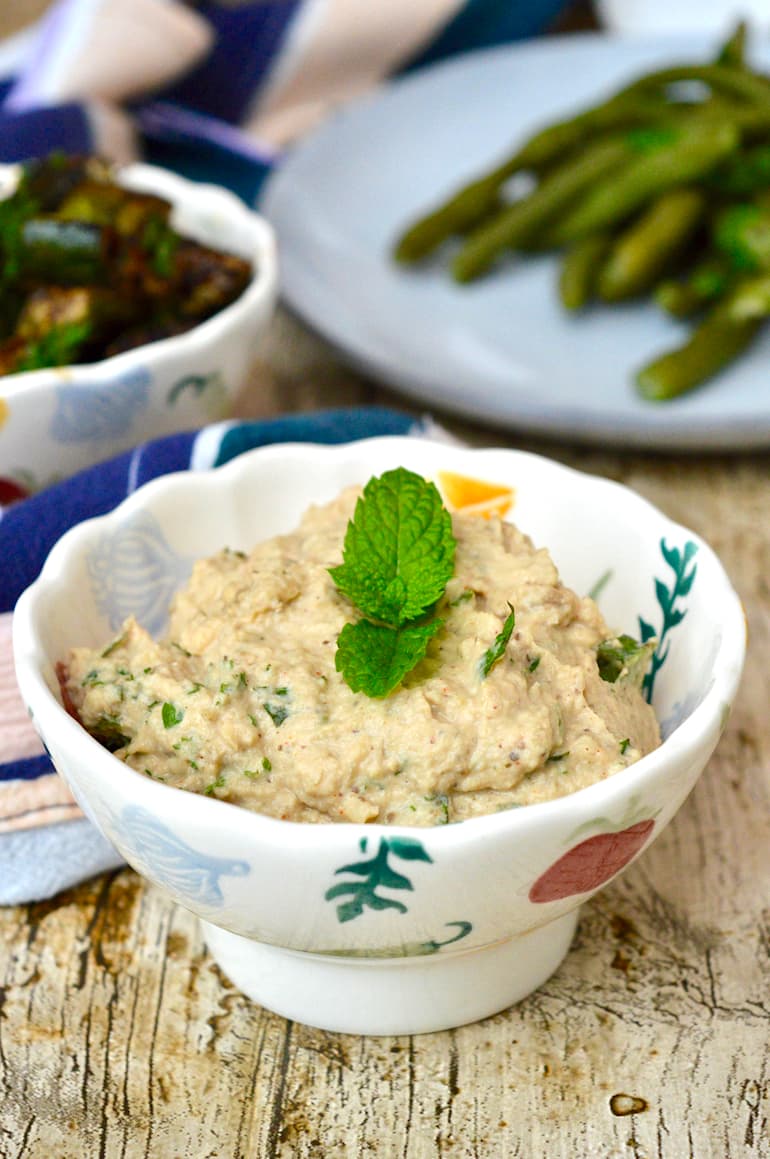
Baba ganoush is a classic Middle Eastern dip made with grilled or roasted aubergines (eggplants). It’s a simple dish with only four ingredients required, though you can dress it up with a number of additions and / or toppings. Either way, it’s creamy, smoky and delicious. The recipe is also naturally healthy and vegan.
This post may contain affiliate links. As an Amazon Associate, I earn from qualifying purchases. See my cookie and privacy statement for further details.
If ever I have an aubergine or two in my veg box, the first thing I think about is baba ganoush. It’s something I used to hate when I was young, but I’ve now come to love. Try it and see what you think.
What Is Baba Ganoush?
It’s a grilled or roasted aubergine (eggplant) purée made with tahini, garlic and lemon juice. As well as being super healthy, it’s also naturally vegan.

These days everyone’s heard of hummus, but baba ganoush is less well known. It’s just as tasty though with a lovely smoky flavour. In the Middle East, where it hails from, it’s a very popular dip.
What Does Baba Ganoush Mean?
In urban slang baba ganoush means “hot stuff”, as in a physically attractive person. Who knew? The original meaning is more along the lines of “spoil daddy”. As in, let’s make a delicious aubergine purée to spoil daddy.
Baba ganoush, or baba ghanouj, is actually just that, a smoky aubergine purée, commonly used as a dip in the Middle East. It was really popular with my family in Egypt.
Why Make Baba Ganoush?
There are many good reasons to make baba ganoush. Here are a few of them.
- Easy to make
- Creamy in texture
- Smoky in flavour
- Delicious to eat
- Plant-based and thus naturally vegan
- Healthy – low carb, low fat and packed full of nutritious compounds
- A good make-ahead dip – often tastes better on day two than day one
- Exotic – surprise friends and family with something they may not have tried before
- Makes good use of aubergines (eggplants)
- An excellent addition to a Middle Eastern or meze feast
Is Baba Ganoush Healthy?
It’s hard to get a dip much healthier than baba ganoush. Not only is it low carb, low fat and high fibre, but it’s also packed with nutritious vitamins and minerals.
Aubergine is known as the poor man’s “meat” because it’s so nutritious and a lot cheaper than meat. It’s high in antioxidants and according to Healthline it may reduce the risk of heart disease, help to prevent diabetes and aid weight loss.
As well as aubergine, baba ganoush also contains healthy hero garlic and tahini. Tahini has a whole host of benefits but also contains a significant amount of protein.
How To Make Baba Ganoush
The quantity I’ve given in the recipe card at the bottom of this post is enough for two to four people, depending on if it’s the star of the show or just part of it. To make more, simply double, triple or quadruple the quantities.
All you need to do is cook the aubergine and then mix it with garlic, tahini, lemon juice and a little salt. There’s no need to add olive oil to the dip itself, though a drizzle over the top is always welcome. Try to make it a good quality flavoursome extra virgin olive oil.
Step 1. Prepare Aubergine (Eggplant)
Garlic adds to the flavour. I like to roast mine along with the aubergine. This gives it a milder, but sweeter taste.
Make two slits in the skin and insert the halved garlic cloves into them.
Oil the aubergine (eggplant) lightly with your hands then cook using one of the methods listed below.
Scrape as much of the skin off as you can whilst still warm. I find the whole skin comes off quite easily. It doesn’t really matter if a few flecks still adhere to the flesh. It adds a bit of texture and colour. Alternatively scrape the flesh out with a spoon.
Step 2. Mix It Up
Once the aubergine and garlic are cooked, it’s then just a question of mixing everything together in such a way as to get the consistency you like.
For a slightly chunky texture, use a fork to mash the aubergines with the tahini, garlic lemon juice and salt. For a smooth texture pulse everything together in a mini food processor a few times. Don’t go overboard though or you may end up with a watery consistency.
Step 3. Serve
Transfer the aubergine purée to a shallow bowl and garnish with one or two of the suggestions below, if liked. Serve at room temperature with warmed or toasted pitta breads cut into fingers, and / or vegetable crudités.
How Long Will It Keep?
One of the many good things about baba ganoush is that it usually tastes better on day two than it does on day one. This makes it a great make-ahead dish. Store in an air-tight container in the fridge for up to four days.
Cooking Techniques
You can grill or roast the aubergine (eggplant) in one of three ways. Grilling is the traditional way, but I like to use my air fryer as it’s easy, economical and doesn’t take too long.
Ideally you’d cook the aubergine (eggplant) over an open flame. This gives it the best smoky flavour. However, this isn’t practical for most so grilling is the next best thing.
If you cook in an air fryer, as I do, or an oven, the smoky notes are quite subtle. You can enhance these by either using smoked salt or smoked paprika.
Grill
Place the oiled aubergine under a medium hot grill and cook until the skin is black and blistered. This usually takes about fifteen to twenty minutes. Turn repeatedly until all of the skin is charred and the flesh feels soft when you press into it.
You can do this over an open flame too, but use tongs and be careful. This method produces the smokiest flavour.
You may need to drain the aubergine of any water if using either of these methods. Just cut in half once cooked and let out any liquid.
Air Fryer
Place in the air fryer at 185℃ (350℉) for twenty minutes, turning once after ten minutes and then again after five. The skin won’t be charred, but the flesh should be cooked.
Oven
Set the oven to 200℃ (180℃ fan, 400℉, Gas 6. Place the aubergine on a metal roasting tray and roast for twenty to thirty minutes, turning after the first fifteen minutes. It’s cooked when the skin begins to blister and the flesh is soft to the touch.
Baba Ganoush: Make It Your Own
To give additional flavour, texture and colour to this authentic baba ganoush recipe, you have a number of options. You can add ingredients to the dip itself or garnish it with various toppings. Here are a few ideas.
Garnishes
Garnish with one or two of the following:
- extra virgin olive oil
- fresh parsley – roughly chopped
- dukkah (an Egyptian toasted nutty herby spice mix)
- za’atar – (a Levantine spice mix similar to dukkah, but without the nuts and includes sumac)
- tomatoes – roughly chopped
- black olives – halved or chopped
- toasted pine nuts
- pomegranate seeds
Additions
- 1 tbsp finely chopped fresh parsley
- 1 tbsp finely chopped fresh mint
- ¼ tsp ground cumin
- ¼ tsp chilli powder – Aleppo chilli flakes will give a mild heat and standard chilli flakes a more intense one
- ½ tsp smoked paprika – particularly good for smoky notes if not cooked on or under a grill
- a pinch of smoked salt – swap this for normal sea salt to enhance the smoky notes
- 1 tsp pomegranate molasses
- 1 tbsp natural yoghurt
Baba Ganoush Without Tahini
Tahini is an inherent ingredient in baba ganoush, but you can make a very tasty aubergine (eggplant) dip without it. You can either follow my recipe for baba ganoush and just leave out the tahini or try my aubergine dip without tahini recipe.
How To Serve Baba Ganoush
Baba ganoush makes a fabulous starter or appetiser. Serve it with warmed or toasted pitta breads cut into fingers and / or vegetable crudités. Likewise this makes a delicious light lunch.
For something rather grander, serve it as part of a meze spread with other dips such as hummus and muhammara. Add a bowl of marinated olives and one of pickles.
Or go for a real feast and serve it alongside homemade falafels, chopped salad, courgettes with yoghurt and za’atar and flatbreads.
Other Aubergine Recipes You Might Like
- Aubergine dip (without tahini)
- Aubergine carrot couscous
- Aubergine rice bowl
- Aubergine yakitori (eggplant skewers)
- Barley bowl with spiced aubergines, chickpeas & tomatoes
- Roasted Mediterranean vegetables
Keep in Touch
Thanks for visiting Tin and Thyme. If you make this baba ganoush, I’d love to hear about it in the comments below. And do please rate the recipe. Have you any top tips? Do share photos on social media too and use the hashtag #tinandthyme, so I can spot them.
For more delicious and nutritious recipes follow me on Twitter, Facebook, Instagram, Flipboard or Pinterest. And don’t forget to SUBSCRIBE to my weekly newsletter. Or why not join the conversation in our Healthy Vegetarian Whole Food Recipes Facebook Group?
If you’d like more Middle Eastern recipes, follow the link and you’ll find I have quite a lot of them. All delicious and nutritious, of course.
Choclette x
Baba Ganoush. PIN IT.
Baba Ganoush
Ingredients
- 1 aubergine (eggplant)
- ⅛ tsp olive oil for coating
- 1 clove garlic halved lengthwise
- ½ lemon juiced
- 1 tbsp light tahini
- 1 pinch sea salt
Instructions
- Rub the oil over the aubergine with your hands.1 aubergine (eggplant), ⅛ tsp olive oil
- Make two slits in the skin with a sharp knife on either side and insert the halved garlic cloves into them. They should go in quite easily, but just push them hard if not.1 clove garlic
- Grill or roast the aubergine using one of the methods below.
- Once cooked, allow to cool a little. Then scrape as much of the skin off as you can whilst still warm. I find the whole skin comes off quite easily. It doesn't really matter if a few flecks still adhere to the flesh. It adds a bit of texture and colour.
- For a rough texture, use a fork to mash the aubergines with the tahini, lemon juice and garlic. For a smooth texture blend everything together in a food processor. A mini food processor is good for these small quantities.½ lemon, 1 tbsp light tahini, 1 pinch sea salt
- Transfer to a shallow bowl and garnish with one or two of the suggestions below, if liked. Serve at room temperature with warmed or toasted pitta breads cut into fingers, and / or vegetable crudités.
Grill Method
- Place the aubergines under a medium hot grill and char the flesh all over, turning until every bit of the aubergine is cooked through.Alternatively char over a naked flame. This will give the smokiest flavour.You may need to drain the aubergine of any water if using either of these methods. Just cut in half once cooked and let out any water.
Air Fryer Method
- Place in the air fryer at 185℃ (350℉) for twenty minutes, turning once after ten minutes and then again after five minutes. It's cooked when the skin begins to blister and the flesh is soft to the touch.
Oven Method
- Heat the oven up to 200℃ (180℃ fan, 400℉, Gas 6). Place the aubergine on a metal roasting tray and roast for 20-30 minutes, turning after the first fifteen minutes. It's cooked when the skin begins to blister and the flesh is soft to the touch.
Notes
Nutrition Estimate
Sharing
I’m sharing this recipe for a simple Middle Eastern aubergine dip with Peachicks Bakery for #CookBlogShare.
what a beautifully simple way to celebrate aubergines! definitely pinning this for later! 🙂
Baba ganoush is really yummy. Hope you manage to give it a try.
Got to admit… I’m a sucker for Baba Ganoush. Can’t have summer without buckets of the stuff xx
Hahaha, I’ve not yet had a bucket of the stuff, but baba ganoush is a regular on our summer table.
wow i didnt think i could make Baba Ganoush in the air fryer. I am totally up to trying this method out tonight!
It’s a brilliant no-fuss method for roasting pretty much any veg and it works well with aubergines too.
Such a classic dip and I absolutely love dukkah which would be perfect with it.
Dukkah works really well with baba ganoush. I love it too.
I too just made some aubergine dip, and can’t wait to try another batch with airfryer version!
Haha, great minds Angie. I love my air fryer, it saves switching that oven on.