
Tzatziki: The Must Have Summer Dip Or Side
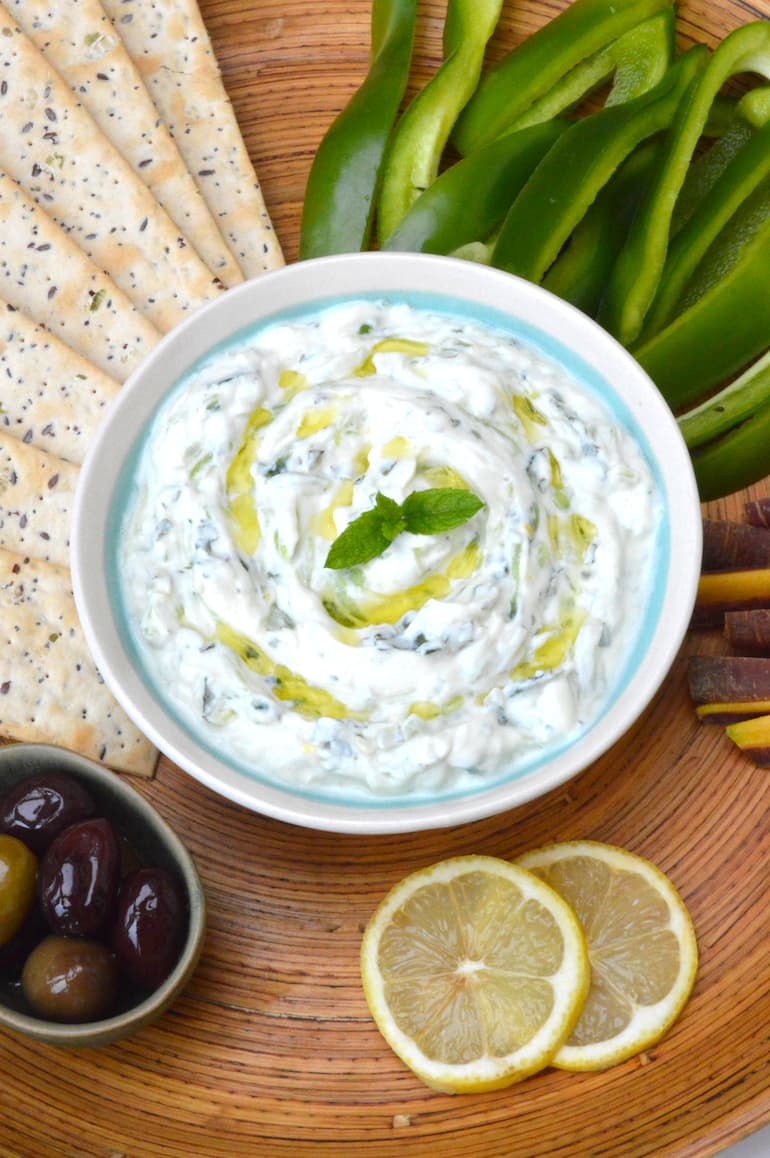
Cooling and refreshing tzatziki is an essential part of summer. Made with strained yoghurt, cucumber, lemon, garlic and fresh herbs, it’s a real delight. Although it makes a lovely accompaniment to many Greek dishes, it’s a meze must and useful addition to all sorts of meals. Use it as a dip, a sauce or side dish to elevate simple meals or enhance your favourite summer recipes.
This post may contain affiliate links. As an Amazon Associate, I earn from qualifying purchases. See my cookie and privacy statement for further details.
I can’t believe I haven’t given you a recipe for Tzatziki before now. I make this fabulous Greek meze staple a lot during the summer months. And it never disappoints. It may have taken me a while, but I hope you enjoy it as much as we do.
Dive Right In
- Why Make Tzatziki
- Tzatziki
- Ingredients
- How To Make Tzatziki
- How To Make Vegan Tzatziki
- What To Eat Tzatziki With
- FAQs
- Other Greek Recipes You Might Like
- Keep In Touch
- The Recipe
Why Make Tzatziki?
Healthy and delicious tzatziki is a general crowd-pleaser. This makes it perfect for summer barbecues, parties, picnics, potlucks or as a versatile side dish to accompany all sorts of meals.

- Easy to Make – With just a few simple ingredients, tzatziki is easy to prepare and because it needs time for its flavours to develop and meld, it’s perfect for meal prep.
- Fresh and Flavoursome – Tzatziki is a cooling and refreshing blend of yoghurt and cucumber. The addition of garlic and herbs boosts its flavour profile which makes it just as good to eat on its own as it does to complement a wide range of dishes.
- Healthy and Light – Made with Greek yoghurt, tzatziki is rich in protein and probiotics. Surprisingly it’s lower in calories than many other dips and sauces. It also contains lots of fibre, vitamins, minerals and antioxidants courtesy of the cucumber, garlic, herbs and lemon.
- Versatile – Use tzatziki as a dip for veggies and pita, a sauce for roasted veggies, part of a meze feast, a summer side dish or even a spread for sandwiches and crackers.
Tzatziki
Tzatziki, pronounced Tsaht-ZEE-kee is a popular Greek yoghurt and cucumber salad. It’s normally served as a meze. Turkey and North Cyprus have something very similar. It’s known there as cacık .
Tzatziki is a bit like raita, but thicker. It uses strained yoghurt rather than plain yoghurt and contains different seasonings and herbs. It’s quite garlicky and is meant to be so. Garlic lovers might like to add an additional clove into this recipe though.
It’s a very easy dish to make. The preparation requires a bit of time from start to finish, but hands on time is minimal.
Tzatziki Ingredients
Tzatziki is a very simple dish with only six ingredients required, not including salt. This means the quality of these ingredients really counts.
Strained Yoghurt
Traditional tzatziki is made with strained sheep or goat’s yoghurt. We generally call strained yoghurt, Greek yoghurt, here in the UK. However most Greek yoghurt you buy is made with cow’s milk.
Full fat strained yoghurt is a must for this recipe. Low fat versions just won’t give you the rich creamy mouthfeel and flavour that a good tzatziki should. Normal plain yoghurt is not thick enough.
If you can get Greek yoghurt made with ewe’s milk, so much the better. It’s not only richer and creamier than either cow’s milk or goat’s, but it’s easier for us humans to digest. Many people who have a lactose intolerance are able to eat sheep yoghurt. (Ref: NZ AgResearch)
I didn’t have any Greek yoghurt when I made the bowl of tzatziki you can see here, so I strained some normal yoghurt instead. It gave such a wonderfully creamy consistency and taste that I think I might carry on with this method in the future.
All I did was spoon 200g of natural yoghurt into a fine meshed sieve and leave it to drip for an hour. It’s surprising how much whey came out.
If you do this, don’t discard the whey, it’s useful stuff. It’s protein rich and good for gut health (Ref: Science Direct). If nothing comes to mind, drink it. That’s what I did on this occasion. It’s really refreshing.
You may want to strain your yoghurt for half an hour or so anyway, depending on the quality of the Greek yoghurt you’re using. Brands vary in quality and consistency.
If you’re after a plant-based tzatziki, use vegan Greek yoghurt.
Cucumber
You can use any type of cucumber you like for this recipe. But English cucumbers are generally the easiest and cheapest to get hold of.
As long as your cucumber isn’t old and tough, there’s no need to peel it. Many of its health benefits are in the skin.
Garlic
Garlic is a key flavour in tzatziki. Try to use a fresh plump clove if you can. You do not want dried garlic for this recipe. Traditional tzatziki is very garlicky, mine is moderately so. If you want the real deal, use two cloves rather than one.
Lemon
Lemon provides a bit of zing to the salad. Although Greek yoghurt has a slight sourness to it, it’s very mild.
Some people use white wine vinegar instead of lemon, but I prefer the freshness and flavour that lemon brings.
Mint
If you grown your own mint, spearmint (Mentha spicata) is the one to go for. Moroccan mint (Mentha spicata var. crispa Morocco), and Turkish mint (Mentha spicata var. crispa Nane) are both very good varieties of spearmint.
These mints have a delicious minty flavour, but are a little sweeter, less tough than some and generally more pleasant as a chopped herb than peppermint, for example.
Although in theory you can use dried mint to make tzatziki, I much prefer fresh mint. I find dried mint has a slightly gritty texture in the mouth and is often too dominant a flavour. If you do use it, use just a pinch.
You can use dill instead of mint if you prefer. Dill has a completely different flavour profile, but it’s a classic Tzatziki herb. You could even try a combination of both, though I have to confess I haven’t gone down this route. Let me know if you do.
Olive Oil
As in so many Mediterranean recipes, the key to the final taste is in the oil. Use as good an extra virgin olive oil as you can afford or find. Whatever you do though, make sure you use cold pressed oil and not refined.
How To Make Tzatziki
Although tzatziki is easy to make, there’s a bit more to it than just mixing a few ingredients together. Hands on time is minimal, but it’s best to make this recipe a few hours before you need it.
Please refer to the recipe card at the bottom of this post for full instructions, timings and quantities of ingredients used.
Step 1. Drain Cucumber
Cucumbers are very watery and some of that water needs to be removed. Most of the water in a cucumber is around the seeds. So the first thing to do is remove those.
Cut the cucumber in half lengthways and scrape out the seeds with a teaspoon. I do this straight into the compost bin.
Grate the cucumber, skin and all, using the coarse side of a box grater (affiliate link). Be careful not to scrape your fingers whilst you’re doing it. It’s easily done.
Transfer the lot to a sieve, mix the salt into it and leave to drip for an hour or so. You’ll know it’s done when it stops dripping. Suspend the sieve over a jug to collect the cucumber water, it makes a most refreshing drink.
If you don’t have time to wait for the cucumber to drain, line the sieve with a piece of muslin or sheet of kitchen towel. Gather up the corners and carefully squeeze as much of the liquid out as you can.
Top Tip
Salting the cucumber helps to draw the water out of it. It also gives it a slightly crisper texture.
Step 2. Mix Ingredients
Once the cucumber has drained, transfer it to a medium sized mixing bowl.
Peel the garlic and grate it directly into the bowl. A microplane (affiliate link) is excellent for this.
Chop the mint finely using a sharp knife and add that to the bowl too.
Add the yoghurt along with the remaining ingredients and stir until everything is well combined. Taste test at this point. There should be enough salt in the dish from the cucumber, but if you feel it needs more, add another pinch.
Cover the bowl and place it in the fridge for at least half an hour, but up to four hours. The flavours need a bit of time to develop and meld. The longer you leave it, the mellower the garlic becomes too. It’s also at its best served cold.
Top Tips
You can swap fresh mint for dried if that’s all you have, but you’ll only need a pinch.
For a zesty kick, finely grate some of the lemon peel into the mix. If you do this, make sure your lemon is organic or at least unwaxed.
Step 3. Serve
When you’re ready to serve, remove the bowl from the fridge and give it another stir.
If using as a dip or part of a meze spread, transfer the tzatziki into a serving bowl, drizzle a little extra virgin olive oil over the top and decorate with mint (or dill fronds) if liked.
How To Make Vegan Tzatziki
It’s very easy to adapt tzatziki to make it vegan. Find a good quality tangy neutral tasting vegan yoghurt and strain it through a sieve for an hour or so. If you’re able to source a good vegan Greek yoghurt, even better. You won’t need to strain it then.
Simply swap this for the dairy yoghurt in the recipe.
What To Eat Tzatziki With
Tzatziki is always a crowd-pleaser at gatherings, which makes it perfect for entertaining. It’s both delicious and healthy and pairs well with a variety of appetisers and main dishes.
But what exactly does this mean in practice?
Probably the most common way to eat tzatziki is to serve it as a dip with warm flatbreads and / or crudités as a snack or appetiser. It’s also good with fried crispy foods like French fries or these parsnip chips.
Tzatziki is, of course, an essential part of any Greek meze. Serve it alongside flatbreads, kalamata olives, falafel, tomato salad, hummus, spanakopita triangles, a green salad and pickles for a veritable veggie feast.
One of it’s more common uses in Greece is as a topping for souvlaki or gyros. However, it also works well as a general spread for sandwiches or crackers.
Tzatziki pairs particularly well with any type of fritter or veggie burger. Try it with my tofu patties, quinoa burgers, chocolate bean burgers, smokey sweetcorn and pepper fritters or these spiced courgette fritters.
Add it to a nourish or buddha bowl for the sauce or even protein element of the dish. It’s an essential component of my Greek rice bowl.
It’s also good with roasted and grilled veg and makes a great side dish to go with a salad buffet. Or why not just add it whenever you feel your meal needs a boost?
FAQs
It’s widely believed that yoghurt, which is the main ingredient in tzatziki, is good for the digestion. Live yoghurt is a natural probiotic which helps to increase beneficial microbial diversity in the gut. Make sure your yoghurt container states “contains live cultures”.
Yes, reducing cucumber’s water content is essential in order to make tzatziki. If you don’t do this you’ll end up with a watery sauce that tastes less rich and creamy than its meant to. You may be surprised at just how much water comes out.
Keep it in a sealed container and it will last in the fridge for three to four days. Don’t worry if some of the liquid has separated out, just stir well before using.
If you make your own tzatziki and hummus, both are really good for you. Tzatziki has less calories than hummus, but hummus contains more fibre. Both contain a good amount of protein and lots of vitamins, minerals and antioxidants. (Ref: Healthline)
If you buy commercial brands of either tzatziki or hummus, all bets are off.
Other Greek Recipes You Might Like
- Fluffy flatbread
- Greek butter beans in tomato sauce
- Hummus
- Spanakopita
- Walnut cake (karydopita)
- Whipped feta with garlic & parsley
Keep in Touch
Thank you for visiting Tin and Thyme. If you make this tzatziki recipe, I’d love to hear about it in the comments below. Do you have any recommendations or tips for using it?
Please rate the recipe. If you post pictures of your creations on social media, tag me @choclette8 so I can see them.
For more delicious and nutritious recipes follow me on Twitter, Facebook, Instagram, Flipboard or Pinterest. And don’t forget to SUBSCRIBE to my weekly newsletter. Or why not join the conversation in our Healthy Vegetarian Whole Food Recipes Facebook Group?
If you’d like more recipes using yoghurt, follow the link and you’ll find I have quite a lot of them. All delicious and nutritious, of course.
Choclette x
Tzatziki. PIN IT.
Tzatziki: The Must Have Summer Dip Or Side
Equipment
- microplane (affiliate link) optional
Ingredients
- ½ cucumber English type, or use 1 Persian cucumber
- 1 pinch fine sea or rock salt
- 150 g Greek yoghurt or other strained yoghurt – full fat is best
- 1 clove garlic finely grated
- 2 tsp extra virgin olive oil
- 1 tbsp lemon juice
- 1 tbsp fresh mint or use dill – finely chopped
Instructions
- Cut the cucumber in half lengthways and scoop out the seeds with a teaspoon. I do this straight into the compost bin.½ cucumber
- Grate the cucumber using the coarse side of a box grater. Scrape the lot into a sieve, mix the salt into it and leave to drip for an hour or so. Suspend the sieve over a jug to collect the cucumber water, it makes a most refreshing drink. If you don’t have time to do this, line the sieve with a piece of muslin or sheet of kitchen towel. Gather up the ends and squeeze as much of the liquid out as you can.1 pinch fine sea or rock salt
- Once the cucumber has drained, transfer it to a medium sized mixing bowl.
- Add the yoghurt along with the remaining ingredients and stir until everything is well combined.150 g Greek yoghurt, 1 clove garlic, 2 tsp extra virgin olive oil, 1 tbsp lemon juice, 1 tbsp fresh mint
- Cover the bowl and place it in the fridge for at least half an hour, but up to four hours. The flavours need a bit of time to develop and meld. The longer you leave it, the mellower the garlic becomes too. It’s also at its best served cold. Stir again just before serving and taste test. If you feel it needs a bit more salt, stir a little in.
Notes
Nutrition Estimate
This post contains affiliate links which are marked with an asterisk* or (affiliate link). If you buy through a link, it won’t cost you any more, but I might get a small commission. Thank you for your support of the brands and organisations that help to keep Tin and Thyme blithe and blogging.
There’s something truly gratifying about elegantly simple recipes that are also delicious. This is one.
This is so try. There are a lot of traditional “peasant” recipes that are very hard to beat.