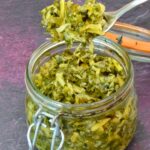
Fermented Kohlrabi with Carrot Tops
This vibrant green fermented kohlrabi combines kohlrabi with carrot tops, carrot, spring onion and coriander for a fresh, crunchy kraut-style ferment. If you're new to fermenting vegetables it's a good one to start with as it ferments quickly and easily. It's crisp, mild, sweet and slightly fizzy - a delicious addition to sandwiches, grain bowls, cheese boards and more.
Servings: 20 servings
Calories: 9kcal
Equipment
- 500ml clip top jars (affiliate link) optional
Ingredients
- 300 g kohlrabi peeled weight
- 1 carrot weighing about 80g
- 1 spring onion (scallion) weighing about 20g
- 80 g carrot tops
- 30 g kohlrabi leaves
- 10 g sea or rock salt (I used grey Celtic sea salt (affiliate link))
- 1 tsp ground coriander
Instructions
- Remove the leaves from the kohlrabi and put them to one side. Peel off the skin and fibrous outer layer then grate the bulb into a large mixing bowl.300 g kohlrabi
- Scrub the carrot, top and tail it, then grate it into the bowl.1 carrot
- Trim the onion, then finely slice and add to the bowl.1 spring onion (scallion)
- Remove the hard stems from the carrot tops and discard. Finely chop the fronds and add to the bowl.80 g carrot tops
- Finely slice the younger kohlrabi leaves and add them to the bowl.30 g kohlrabi leaves
- Spoon in the salt and coriander, then scrunch everything together with clean hands. Keep scrunching until you've extracted a decent amount of juice. Kohlrabi is quite watery, so it only takes a minute or so.10 g sea or rock salt, 1 tsp ground coriander
- Transfer the mix, including all of the liquid into a sterilised 500ml glass jar and pack it down well with the back of a spoon to ensure there are no air pockets. A clip top jar is perfect. Make sure there's a good 2cm, half inch of headroom between the brine and the top of the jar.
- As the vegetables need to be submerged in the liquid, you'll need to weigh them down with something. Take one of the older kohlrabi leaves and lay it across the top, then use something small, flat and heavy to go on top. I use a pebble.
- Seal the jar and leave it in a shady part of the kitchen to ferment at room temperature for four to seven days. How long you leave it will depend on how sour you like your ferments.
- Burp the jar once a day to release any gasses that have built up. This is important to prevent the jar from exploding.
- As soon as the ferment is to your liking, transfer to the fridge where it will keep for several weeks, although the flavour will continue to develop.
Notes
How long it takes to ferment will depend on the quality of the vegetables, the ambient room temperature and personal taste.
To sterilise glass, see my post on how to sterilise glass jars.
You’ll find additional tips and info about this recipe in the main body of the post.
Please note: calories and other nutritional information are per serving. They’re approximate and will depend on serving size and exact ingredients used. Please refer to my nutrition disclaimer for further information.
Top Tip - Use as you would sauerkraut or kimchi.
Nutrition
Serving: 25g | Calories: 9kcal | Carbohydrates: 2g | Protein: 1g | Fat: 0.1g | Saturated Fat: 0.01g | Polyunsaturated Fat: 0.02g | Monounsaturated Fat: 0.02g | Sodium: 200mg | Potassium: 70mg | Fiber: 1g | Sugar: 1g | Vitamin A: 671IU | Vitamin C: 14mg | Calcium: 23mg | Iron: 0.5mg